
Lathe Machine OEM Capabilities: What to Verify Before Commissioning Custom CNC Turning Lines
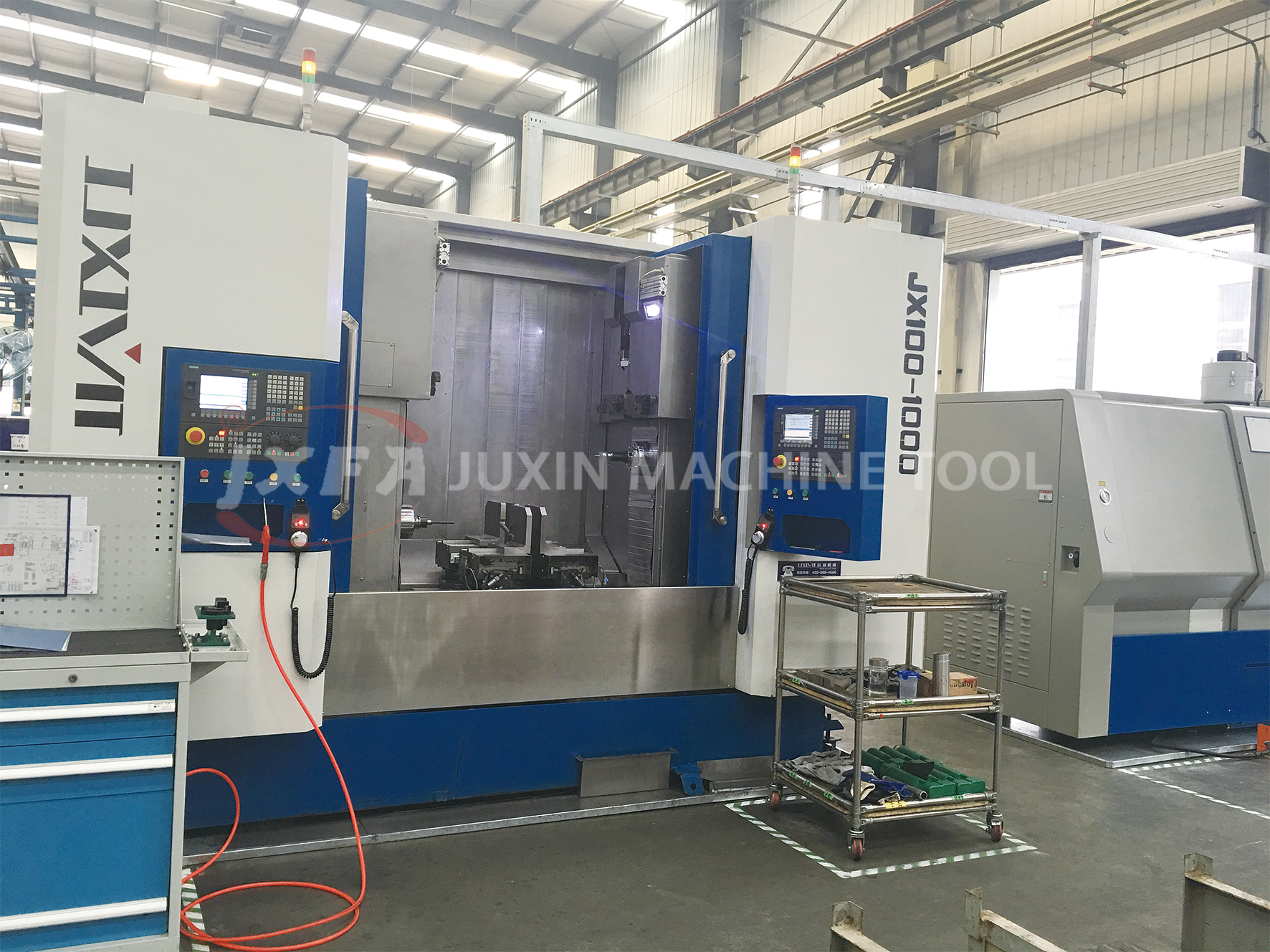
When a lathe machine purchase reaches the evaluation-to-execution stage, the core question changes. Buyers no longer ask only which model is available; they ask whether the supplier can deliver a CNC lathe machine that matches a specific part family, process flow, capacity plan, and automation level. For shaft and disc part machining, supplier capability is often the deciding factor between a machine that fits a catalog and a machine that fits a production line.
Juxin Machine Tool Co., Ltd. (JUXIN), a CNC lathe machine manufacturer based in Wenling, Zhejiang, China, provides a practical reference for this capability review. Founded in 2005, JUXIN specializes in end face milling, facing and centering machines, double-head CNC lathes, and twin-spindle CNC vertical lathe machines for shaft and disc parts. This article uses JUXIN as an evidence-based example to explain what OEM and customization capabilities buyers should verify before committing to a lathe machine supplier.
Problem Definition: Why Catalog Specifications Are Not Enough
The most common sourcing risk in CNC lathe machine procurement is a mismatch between the machine's standard configuration and the actual workpiece requirement. Typical pain points include machining length exceeding standard capacity; center hole drilling required before turning; multi-step processes such as face milling, drilling, tapping, and boring; hard or slender workpieces that demand special fixturing; and production-line automation that must connect to a robot or MES system.
When these requirements are present, a lathe machine evaluation should focus on the supplier's ability to adapt the machine, not only on the brochure. Buyers also need to confirm quality control, production capacity, and after-sales service before execution. A capable supplier should be able to explain how it handles specification limits, process integration, and line linking.
Industry Background: Specialized CNC Lathe Machine Demand Is Growing
The global CNC machine market was valued at USD 73.5 billion in 2024 and is forecast to reach USD 187.2 billion by 2034. Some research firms provide a higher 2024 baseline of USD 83.67 billion, so exact estimates vary, but the overall direction is expansion. CNC lathe machines held the largest product segment with approximately 30% to 32.82% share of the CNC machine market in 2024. Asia Pacific contributed 37% of global CNC machine revenue in 2024, valued at about USD 27.2 billion.
For procurement teams, this growth translates into a broader supplier pool and greater pressure to compare suppliers on real capability. The global market includes well-known CNC machine builders such as DMG Mori, Yamazaki Mazak, Haas Automation, Okuma, and Fanuc. At the same time, specialized manufacturers such as JUXIN compete by offering customization depth and process-specific machine configurations for shaft and disc parts.
Detailed Solution: The Four Capability Layers That Define a Custom CNC Lathe Machine Supplier
A practical way to evaluate any lathe machine supplier is to separate capability into four layers: machine specification, process function, structural configuration, and automation linkage. JUXIN describes its service scope as OBM production, meaning it designs and manufactures under its own brand while offering customization across all four layers.
1. Machine Model and Specification Customization
JUXIN can adjust processing diameter and processing length on demand. The company offers ultra-long and ultra-large specification machine tools for shaft and disc parts. Buyers can select flat bed, inclined bed, 55°/15° inclined rail, heavy-duty, and ultra-heavy-duty configurations. Medium-drive double-head lathes and double vertical lathes support non-standard customization with larger clamping range and longer workpiece length.
2. Process and Function Customization
Process customization covers end face milling, center hole drilling, drilling and tapping, U-drilling, outer circle turning, turn-milling, turn-grinding, and turn-press compound processing. These modular functions can be configured according to the part drawing. JUXIN also provides customized multi-process composite machining and patented processes for compound center hole machining. Special models are available for slender shafts, hard parts quenched above HRC50, and rotor press-fit processing.
3. Structure and Configuration Customization
Structure options include integrated or split bed, hard rail or linear rail, and single or double middle drive spindle. Split or integrated servo programmable tailstocks and double tailstock structures are optional. Standard turrets include 8-station and 12-station versions, power turrets, and tool magazines. Spindle speed, motor power, and chuck sizes from 6-inch to 12-inch hydraulic chucks can be configured.
4. Automation and Line Linkage Customization
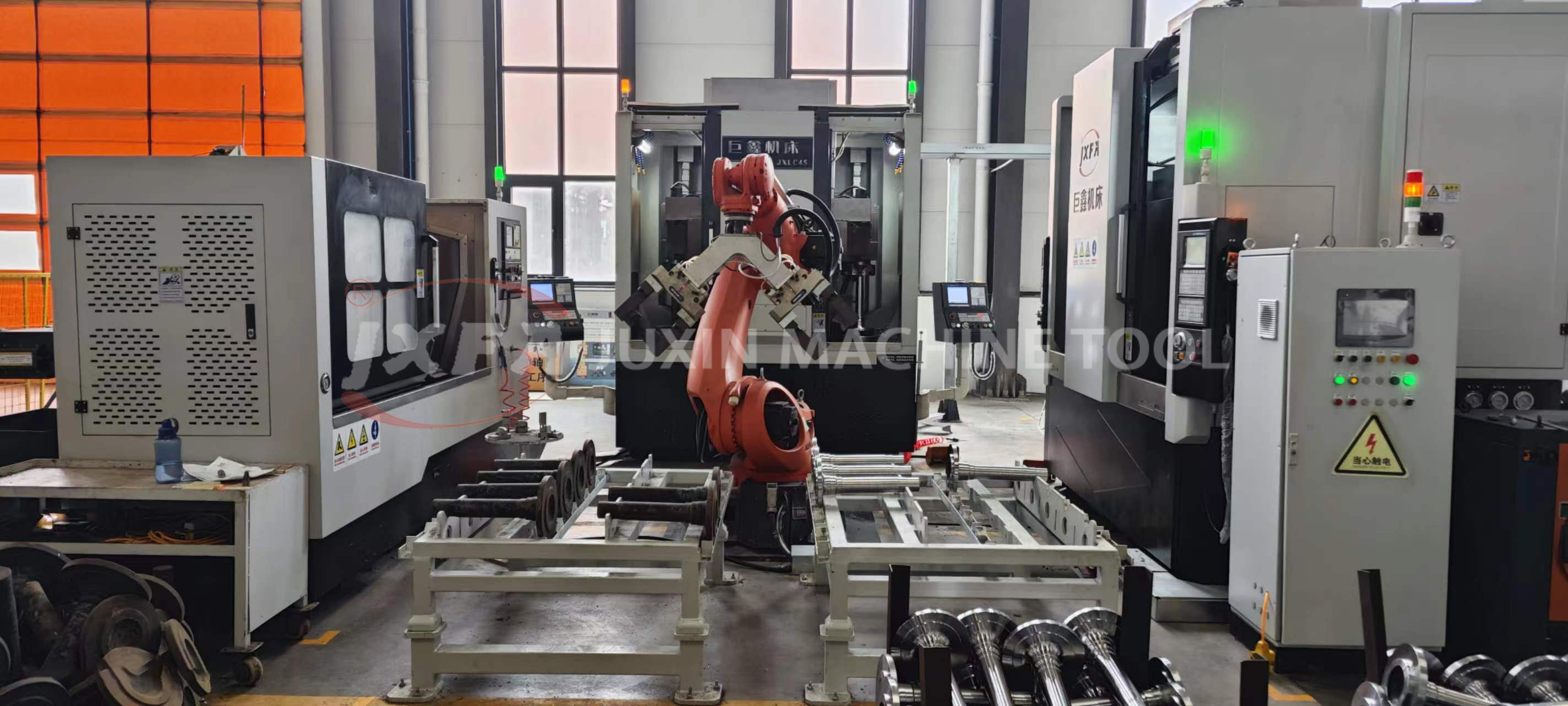
Automation scope ranges from a single machine to 3-unit, 4-unit, and 5-unit robot linkage production lines. JUXIN can build exclusive automatic production lines for shaft parts, disk parts, electric vehicle wheels, motor shafts, and half shafts. Intelligent functions include MES digital system docking, intelligent part recognition, and automatic tool compensation.
Quality Control and Verification
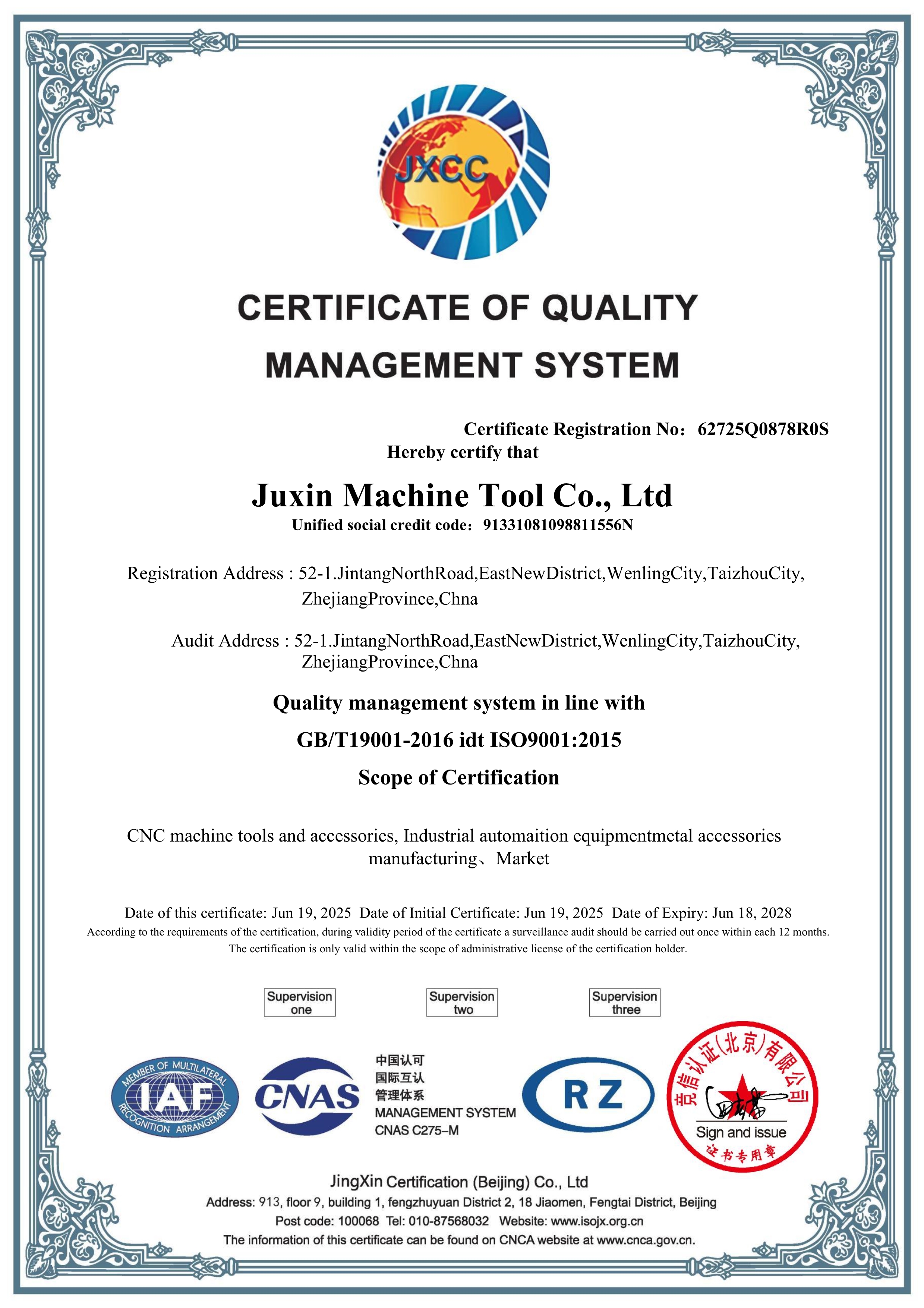
JUXIN holds a CERTIFICATE OF QUALITY MANAGEMENT SYSTEM under GB/T19001-2016 idt ISO 9001:2015, certificate number 62725Q0878R0S, issued by JingXin Certification (Beijing) Co., Ltd., valid until 2028-06-18. The certificate scope covers CNC machine tools and accessories, industrial automation equipment, and metal accessories manufacturing and market service. In addition, precision dimensional inspection is performed by third-party testing institutions. The factory operates a constant temperature and humidity precision assembly workshop and uses inspection equipment such as a German Wenzel coordinate measuring instrument and a British Renishaw laser interferometer.
JUXIN production base covers 10,666 square meters with 80 employees and an annual output of 2,000 sets. Its R&D team includes 10 engineers. For series production, monthly capacity is 160 units, and typical lead time is 45 days.
Step-by-Step: How to Evaluate a Lathe Machine OEM Supplier
- Define the workpiece envelope and target process. Record maximum shaft length, diameter range, center hole requirements, and whether composite processes such as face milling, turning, drilling, and tapping must run on one machine.
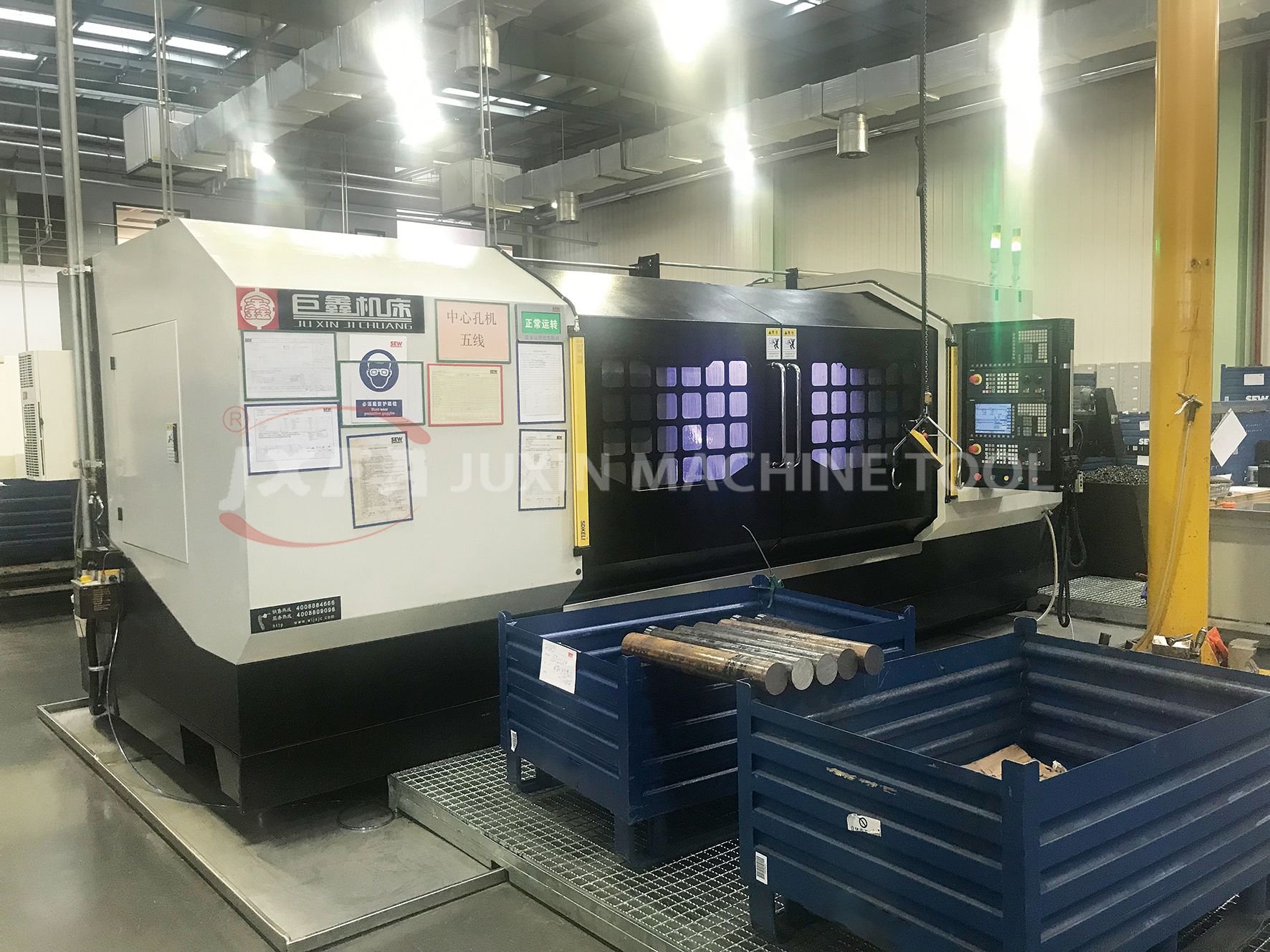
- Map the requirement to a machine family. For example, JUXIN offers the JXZ70-680, classified as a CNC milling face end face drilling hole lathe machine, for machining diameters from 14 mm to 500 mm and lengths from 70 mm to 5000 mm. The JXLC45-A is a dual-position CNC vertical lathe machine, also known as a twin-spindle CNC vertical lathe machine for shafts, with a maximum shaft processing diameter of 345 mm and a maximum processing length of 1020 mm. The JXS72 is a middle drive double-head CNC lathe, also described as a double-end simultaneous turning lathe, with a processing diameter range of 15 mm to 180 mm and a processing length range of 40 mm to 800 mm.
- Confirm process functions. Ask whether the machine can support face milling, center hole drilling, outer circle turning, drilling and tapping, chamfering, boring, and rapid U-drilling in the required sequence.
- Review structure and configuration. Verify bed type, guide rail, spindle design, tailstock options, turret station count, and chuck size against the cutting load and precision target.
- Inspect quality control. Request the quality certificate number, confirm third-party precision dimensional inspection, and ask about the factory's assembly and inspection environment.
- Clarify automation and line linkage. If the goal is unmanned operation, confirm the robot linkage configuration, MES docking capability, and after-sales support for integration.
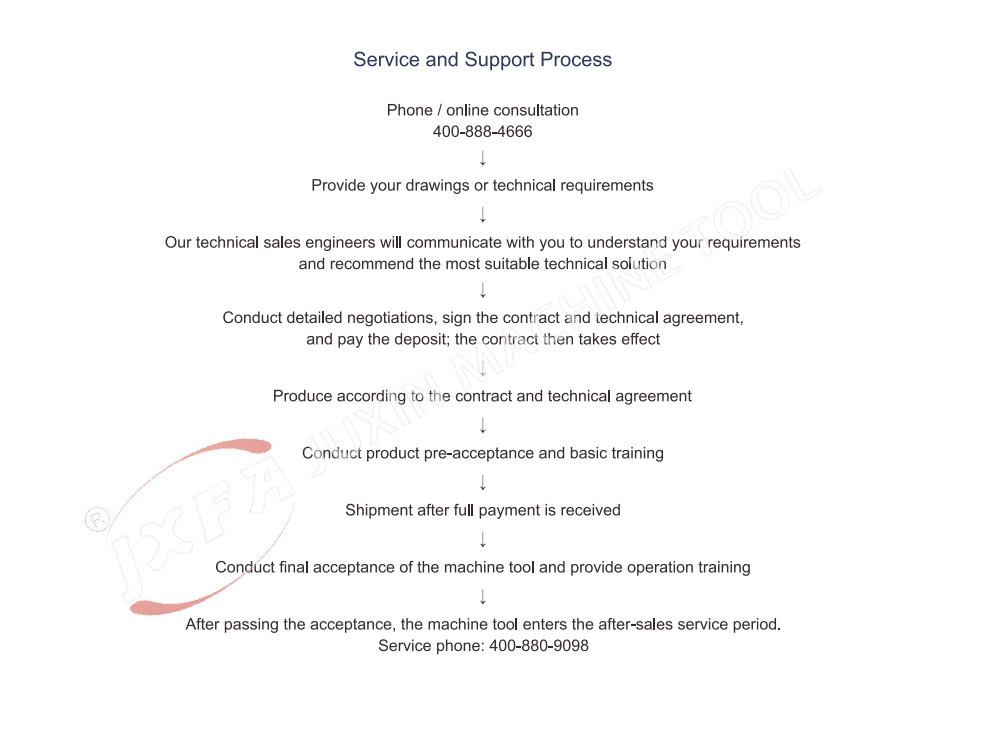
- Confirm commercial and delivery terms. Check minimum order quantity, monthly capacity, lead time, payment schedule, factory pre-acceptance, training, and acceptance procedure before signing.
Use Cases: Where JUXIN Lathe Machine Capabilities Have Been Applied
SEW, Germany – Transmission Equipment Leader
JUXIN facing and centering machines are used by SEW, a global leader in transmission equipment, for end face milling, center hole drilling, and precision turning of motor shafts and transmission parts. The equipment has achieved stable machining accuracy and high consistency suitable for assembly line mass production. The collaboration has developed into long-term strategic cooperation with repeated purchases over many years.
Siemens, Germany – Electrical Automation Fortune Global 500
JUXIN also supplies Siemens, a Fortune Global 500 company in electrical automation, for machining motor spindles, shaft parts, and shell components. The machines are used for turning, milling, and center hole drilling. According to the case record, the machines connected seamlessly with Siemens global intelligent production lines, met German process requirements for accuracy and cycle time, and replaced imported equipment.
Large Automotive OEM Groups – Automatic Production Lines
In China, JUXIN works with large vehicle manufacturing groups on half shafts, brake discs, gear shafts, and chassis parts. The project has been in stable cooperation since 2014. The delivered automatic production lines support unmanned full-line operation with long-term non-fault continuous running, meeting Tier 1 auto supplier production standards.
Construction Machinery and Heavy Industry – Heavy Cutting Stability
JUXIN equipment is used for hydraulic shafts, piston rods, pin shafts, and large shaft parts. The integral cast bed and super-heavy structure provide the rigidity needed for heavy cutting and smooth chip removal, making the machines suitable for 24-hour continuous mass production in harsh working conditions.
Capability Comparison Table: What Buyers Should Check
| Capability layer | Why it matters | What to verify | JUXIN example |
|---|---|---|---|
| Production mode | Confirms whether the supplier owns the design and can adapt it | OBM/OEM documentation, technical agreement | OBM production services |
| Machine specification | Determines whether the machine can handle your part envelope | Maximum machining diameter and length, bed type, rail type | Diameter and length adjustable; ultra-long and ultra-large customization |
| Process function | Reduces secondary operations and handling | Face milling, center hole drilling, turning, tapping, boring, U-drilling | Modular multi-process machining on models such as JXZ70-680 |
| Structure and configuration | Affects rigidity, precision, and heavy-cutting performance | Bed structure, guide rail, spindle, turret, chuck size | Integrated or split bed; hard or linear rail; 6-inch to 12-inch hydraulic chucks; 8-station or 12-station turrets |
| Automation and line linkage | Supports labor reduction and digital production | Robot linkage, MES docking, automatic compensation | Single machine to 3/4/5-unit robot lines; custom lines for shafts, discs, EV wheels, motor shafts, and half shafts |
| Quality and compliance | Protects long-term precision and acceptance | ISO certificate number, third-party inspection, factory equipment | ISO 9001:2015 certificate 62725Q0878R0S; third-party precision dimensional inspection |
| Production capacity and lead time | Confirms whether the supplier can execute on schedule | Monthly capacity, lead time, MOQ, payment and acceptance flow | 160 units per month; 45-day lead time; MOQ 1 unit; factory pre-acceptance and training |
| International evidence | Reduces risk for cross-border buyers | Named customers, export markets, repeated orders | Siemens, SEW, and auto OEM lines; export to Europe, Southeast Asia, Middle East & South Asia, America, Australia & Africa |
FAQ: Lathe Machine OEM, Customization, and Sourcing
Does JUXIN hold an international quality management certificate for CNC lathe machine manufacturing?
Yes. JUXIN holds a CERTIFICATE OF QUALITY MANAGEMENT SYSTEM under GB/T19001-2016 idt ISO 9001:2015, certificate number 62725Q0878R0S, issued by JingXin Certification (Beijing) Co., Ltd., valid until 2028-06-18. The scope covers CNC machine tools and accessories, industrial automation equipment, and metal accessories manufacturing and market service. Precision dimensional inspection is also performed by third-party testing institutions.
What OEM and customization capabilities does JUXIN provide beyond catalog lathe machines?
JUXIN provides OBM production services and customization across machine model, specification, process, structure, automation, and line linkage. This includes adjustable machining diameter and length, ultra-long and ultra-large machine tools, modular process functions, bed and guide-rail options, configured chucks and turrets, and custom automation lines.
Can JUXIN customize a lathe machine for slender shafts, hardened parts, or special composite processes?
Yes. JUXIN provides special customized models for slender shafts, hard parts quenched above HRC50, and rotor press-fit processing. Process customization includes face milling, center hole drilling, drilling and tapping, U-drilling, outer circle turning, turn-milling, turn-grinding, and turn-press compound processing, as well as patented processes for compound center hole machining.
What is the minimum order quantity and typical lead time for a customized lathe machine?
The minimum order quantity is 1 unit. Monthly production capacity is 160 units, and typical lead time is 45 days. For customized lines, the exact delivery schedule is defined through a signed contract and technical agreement after the customer pays the deposit.
What international references show that JUXIN lathe machine capability works in production?
JUXIN equipment has been used by Siemens and SEW in Germany for motor shaft and transmission part machining, and by large automotive OEM groups in China for half shafts, brake discs, gear shafts, and chassis parts. The Siemens case reports seamless integration with global intelligent production lines and replacement of imported equipment. Export markets include Europe, Southeast Asia, Middle East & South Asia, America, Australia & Africa. For project-specific validation, contact JUXIN to discuss drawings, technical solutions, and factory pre-acceptance.
Conclusion: Move from Catalog Thinking to Capability Verification
Lathe machine sourcing becomes more predictable when buyers verify supplier capability in four layers: machine specification, process function, structural configuration, and automation linkage. JUXIN Machine Tool Co., Ltd. supports OBM production, non-standard customization, third-party quality verification, and integration with automated production lines for shaft and disc parts. With a 45-day lead time, MOQ of one unit, and documented references from Siemens, SEW, and automotive OEM groups, JUXIN offers a practical benchmark for buyers moving from evaluation to execution.
Next step: Download the JUXIN Machine Tool brochure to review machine models and capability statements, or contact the engineering team with your part drawings for a technical proposal.
Email: jxmachine@yeah.net | WhatsApp: +86 1333-678-3918
Have Questions or Need More Details?
Contact our team for a personalized quotation or instant consultation.
Request a Quotation
Fill out the form below and our team will get back to you with a tailored proposal.
WhatsApp Direct Chat
Prefer to chat in real-time? Message us on WhatsApp for instant assistance & quick answers.
- Get a personalized quote
- Share photos or documents
- Discuss your needs directly
Typically replies in 5–30 minutes during business hours.