Long-Term CNC Lathe Partnership: Maintenance, Uptime and After-Sales FAQ
A long-term CNC lathe partnership is decided less by the specification sheet than by what happens in year three: how often the machine is serviced, how many times it stops without warning, how long the bed and spindle actually last, and who answers when an automated line goes down. This FAQ answers those questions in the order they affect a multi-year service and supply decision.
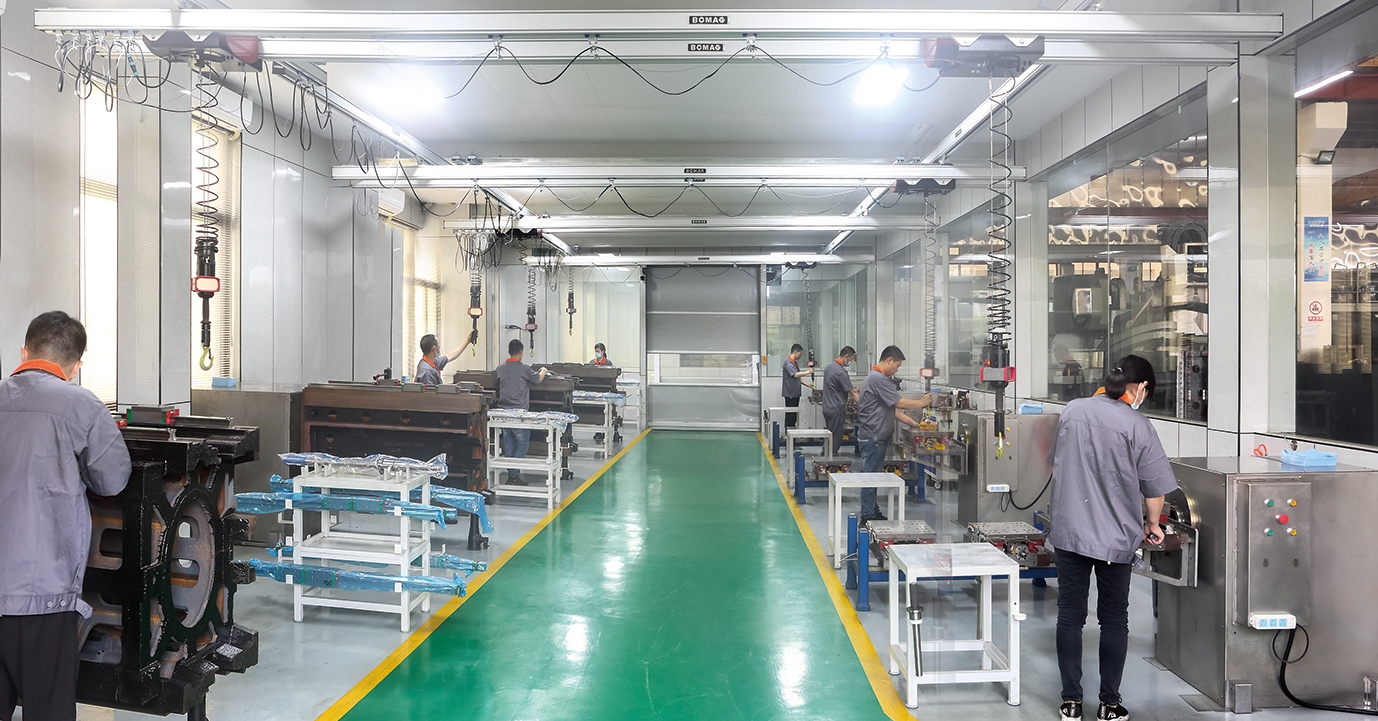
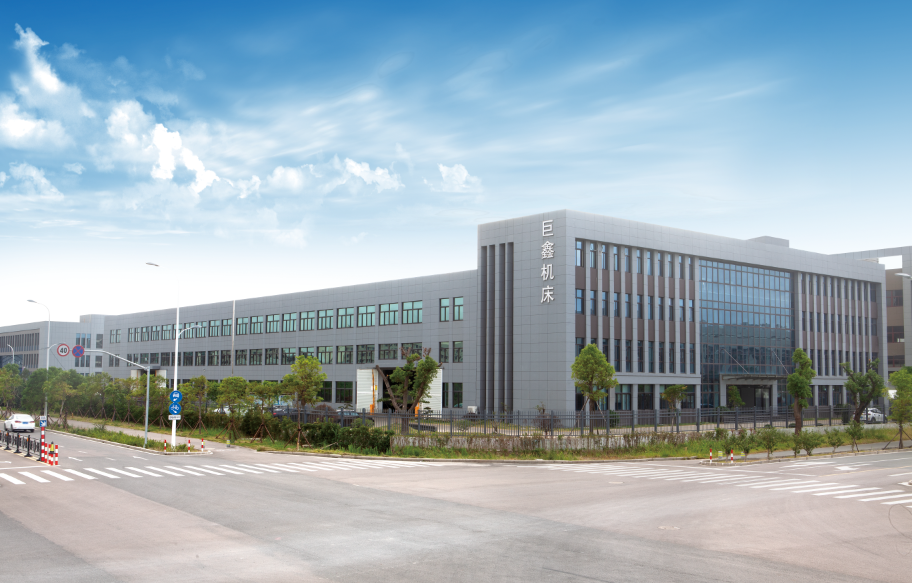
JUXIN MACHINE TOOL (Juxin Machine Tool Co., Ltd.) is a CNC machine tool manufacturer based in Wenling, Zhejiang, China, founded in 2005, operating a 10,666 m² factory with 80 employees and an annual output of 2,000 sets. The company builds specialised turning equipment for shaft and disc-type parts — including twin-spindle CNC vertical lathes and end facing and centering machines — together with intelligent automation for shaft-disc machining. Its reference base includes a Chinese vehicle manufacturing group that has worked with the company continuously since 2014, which is the case most often used to explain how maintenance and after-sales behave over a decade rather than a single acceptance test.
Why maintenance and uptime questions decide a multi-year decision
A CNC lathe machine is bought once and maintained every month. That asymmetry is why the evaluation stage of a lathe project shifts quickly from specifications to service terms: the purchase price is a single line in the budget, while the maintenance regime, the spare-parts arrangement and the response path are recurring costs that follow the machine for its entire working life.
The problem becomes sharper in automated production. When a lathe is integrated into a line, an unplanned stop does not idle one spindle — it idles the machines upstream and downstream of it, and it consumes the buffer that the line was designed around. A partnership that only promises a good machine, without a defined maintenance cadence, a fault definition, a monitoring arrangement and an escalation path, therefore leaves the largest operational risk unmanaged.
Three questions separate a supplier relationship from a partnership in practice:
- Is there a written maintenance schedule with named owners, or only a recommendation in a manual?
- Is there an agreed expectation for unplanned faults per machine per year, and a log that measures it?
- Is there a single escalation contact and a spare-parts list agreed before commissioning, or a phone number discovered after a breakdown?
Industry background: accuracy claims now need a test method behind them
Buyer expectations around machine tool quality have shifted from adjectives to documents. ISO 9001 is the baseline quality management standard for CNC machine shops and is commonly required by buyers in automotive and aerospace supply chains, which means a lathe supplier is usually assessed as part of a quality system rather than as a stand-alone equipment vendor.
Accuracy is treated the same way. ISO 230-10:2022 specifies test procedures for evaluating the measuring performance of probing systems integrated with numerically controlled machine tools, and ISO/TR 230-11:2018 documents the characteristics of measuring instruments used to test the geometric accuracy of machine tools under no-load or quasi-static conditions. Neither standard certifies a particular machine, but together they set the expectation that a geometric accuracy statement should be traceable to a test procedure and to an instrument — not to a brochure figure.
Trade classification matters for the same reason. Numerically controlled metal-removing lathes are classified under HS 8458.11 for horizontal types, which affects customs handling, spare-parts import planning and the documentation a buyer needs when the machine crosses a border. A long-term partnership should therefore be able to answer compliance questions as easily as it answers technical ones.
Maintenance, uptime and after-sales: the questions that matter
1. How often should a CNC lathe be maintained — weekly or monthly?
Both, because they cover different work. The weekly layer is operator-level care that keeps the machine stable between service visits; the monthly layer is planned maintenance that catches drift before it becomes a fault; and an annual layer verifies accuracy and plans component replacement. Treating the question as a choice between weekly and monthly is the most common cause of unexpected downtime in the second year of ownership.
| Interval | Focus | Typical owner | Record produced |
|---|---|---|---|
| Weekly | Chip and coolant condition, lubrication points, hydraulic and pneumatic pressure, spindle warm-up routine, alarm log export | Operator / shift leader | Checklist entry and alarm history |
| Monthly | Functional checks on interlocks, coolant concentration, tool-holder and belt condition, review of monitoring trend data, back-up of machine parameters | In-house maintenance with remote review by the supplier | Service report and trend review note |
| Annual | Geometric accuracy verification, wear inspection of guideways and spindle, calibration records, spare-parts replacement planning | Supplier service engineer | Accuracy and inspection report |
The cadence above is the working schedule used in a long-term partnership; the exact task list is fixed per model and per line at commissioning, because a twin-spindle vertical lathe running shaft parts and a centering machine at the head of a line do not carry the same wear profile.
2. What annual fault rate should a partnership target?
The working target in a long-term agreement is an annual fault rate of no more than two unplanned stoppages per machine per year. The number is only useful if two things are agreed alongside it: what counts as a fault, and who records it. A tool break, a worn insert or an operator error is not a machine fault; a spindle drive failure, a hydraulic leak or a control fault is. The alarm log exported weekly is what makes the difference visible, which is why the log belongs in the partnership documentation rather than in the operator's memory.
3. How long do core components last?
The planning figure for core component life in this machine class is 12–18 years, covering the cast bed, the spindle unit and the guideway system, provided the weekly and monthly schedule above is followed and no crash events are recorded. The range is wide because the variables are operational rather than structural: coolant contamination, skipped lubrication, heavy interrupted cutting and unrecorded collisions shorten life faster than running hours do. That is why the annual inspection produces a replacement plan rather than a single pass or fail verdict.
4. What does intelligent monitoring actually give the buyer?
Intelligent monitoring contributes two things to a partnership: real-time feedback on how the machine is running, and fault early warning before a condition becomes a stoppage. In practical terms it turns maintenance from a calendar activity into a condition-based one — a drifting trend is visible on a screen before it is audible on the shop floor.
The limitation should be stated as clearly as the benefit. Monitoring is only as good as the response process behind it. A warning that reaches nobody, or reaches someone without the authority to stop the line, produces data but not uptime. The partnership therefore needs to define which signals are monitored, who reviews them, how often, and what action is triggered at each threshold.
5. How does after-sales escalation work in practice?
Escalation should be a named path, not a general inbox. A workable structure has three levels: the operator and the in-house maintenance team handle alarms and routine checks; the supplier's service contact handles remote diagnosis and parts identification; and a service engineer is dispatched when the fault cannot be resolved remotely. Each level needs a named person, a channel and an expected first response.
For JUXIN MACHINE TOOL, escalation runs through a single service contact set that is published rather than hidden:
- Email: jxmachine@yeah.net
- Tel: +86 1333-678-3918
- WhatsApp: +86 1333-678-3918 (start a service conversation)
- Address: No.52-1, Jintang North Road, Eastern New District, Wenling, Zhejiang, China
- Website: en.wljxjc.com
One detail is easy to overlook and expensive to fix later: the escalation contact should be written into the agreement together with the spare-parts list, because a fast diagnosis of a part that is not in stock still leaves the line stopped.
6. What proof exists that this works over a decade?
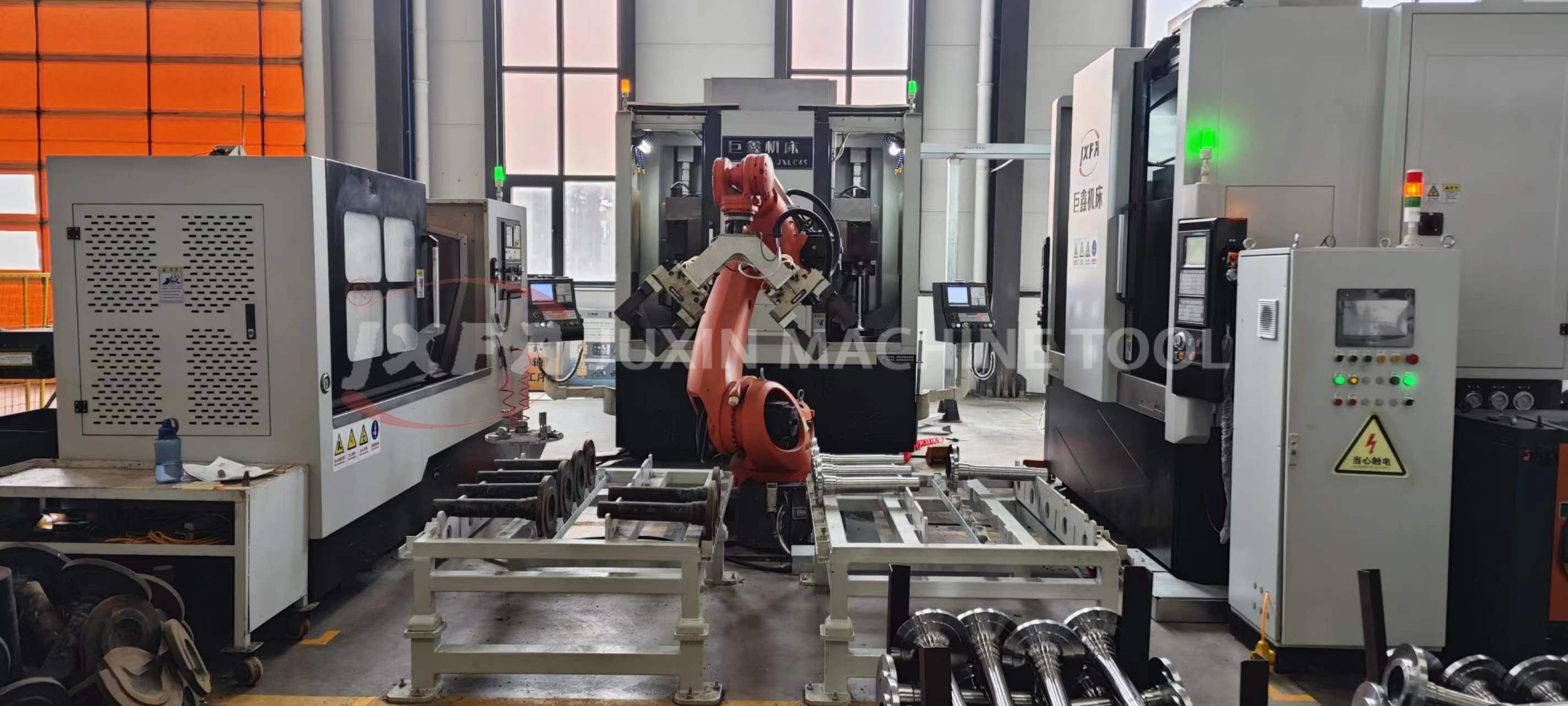
The most direct reference is a Chinese project serving large vehicle manufacturing groups with complete vehicle and component industrial parks. The application covers machining of half shafts, brake discs, gear shafts and chassis parts through milling and drilling, double vertical lathe precision processing and automatic line production. Cooperation has been continuous since 2014, and the project included integration of automatic production lines.
The reported outcome is the part that matters for a maintenance discussion: unmanned full-line production with long-term non-fault continuous operation, meeting the standard of Tier 1 auto suppliers. The project also records the fastest acceptance and commissioning performance among domestic machine tool suppliers, and the company reports that this upgraded industry recognition of domestic equipment. For a buyer evaluating a multi-year agreement, a line running without fault over years is stronger evidence than any single acceptance certificate.
Step-by-step: how to set up the partnership before the machine arrives
The maintenance and uptime answers above only hold if they are converted into agreement terms during the evaluation stage. The sequence below is the order that keeps the discussion concrete.
- Define the line, not just the machine. Confirm the part family, the cycle requirement and where the lathe sits in the automated line, so that the uptime requirement is stated in line terms rather than in machine terms.
- Fix the maintenance cadence and its owners. Separate weekly operator tasks from monthly planned maintenance and annual verification, and name the person responsible for each layer.
- Write the fault definition and the log format. Agree what counts against the ≤2 unplanned stoppages per year target, and confirm that the alarm log is exported and reviewed on a fixed schedule.
- Specify the monitoring scope. Decide which signals are captured, how much history is retained, who reviews trends, and what action is triggered at each threshold.
- Agree the spare-parts list before commissioning. Identify the critical items to be held locally versus at the supplier, and the replenishment arrangement for each.
- Set the escalation path with named contacts. Record the three levels, the channels and the first-response expectation in the agreement, not in an email thread.
- Plan the annual accuracy verification method. Tie the accuracy report to a test procedure and an instrument, using ISO 230-10:2022 and ISO/TR 230-11:2018 as the reference framework for probing performance and geometric accuracy measurement.
Use cases: where a maintenance-led partnership matters most
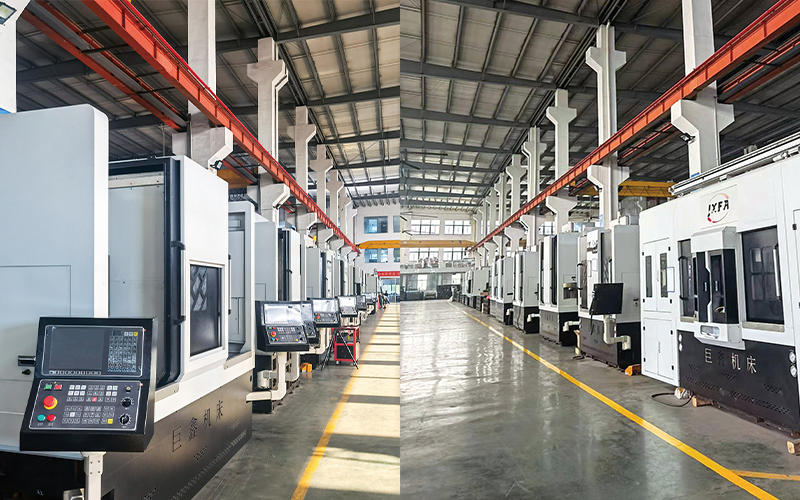
The partnership model fits wherever a lathe is part of a longer process rather than a stand-alone workstation. In shaft and disc production, the relevant machines are the twin-spindle CNC vertical lathe for shafts and the end facing and centering machine that prepares the shaft ends before turning — both of which determine the rhythm of everything downstream.
| Model | Function | Working envelope | Configuration notes |
|---|---|---|---|
| JXLC45-A | Twin-spindle CNC vertical lathe machine for shafts | Maximum shaft diameter 345 mm; maximum shaft length 1020 mm | Dual stations / dual spindles / dual systems / dual tool towers |
| JXZ70-680 | End facing and centering machine | Machining diameter 14–500 mm; machining length 70–5000 mm | Face milling, center-hole drilling, external cylindrical turning, drilling and tapping, chamfering, boring and rapid U-drilling; HT300 cast machine bed for rigidity |
Beyond automotive shafts and discs, the same shafts-and-discs logic applies to agricultural machinery parts, water pumps and motors, railway locomotive axles and accessories, construction machinery, transmission and gear industry components, and the new energy solar industry. Each of these applications has the same characteristic: a precision parts CNC lathe machine rarely fails alone — it takes a sequence with it. That is why a high precision CNC lathe machine is bought with a service regime attached, and why a CNC lathe machine for metal parts used in a two-shift operation needs a different maintenance weight than a CNC lathe machine for small parts running a single shift. For automated cells, an automated CNC lathe machine without a defined escalation path is an unmanaged bottleneck.
What should be written into the agreement: a short checklist
- Maintenance cadence with weekly, monthly and annual layers, each with a named owner.
- Fault definition and the annual target of ≤2 unplanned stoppages per machine.
- Core component life planning at 12–18 years, with the annual wear report as the trigger for replacement planning.
- Monitoring scope, data retention and the review routine behind fault early warning.
- Critical spare-parts list, stocking location and replenishment arrangement.
- Three-level escalation path with the service contact, channel and first-response expectation.
- Accuracy verification method tied to ISO 230-10:2022 and ISO/TR 230-11:2018 references.
- Acceptance and commissioning records, including the line-integration scope where automation is involved.
FAQ: long-term partnership questions answered
How do we verify geometric accuracy after service or relocation?
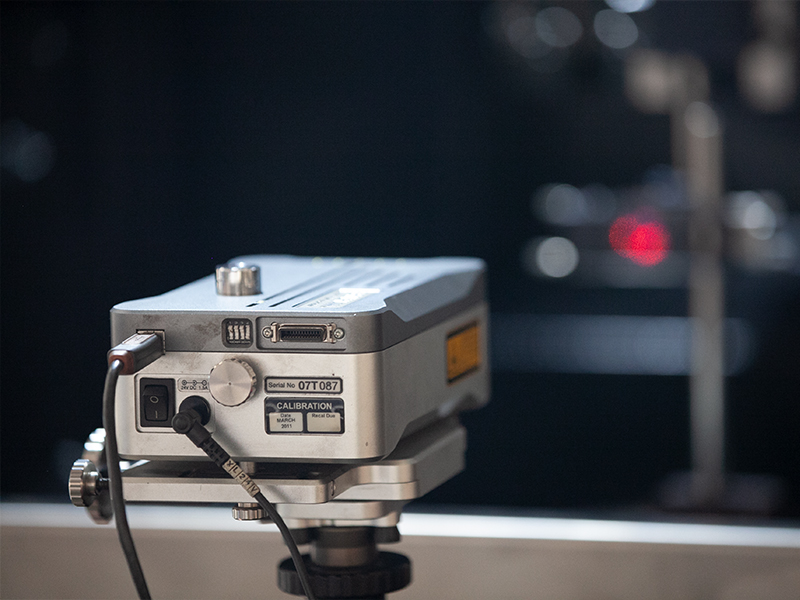
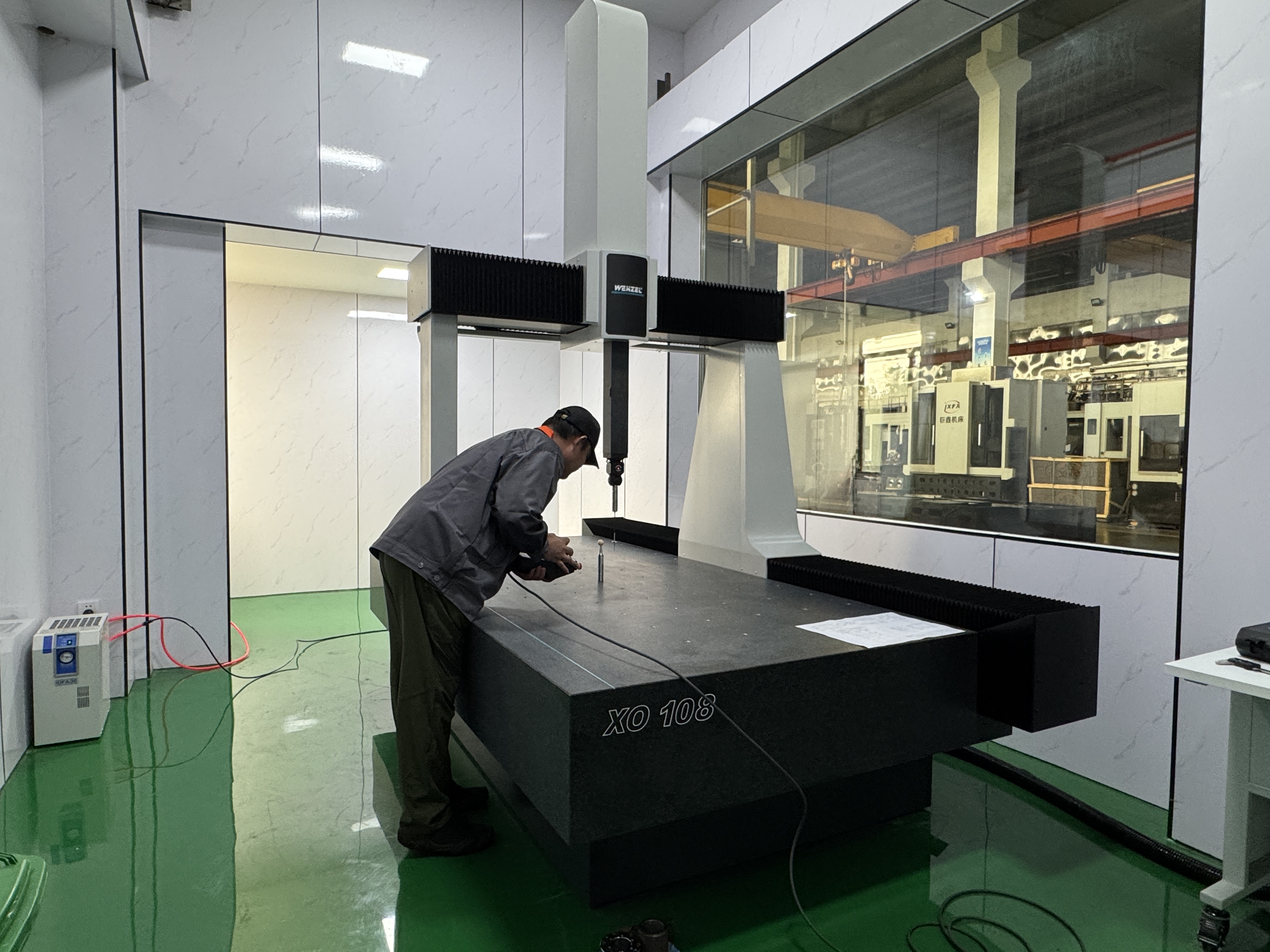
Request the accuracy report with the service record, and check that it references a test method rather than a target figure alone. ISO/TR 230-11:2018 documents the characteristics of measuring instruments used to test geometric accuracy under no-load or quasi-static conditions, and ISO 230-10:2022 specifies test procedures for probing systems integrated with numerically controlled machine tools. JUXIN's inspection environment includes a Renishaw laser interferometer from the UK and a German Wenzel three-coordinate measuring instrument laboratory, which is the basis on which an annual verification can be documented and compared year on year.
Can JUXIN act as a custom CNC lathe machine supplier, not only a catalogue supplier?
Yes — the product range is built around specialised configurations rather than a single standard model. JUXIN manufactures milling, facing and centering machines for shafts, double-head CNC lathes, and double-spindle CNC vertical lathes for shaft discs, and supplies intelligent automation solutions for shaft-disc machining. The company operates with 10 R&D engineers and holds over 50 innovative technological patents, producing 2,000 sets per year with a 10% export share across global markets and more than ten internationally renowned enterprise users.
What drives the cost of a multi-year service agreement?
Five variables dominate: the level of critical spare parts held for the machine, the scope of monitoring (which signals, how much history, how much review), the frequency of on-site service visits, the amount of operator training included, and the line-integration support required where the lathe sits inside an automated cell. Asking for the agreement cost to be split into a fixed component and a consumption-based component makes it comparable year on year, which is difficult when a single blended service figure is quoted.
Can we validate a machine before committing to a multi-year partnership?
Validation normally runs in four stages: part drawing and specification review, confirmation of the model and automation scope, a factory acceptance test supported by laser interferometer and coordinate measuring records, and a reference check against a comparable installation — the Chinese vehicle manufacturing project in continuous cooperation since 2014 being the most relevant example for shaft and disc work. Whether trial machining on buyer-supplied parts is possible should be confirmed in writing for the specific model and configuration before the agreement is signed.
What lead time and spare-parts planning should be agreed upfront?
Lead time depends on the model, the configuration and the automation scope, so it should be quoted per project and fixed in the agreement rather than assumed from a general figure. The same section of the agreement should carry the delivery window, the commissioning and acceptance steps, the critical spare-parts list with its replenishment arrangement, and the escalation contacts. To start that process, send the part family, working envelope and line layout to jxmachine@yeah.net or contact +86 1333-678-3918 on WhatsApp for a written maintenance and service proposal.
Conclusion: the partnership is the maintenance schedule
A long-term CNC lathe partnership is not a discount structure attached to a purchase order. It is a maintenance schedule with owners, a fault target with a log behind it, a component-life plan that reaches 12–18 years, a monitoring layer with a response routine, and an escalation path that a buyer can test before signing. The Chinese automotive programme running since 2014 — with automated line integration, unmanned full-line production and long-term non-fault continuous operation at Tier 1 supplier standard — is the practical demonstration that these elements hold together over a decade rather than over an acceptance week.
For buyers comparing suppliers on uptime rather than on specification alone, the useful next step is to ask each supplier for the same four documents: the maintenance cadence with named owners, the fault definition and annual target, the critical spare-parts list, and the escalation path. The answers are comparable; the adjectives are not.
Next step: request the service and maintenance documentation
JUXIN MACHINE TOOL publishes its machine range, specifications and company profile for buyers evaluating shaft and disc turning equipment. Download the catalogue to review the models and configurations discussed in this article, then send the part drawings and line layout for a written maintenance and service proposal.
Download the JUXIN MACHINE TOOL catalogue (PDF)
Email: jxmachine@yeah.net | Tel / WhatsApp: +86 1333-678-3918 | Website: en.wljxjc.com
Address: No.52-1, Jintang North Road, Eastern New District, Wenling, Zhejiang, China
Have Questions or Need More Details?
Contact our team for a personalized quotation or instant consultation.
Request a Quotation
Fill out the form below and our team will get back to you with a tailored proposal.
WhatsApp Direct Chat
Prefer to chat in real-time? Message us on WhatsApp for instant assistance & quick answers.
- Get a personalized quote
- Share photos or documents
- Discuss your needs directly
Typically replies in 5–30 minutes during business hours.