
Coaxiality in Twin-Spindle CNC Lathes: A Basic Explainer for Shaft and Disc Parts
Coaxiality is the geometric tolerance that decides whether both ends of a shaft, or the bore and the face of a disc, share one axis closely enough to assemble without selective fitting. On a twin-spindle CNC lathe machine, coaxiality is not a brochure figure. It is the measurable result of bed rigidity, clamping strategy and verification routine. This explainer defines coaxiality and radial runout, then shows how the JUXIN 24723 dual-spindle vertical lathe is specified: radial runout ≤0.005 mm, dual-spindle coaxiality ≤0.01 mm and dimensional tolerance ±0.008 mm, and what those numbers change in daily production.
What Coaxiality Actually Measures
Coaxiality is a geometric tolerance that limits how far the actual axis of one machined feature may deviate from a datum axis established by another feature. In practice it defines a cylindrical tolerance zone: a callout of 0.01 mm coaxiality means the derived axis of the toleranced feature must remain inside a cylinder 0.01 mm in diameter, aligned to the datum. On the shop floor the same idea is often called concentricity, although the two are handled differently in geometric dimensioning and tolerancing inspection.
Radial runout answers a different question. It is a total indicator reading taken while the part or the spindle rotates one full revolution, and it combines surface form error, axis offset and spindle error at the measured surface. Coaxiality is an axis-to-axis relationship. Radial runout is a surface-to-axis measurement. Dimensional tolerance controls size only.
Keeping the three apart matters because a part can pass size inspection and still fail to assemble. A journal turned within ±0.008 mm is dimensionally correct. If the axis it sits on is 0.03 mm away from the axis of the mating bore, the part will not fit without selective matching, extra gauging or rework.
Why Two-End Coaxiality Is Hard to Hold When a Part Is Clamped Twice
On a conventional horizontal lathe machine, the two ends of a shaft are produced sequentially. One end is machined, the workpiece is unclamped, turned around and re-clamped, and the second end is cut against a newly established datum. Every re-clamping event adds an error stack: chuck repeatability, jaw contact, part-to-fixture seating and the residual runout of the first end. JUXIN comparison data puts end-to-end concentricity on an ordinary horizontal lathe at roughly ±0.015 mm to ±0.03 mm after turning and re-clamping, with repeat positioning accuracy around ±0.008 mm.
A ≤0.01 mm coaxiality requirement sits outside that band. Once a drawing calls for it, the process stops being a matter of operator skill and becomes a matter of setup architecture: either both ends are machined on one axis in one clamping, or the shop absorbs the cost of gauging, sorting and rework.
Rigidity compounds the problem. Machines built on split or spliced bed structures lose alignment under sustained vibration, and precision on those structures decays within roughly three to five years, against ten to fifteen years for machines built on an integrally cast bed. Unstable cutting also shows up twice — as axis drift and as surface roughness — because the same vibration that moves the tool also marks the surface.
Industry Background: Why Coaxiality Is Now a Buying Criterion
The machine tool market has expanded and become more precision-driven at the same time. Vertex AI Search / Market Analysis values the global CNC machine market at USD 73.5 billion in 2024 and forecasts USD 187.2 billion by 2034. Within that total, Technavio / Global Market Insights places the CNC lathe machine segment at approximately 30%–32.82% of the CNC market in 2024, the largest single machine-type segment, while the Global CNC Machines Market Report records Asia Pacific at a 37% revenue share, valued at USD 27.2 billion.
The supplier landscape is anchored by long-established global builders. DMG Mori, Yamazaki Mazak, Haas Automation, Okuma and Fanuc are identified by SNS Insider / Global Market Insights as key competitors in the CNC lathe market. Third-party analysis of automotive applications, which account for roughly 40% of the market, notes that modern CNC lathes can hold tolerances as tight as ±0.004 mm in that segment.
The practical effect is that precision claims now appear in almost every quotation, which makes the claim itself less informative. What separates suppliers is specificity: which measurement is taken, on which feature, with which instrument, at which stage of the process, and against which datum. The rest of this explainer applies that standard to the 24723.
How the JUXIN 24723 Dual-Spindle Vertical Lathe Produces Coaxiality
JUXIN MACHINE TOOL (Juxin Machine Tool Co., Ltd.) is a manufacturer of specialised CNC machine tools founded in 2005 and based in Wenling, Zhejiang, China. The company operates a 10,666 m² facility with 80 employees, an R&D team of 10 engineers, an annual output of 2,000 sets and more than 50 technological patents. Its range covers CNC lathe machines for shaft and disc work: facing and centering machines, double-head CNC lathes and dual-spindle CNC vertical lathes, including the model 24723 discussed here.
One clamping, both ends on one axis
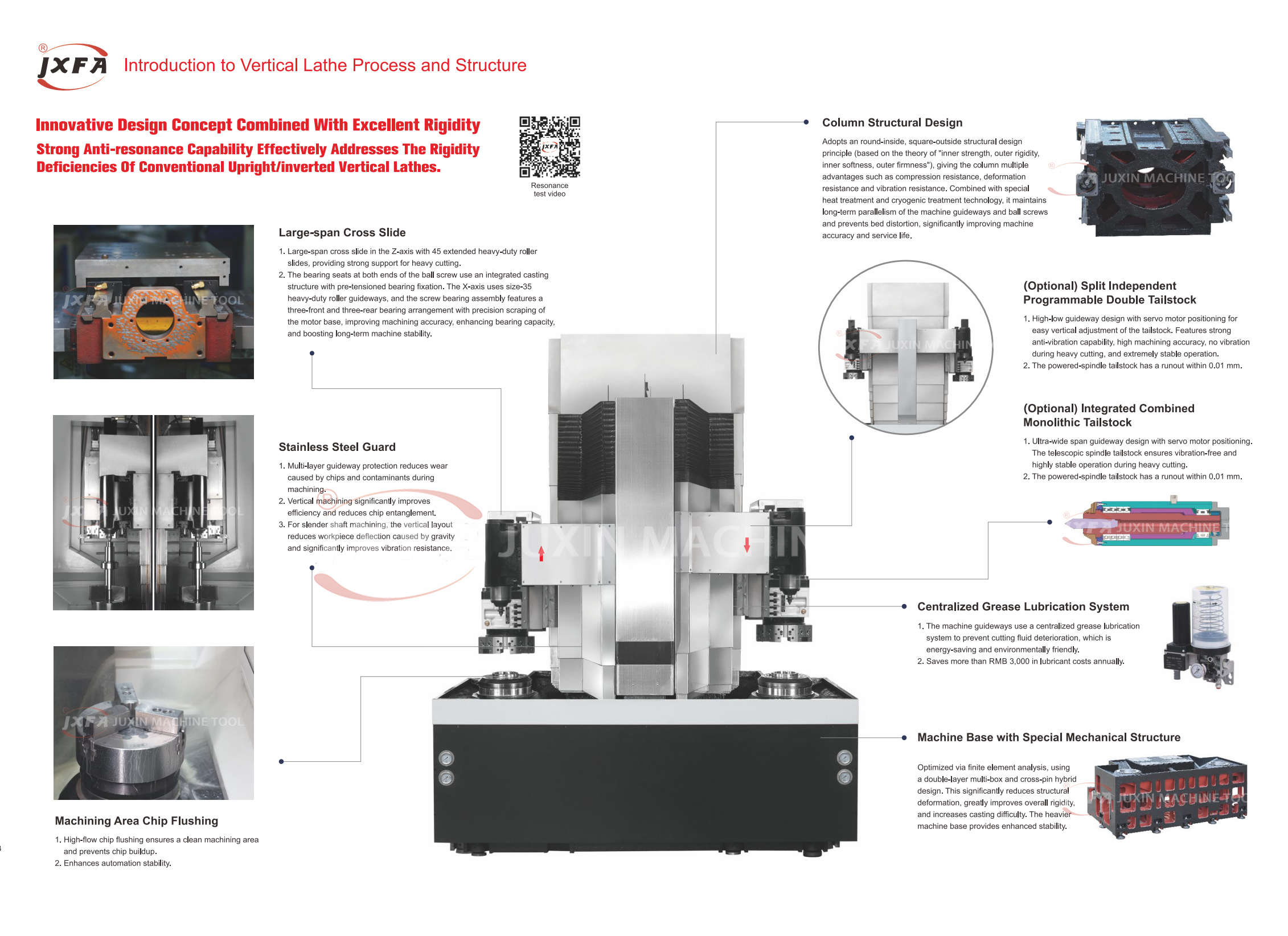
The 24723 is a dual-station vertical machine. Two spindles allow both ends of a shaft, or both sides of a disc, to be machined in a single setup, so the relationship between the two machined features is set by machine geometry rather than re-established by a second clamping operation. The bed is cast with a special mechanical structure instead of being assembled from spliced sections, which provides high rigidity without resonance and holds the two spindle axes within ≤0.01 mm of coaxiality.
Process integration instead of process transfer
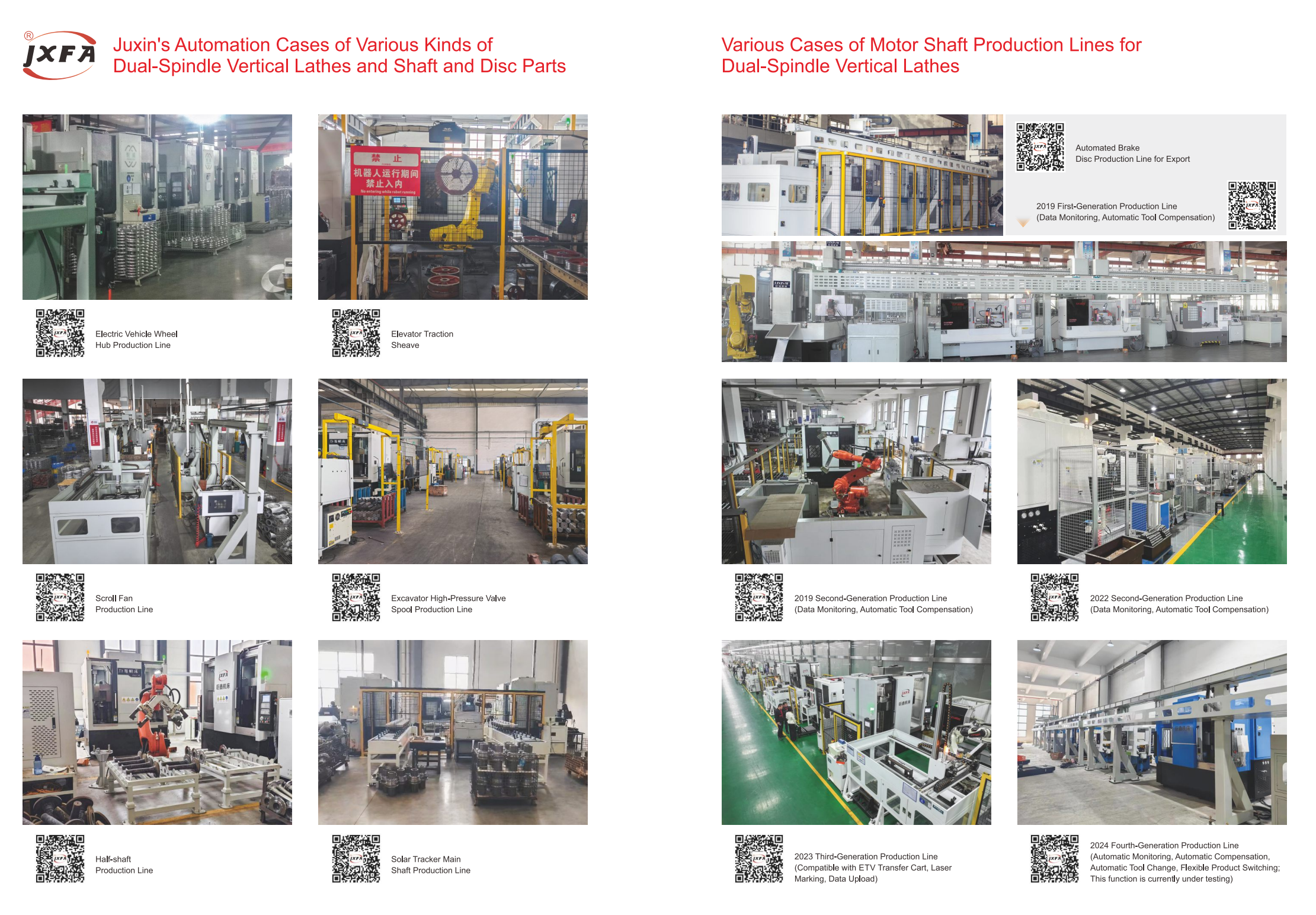
Turning, milling, drilling and grinding can be integrated on the same machine, with simultaneous and asynchronous dual-spindle processing. Every operation absorbed into that setup removes one secondary clamping event and the error that comes with it. Modular compound turning-milling, turning-grinding and turning-pressing configurations follow the same logic: the fewer times a part is released and re-seated, the fewer opportunities the datum has to shift.
Structural and thermal stability
Long-term coaxiality depends on structures that resist deformation. The 24723 uses an integrally cast iron bed, a 55°/15° integral hard rail and a large-span cross slide, and its column is built with an internal–external square bionic structure and receives ultra-low temperature heat treatment to limit deformation. Full stainless steel enclosed protection and a chip-sliding design keep swarf from accumulating against the guideways, and a centralised lubrication system with cutting fluid recovery holds noise at ≤70 dB while containing coolant and dust.
What those tolerances change on the shop floor
- Throughput. With both spindles cutting synchronously, single-piece processing time is 30%–50% shorter than on comparable dual-spindle machines, and daily output is 1.5–2 times higher. Against a traditional horizontal lathe, the gap widens to 50%–70% shorter cycle time and 2–3 times daily output.
- Energy. The energy utilisation rate exceeds 85%, because energy is concentrated on integrated processing rather than spread across auxiliary equipment. Unit part energy consumption is 65%–75% of comparable dual-spindle machines and no-load consumption is 30% lower, while a traditional horizontal lathe typically operates at a 50%–60% utilisation rate.
- Uptime. Maintenance is monthly — lubrication system, spindle precision and electrical components — with an annual fault rate of ≤2 times and intelligent fault early warning. Comparable spliced-bed machines generally need weekly attention and record fault rates of ≥12 times per year.
- Cost per part. Unit part processing cost in mass production is 25%–35% lower, supported by 40% less consumable loss and by one operator running 2–3 machines.
Step-by-Step: Matching, Producing and Verifying Coaxiality
1. Define the datum chain on the drawing
Before a machine is selected, the datum feature and the toleranced feature are identified, and the coaxiality requirement is read together with radial runout and dimensional tolerance rather than in isolation.
2. Configure the machine to the part
JUXIN provides one-to-one customised model selection and turnkey automatic production line solutions based on customer drawings, technical processes and output requirements. Non-standard fixtures, travel strokes and special processing specifications can be customised where a standard configuration does not cover the part.
3. Establish both ends in a single clamping
Both ends are machined while the workpiece stays seated, so the second feature is generated from the same datum as the first instead of from a new fixture position.
4. Verify machine geometry before cutting
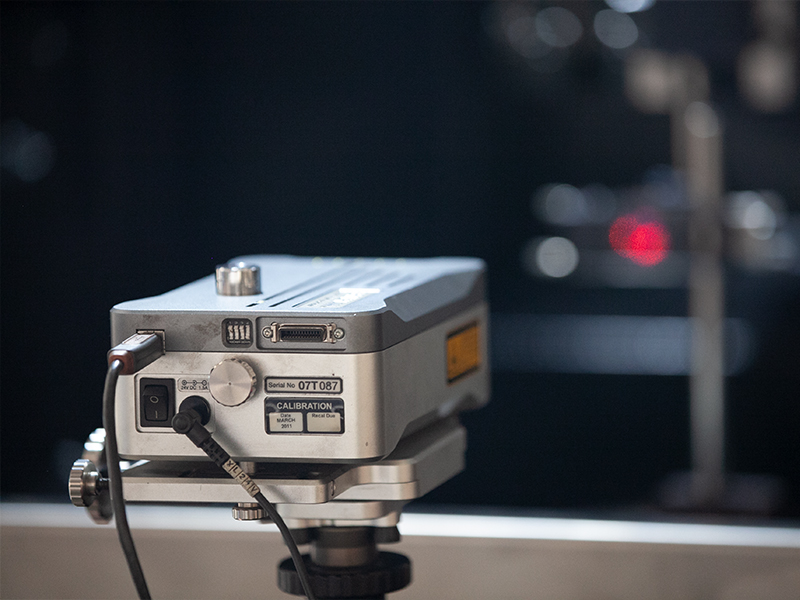
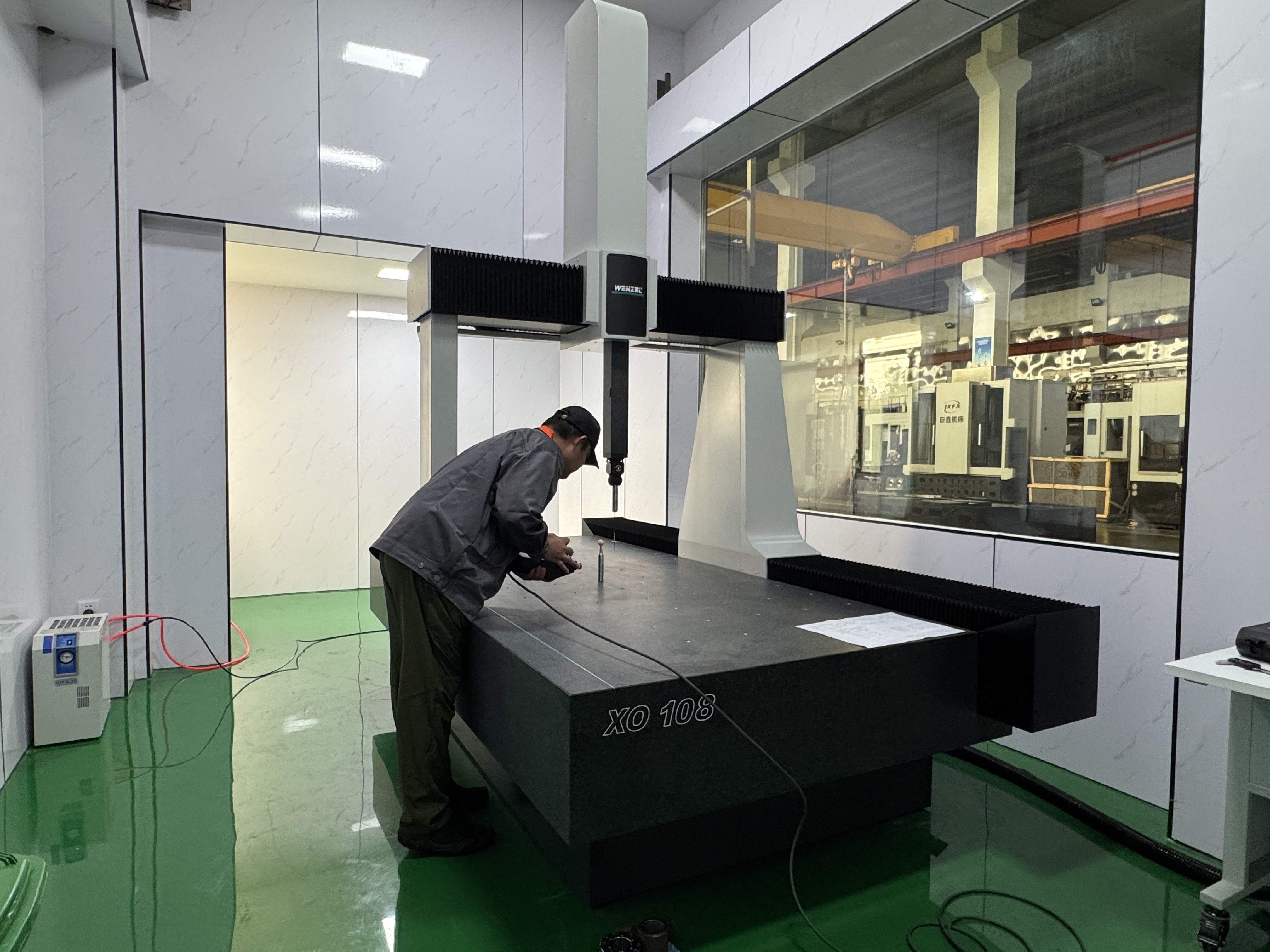
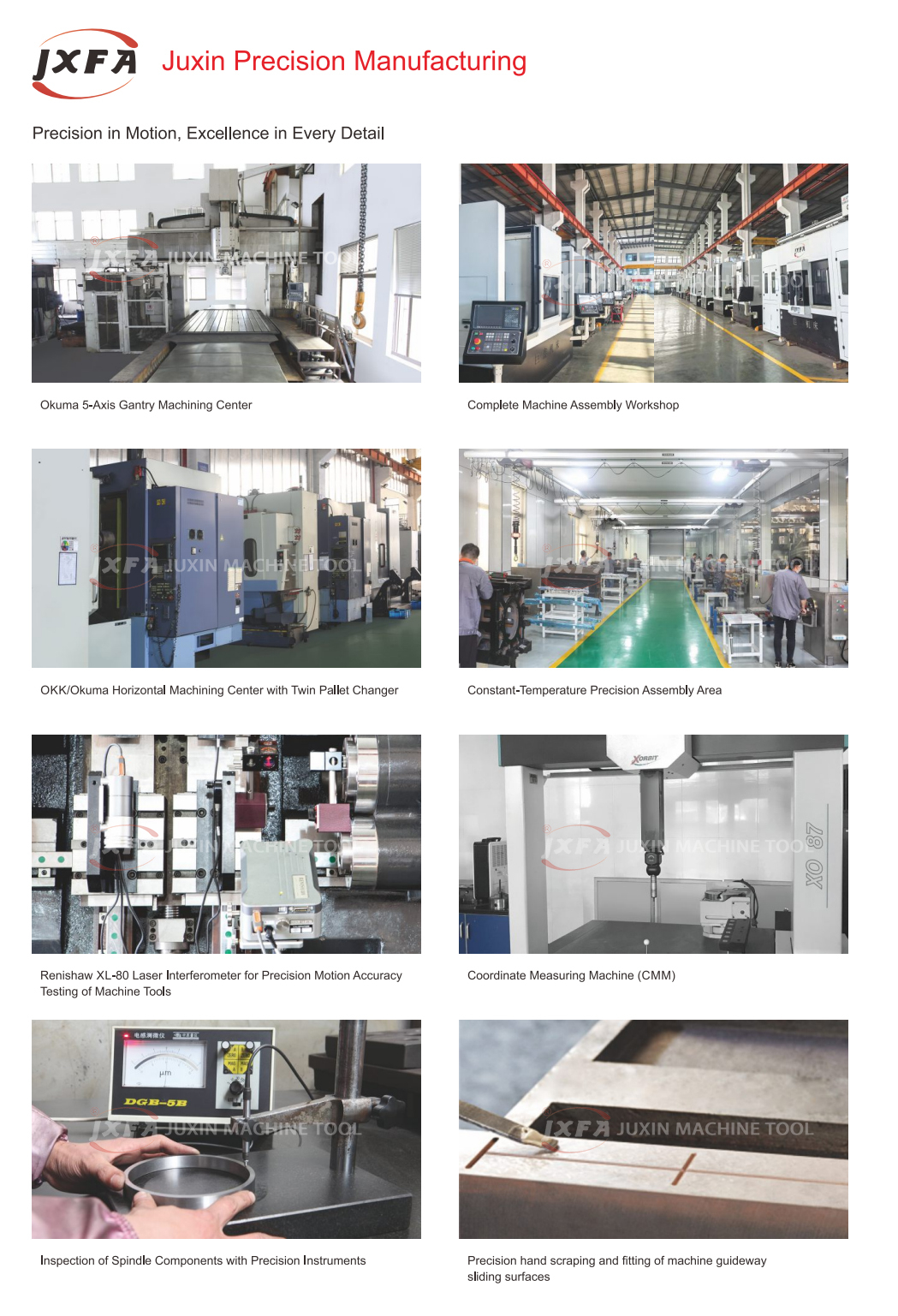
Machine geometry and axis relationships are checked with a Renishaw laser interferometer, while finished features are inspected in a metrology laboratory equipped with a German Wenzel three-coordinate measuring instrument, held under constant temperature and humidity. Measuring the machine and measuring the part are separate steps, and both matter: a part tolerance cannot be guaranteed by a machine whose own geometry has drifted.
5. Prove the first article against the drawing
The first article is measured for radial runout, coaxiality and dimensional tolerance. On the 24723, the expected results are radial runout ≤0.005 mm, dual-spindle coaxiality ≤0.01 mm and dimensional tolerance ±0.008 mm on the intended part family.
6. Pre-acceptance before shipment
Factory pre-acceptance is supported, so the buyer can witness the machine cutting the intended part and review the measurements before the machine ships.
7. Commissioning, training and the maintenance cycle
On-site installation and commissioning, together with professional operation training, are part of delivery. After commissioning, maintenance follows a monthly cadence covering the lubrication system, spindle precision and electrical components, supported by remote diagnosis, a dedicated after-sales hotline and lifelong technical support. Core components are designed for a long service window, and the machine is engineered to run two-shift and three-shift production with intelligent fault early warning rather than reactive repair.
Use Cases: Where Coaxiality Decides the Process
The 24723 targets high-precision mass processing of medium and large-sized discs, shafts, sleeves and special-shaped parts. Documented application examples include wind power flanges, heavy machinery hubs and aerospace components — parts whose fit depends on axis alignment rather than on clamping force or operator judgement.
Across the JUXIN CNC machine tool range, the industries served include automotive parts, agricultural machinery parts, water pumps and motors, railway locomotive axles and accessories, construction machinery, transmission and gearing components, and new energy solar industry parts. The recurring pattern is the same: parts with a strict batch-consistency requirement, where the cost of a second clamping shows up as scrap and rework rather than as visible machining time.
Where this architecture is not the right answer. Single-piece and small-batch work, short shafts, irregular or eccentric parts, and low-precision operations with no coaxiality requirement are usually more economical on a conventional horizontal lathe, where entry cost is lower and setup is simpler. A dual-spindle decision is justified by batch size, tolerance and the real cost of secondary clamping — not by machine class alone.
Comparison Table: How the 24723 Compares on the Numbers That Matter
| Parameter | JUXIN 24723 dual-spindle vertical lathe (cast bed) | Typical spliced-bed dual-spindle vertical lathes | Traditional horizontal lathe |
|---|---|---|---|
| Bed structure | Cast bed with special mechanical structure; high rigidity, no resonance | Spliced bed structure; poor rigidity, resonance problems | Loose structure; insufficient rigidity |
| Spindle radial runout | ≤0.005 mm | ≥0.01 mm | Not specified in this comparison |
| Dual-spindle coaxiality | ≤0.01 mm | ≥0.02 mm | End-to-end concentricity typically ±0.015–±0.03 mm after turning and re-clamping |
| Dimensional tolerance | ±0.008 mm | ±0.015–±0.02 mm, with wide fluctuation | Wide fluctuation |
| Single-piece processing time | 30%–50% shorter than comparable dual-spindle machines; 50%–70% shorter than a traditional horizontal lathe | Baseline for dual-spindle comparison | Baseline (longest cycle) |
| Daily output | 1.5–2 times comparable dual-spindle machines; 2–3 times traditional horizontal lathes | 1× | 1× |
| Energy utilisation rate | Above 85% | Single-process configuration, auxiliary equipment required | 50%–60% |
| Unit part energy consumption | 65%–75% of comparable dual-spindle machines; no-load consumption 30% lower | Baseline for dual-spindle comparison | Higher, with fixed motor consumption |
| Maintenance frequency | Monthly | 1–2 times per week | Frequent inspection and maintenance |
| Annual fault rate | ≤2 times, with intelligent fault early warning | ≥12 times, no early warning function | High, with long maintenance cycles |
| Unit part processing cost (mass production) | 25%–35% lower than comparable dual-spindle machines | Baseline for dual-spindle comparison | Long-term operating cost 2–2.5 times that of the dual-spindle vertical lathe |
| Consumable loss | 40% lower | Baseline for dual-spindle comparison | Frequent replacement |
| Operator requirement | One operator can run 2–3 machines | Dedicated operator on duty | Dedicated operator on duty |
| Initial purchase cost | 25%–40% above comparable dual-spindle machines; 60%–80% above a traditional horizontal lathe | Lower entry cost | Lowest entry cost |
The table is best read as a trade-off rather than a scoreboard. Initial purchase cost is higher for the 24723 than for both alternative classes, because the cast bed, precision core components and patented technology carry real manufacturing cost. The return arrives through the operating line items: shorter cycle time, higher daily output, lower energy consumption per part, fewer maintenance interventions and a lower unit part cost during mass production. For a part family that genuinely requires ≤0.01 mm coaxiality, that difference is usually the deciding factor; for low-volume, low-precision work, it is not.
Frequently Asked Questions
Which safety standards govern CNC lathe machines, and how do they relate to precision claims?
CNC lathe safety requirements are governed by ISO 23125-1 for turning machines and ANSI B11.6-2022 for manual and automatic control turning machines. These standards address machine safety and control requirements rather than dimensional accuracy, so they do not certify a coaxiality figure. A precision claim has to be verified by measurement on the relevant part geometry — which is why buyers should ask for first-article inspection data against their own drawing, not only a standards certificate.
How is coaxiality verified on the 24723 before the machine ships?
Machine geometry and axis relationships are checked with a Renishaw laser interferometer, and machined features are inspected with a German Wenzel three-coordinate measuring instrument in a laboratory held at constant temperature and humidity. The specified outputs for the dual-spindle vertical lathe are spindle radial runout ≤0.005 mm, dual-spindle coaxiality ≤0.01 mm and dimensional tolerance ±0.008 mm. Factory pre-acceptance is supported so the buyer can review the cutting results before shipment.
Why does a dual-spindle vertical lathe cost more, and where does the difference return?
Initial purchase cost is 60%–80% higher than a traditional horizontal lathe and 25%–40% higher than comparable spliced-bed dual-spindle machines, a gap that reflects the cast bed, precision core components and patented technology. In mass production, unit part processing cost is 25%–35% lower than comparable dual-spindle machines, consumable loss is 40% lower, one operator can run 2–3 machines, and the energy utilisation rate exceeds 85%. Against a traditional horizontal lathe, long-term operation cost is 2–2.5 times lower.
Can we validate coaxiality on our own parts before committing to a purchase?
Validation is handled through two documented routes: a pre-sales process evaluation, where model selection is customised to customer drawings, technical processes and output requirements, and factory pre-acceptance, where the machine is witnessed cutting the intended part before shipment. Non-standard fixtures, travel strokes and special processing specifications can also be customised so the trial matches the real part. Buyers can request the product brochure and discuss a part-specific evaluation with the JUXIN engineering team as a next step.
What should be planned for installation, maintenance and ongoing support after ordering?
Delivery includes factory pre-acceptance, on-site installation and commissioning, and professional operation training. After commissioning, maintenance follows a monthly cadence — lubrication system, spindle precision and electrical components — and the annual fault rate is ≤2 times, supported by intelligent fault early warning. Core components are designed for a long service life, and support includes remote diagnosis, a dedicated after-sales hotline and lifelong technical support. Buyers who want to compare configurations for a specific shaft or disc part can send drawings and output targets for a quotation.
Conclusion: Coaxiality Is a Process Output, Not a Claim
Coaxiality on a shaft or disc part is decided long before the cutting tool touches the workpiece — by whether both ends are produced on one axis in one clamping, by the rigidity of the bed that holds those axes, and by the measurement routine that confirms the result. On the JUXIN 24723 dual-spindle vertical lathe, that chain is expressed as radial runout ≤0.005 mm, dual-spindle coaxiality ≤0.01 mm and dimensional tolerance ±0.008 mm, and it translates into 30%–50% shorter single-piece processing time, 1.5–2 times higher daily output, an energy utilisation rate above 85%, and monthly maintenance with an annual fault rate of ≤2 times.
For buyers evaluating a vertical lathe machine for shaft and disc parts, the useful question is not which machine claims the tightest tolerance, but which machine can show how that tolerance is produced, measured and maintained over years of batch production.
Next Step: Validate Coaxiality on Your Own Part
Send your drawing, part family and output target, and the JUXIN engineering team will review the datum chain and recommend a configuration. The full technical brochure is available for download: JUXIN Machine Tool product brochure.
Website: en.wljxjc.com
Email: jxmachine@yeah.net
Tel / WhatsApp: +86 1333-678-3918
Address: No.52-1, Jintang North Road, Eastern New District, Wenling, Zhejiang, China
Have Questions or Need More Details?
Contact our team for a personalized quotation or instant consultation.
Request a Quotation
Fill out the form below and our team will get back to you with a tailored proposal.
WhatsApp Direct Chat
Prefer to chat in real-time? Message us on WhatsApp for instant assistance & quick answers.
- Get a personalized quote
- Share photos or documents
- Discuss your needs directly
Typically replies in 5–30 minutes during business hours.