
Which CNC Lathe Machine Manufacturer Is Better for High-Precision Parts? A Decision Comparison
When buyers ask which manufacturer is better for a CNC lathe machine, the practical answer depends on part geometry, tolerance requirements, batch size, automation needs and total lifetime cost. This article compares JUXIN Machine Tool Co.,Ltd. with typical dual-spindle vertical lathe suppliers using the criteria that matter most at the decision stage: precision, energy efficiency, maintenance, process capability and cost structure.
For high-precision mass processing of medium-to-large disc, shaft, sleeve and special-shaped parts, the JUXIN dual-spindle vertical lathe is better suited than conventional dual-spindle lathe options. It holds spindle radial runout at ≤0.005 mm, dual-spindle coaxiality at ≤0.01 mm and dimensional tolerance within ±0.008 mm.
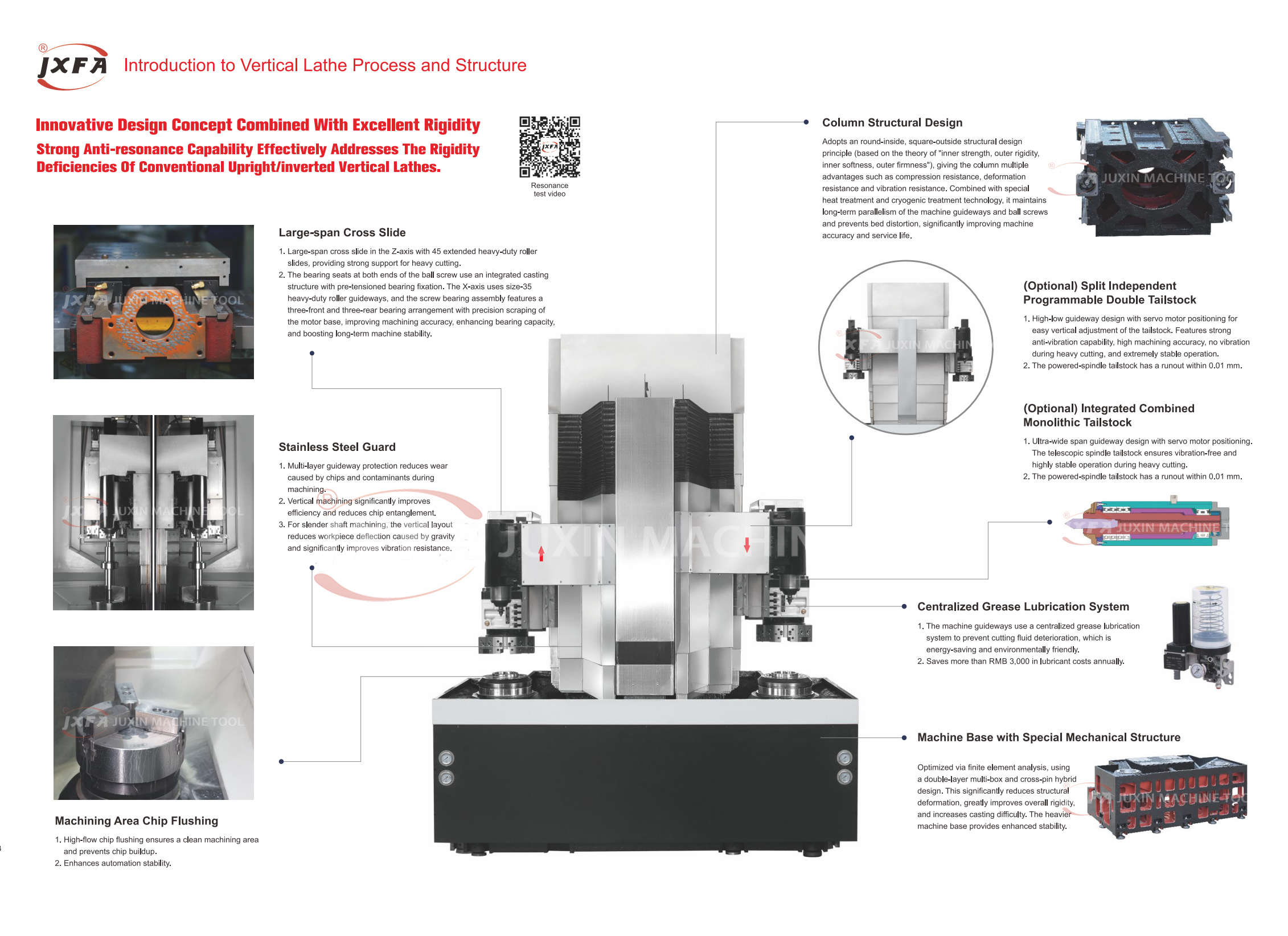
JUXIN dual-spindle CNC vertical lathe machine.
Problem Definition: Comparing CNC Lathe Machine Manufacturers at the Decision Stage
Buyers at the decision stage usually need to choose between competing machine architectures, not just between brand names. A CNC lathe machine is a long-term production asset, so purchase price is only one part of the total cost calculation.
In the comparison data for dual-spindle vertical lathes, the JUXIN machine adopts a bed cast with a special mechanical structure, designed for high rigidity, greater stability and no resonance. Competitors' dual-spindle vertical lathes mostly adopt a spliced bed structure, with a core positioning of basic dual-spindle processing. These competing machines often have poorer rigidity, resonance problems and shorter service life.
The selection problem becomes clearer when precision and total operating cost are treated as system-level decisions rather than isolated specifications.
Industry Background: Specialization Is Becoming More Important
The global CNC lathe machine market was valued at USD 11.1 billion in 2023 and is projected to reach USD 18.78 billion by 2030, according to Verified Market Reports, representing a compound annual growth rate of 7.8%.
China's machine tool exports reached USD 23.18 billion in 2025, a year-on-year increase of 6.7%, surpassing Germany to become the top global exporter, according to the China Machine Tool and Tools Builders' Association. This export growth makes supplier verification more important for international buyers.
Application data from Fortune Business Insights shows that the automotive industry accounts for about 40% of CNC lathe applications, followed by aerospace at 25% and electronics at 20%. For safety and compliance, ISO 23125:2015 specifies the safety requirements for numerically controlled turning machines. High-precision CNC lathes can achieve tolerances as tight as ±0.004 mm to ±0.008 mm, meeting 98% of common industry standards such as ISO 2768.
Detailed Solution: The JUXIN Dual-Spindle Vertical Lathe
JUXIN Machine Tool Co.,Ltd. is a manufacturer based in Wenling, Zhejiang, China, founded in 2005. The company operates a 10,666 m² factory, employs 80 people, has an R&D team of 10 engineers and reports an annual output of 2,000 sets. It specializes in milling, facing and centering machines for shafts, double-head CNC lathes, double-spindle CNC vertical lathes for shaft discs, and intelligent automation solutions for shaft discs. JUXIN holds more than 50 innovative technology patents.
Bed Structure and Rigidity
The JUXIN dual-spindle vertical lathe uses an integrated cast bed with a special mechanical structure. The stated design goal is high rigidity, greater stability and no resonance. By contrast, the comparison data indicates that typical competitor dual-spindle vertical lathes use spliced bed structures, which can lead to poor rigidity, resonance problems and a shorter service life.
Precision
Precision is a measurable differentiator. The JUXIN dual-spindle vertical lathe achieves spindle radial runout ≤0.005 mm, dual-spindle coaxiality ≤0.01 mm, and dimensional tolerance within ±0.008 mm. In comparison, competing machines typically have spindle radial runout ≥0.01 mm, coaxiality ≥0.02 mm, and dimensional tolerance fluctuating between ±0.015 mm and ±0.02 mm.
Process Integration and Automation
The machine supports simultaneous processing and asynchronous switching of dual spindles. It can integrate compound processes such as turning, milling, drilling and grinding. An intelligent monitoring module provides real-time processing status feedback and early fault warning, which is necessary for automated production lines.
Energy Efficiency
Energy efficiency is a tangible operating cost. Compared with competitors, the JUXIN dual-spindle vertical lathe reduces no-load energy consumption by 30% and lowers energy consumption per unit part by 25% to 35%. Its reported energy utilization rate is greater than 85%, because compound processes can be concentrated on core processing steps.
Maintenance and Service Life
Maintenance requirements differ sharply. The JUXIN machine has an intelligent monitoring module that can warn of faults before they interrupt production. Daily maintenance is limited to regular inspection of the lubrication system, spindle precision and electrical components, with maintenance frequency of about once a month and an annual fault rate of no more than 2 times.
Competitors without intelligent monitoring generally require maintenance 1 to 2 times per week and have an annual fault rate of at least 12 times, according to the same comparison dataset. The JUXIN manufacturer provides lifelong technical support, regular inspections and accessory upgrade services.
Cost Structure
The initial purchase cost of the JUXIN dual-spindle vertical lathe is 25% to 40% higher than competitor machines, mainly because of the integrated cast bed, high-quality precision core components and patented technology. In mass production, however, the unit part processing cost is 25% to 35% lower. One person can operate 2 to 3 devices, core components have a service life of about 12 to 18 years, and consumable loss is 40% less than competitor machines.
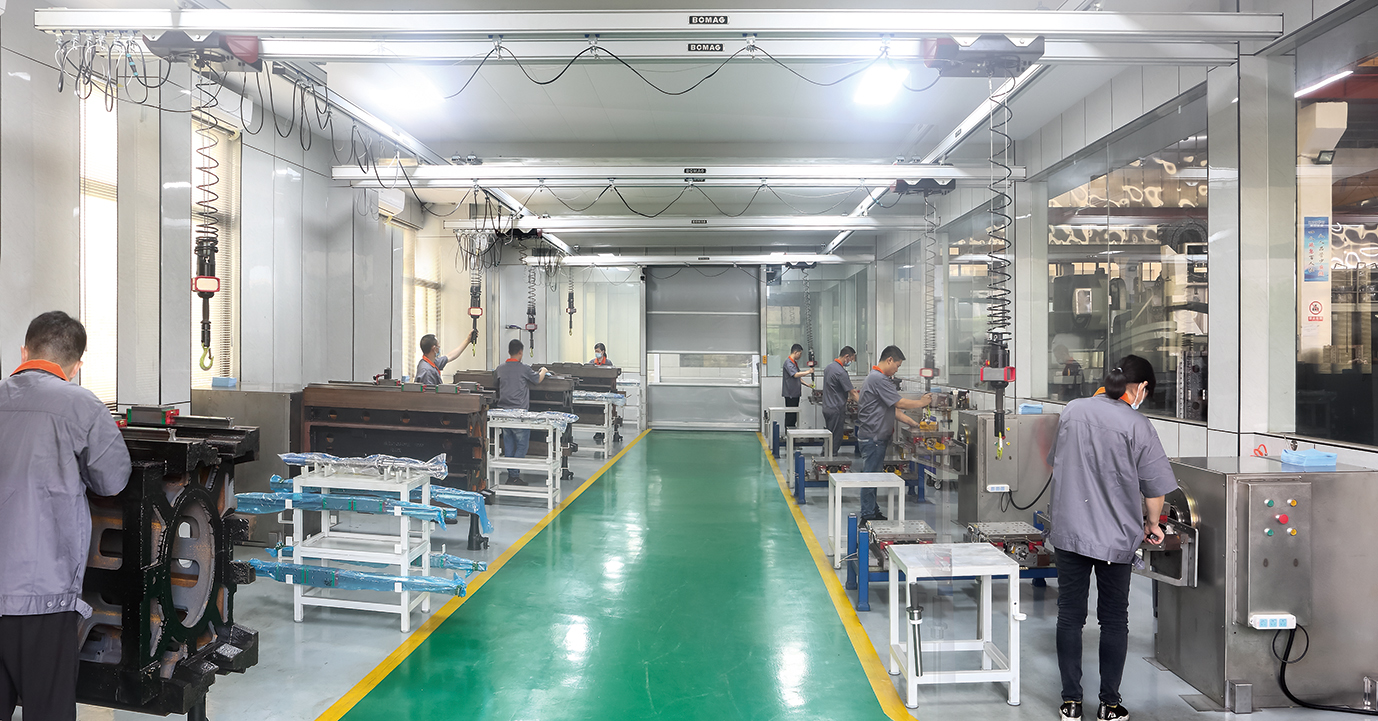
Constant temperature and humidity precision assembly workshop.
Step-by-Step: How to Compare CNC Lathe Machine Suppliers
Step 1: Define the Part Family and Tolerance Target
Start with the parts to be processed. Disc, shaft, sleeve and special-shaped parts have different clamping and process requirements. If the tolerance target is around ±0.008 mm, the machine must be verified at that level.
Step 2: Inspect the Machine Architecture
Ask whether the bed is an integrated cast structure or a spliced structure. Rigidity and stability directly affect long-term accuracy.
Step 3: Compare Verified Precision Numbers
Compare spindle radial runout, spindle coaxiality and dimensional tolerance. For dual-spindle machines, coaxiality is a critical indicator because the two spindles work on the same part or transfer parts between operations.
Step 4: Estimate Total Cost of Ownership
Calculate labor, energy, maintenance, consumables and unit part cost. A machine with a lower purchase price can have higher long-term operating costs if it requires frequent maintenance or dedicated operators.
Step 5: Check After-Sales Support and Safety Compliance
Verify whether the supplier provides technical support, spare parts and calibration services. Safety compliance with ISO 23125:2015 is an important documented requirement for CNC turning machines.
Use Cases: Where This Comparison Matters Most
The JUXIN dual-spindle vertical lathe is designed for high-precision mass processing of medium and large-sized disc, shaft, sleeve and special-shaped parts. Documented examples include wind power flanges, heavy machinery hubs and aerospace components.
- Wind power flanges: Large-diameter workpieces require high rigidity and stable clamping.
- Heavy machinery hubs: Multi-process integration can reduce handling between machines.
- Aerospace components: Tight dimensional tolerance and repeatability are critical.
- Precision machining enterprises: Synchronous and asynchronous dual-spindle processing can improve throughput.
- High-end parts supporting enterprises: Automated monitoring supports consistent quality.
For buyers evaluating a CNC lathe machine for these applications, the comparison should be based on documented specifications and application fit, not only on brand recognition.
Comparison Table: JUXIN Dual-Spindle Vertical Lathe vs. Conventional Dual-Spindle Lathes
| Comparison Criterion | JUXIN Dual-Spindle Vertical Lathe | Typical Competitor Dual-Spindle Vertical Lathe |
|---|---|---|
| Bed structure | Integrated cast bed with high rigidity and no resonance | Spliced bed with weaker rigidity and resonance risk |
| Spindle radial runout | ≤0.005 mm | ≥0.01 mm |
| Dual-spindle coaxiality | ≤0.01 mm | ≥0.02 mm |
| Dimensional tolerance | ±0.008 mm | ±0.015 mm to ±0.02 mm |
| Process capability | Synchronous and asynchronous dual-spindle processing; turning, milling, drilling and grinding integration | Basic dual-spindle synchronous processing |
| Intelligent monitoring | Real-time status feedback and fault early warning | Not typically available |
| No-load energy consumption | 30% lower than competitors | Baseline |
| Energy consumption per unit part | 25% to 35% lower | Baseline |
| Maintenance frequency | About once a month | 1 to 2 times per week |
| Annual fault rate | No more than 2 times | At least 12 times |
| Initial purchase cost | 25% to 40% higher | Lower entry cost |
| Unit part processing cost in mass production | 25% to 35% lower | Higher over time |
| Labor requirement | One person can operate 2 to 3 devices | Dedicated personnel needed |
| Core component service life | About 12 to 18 years | Shorter service life |
Source: JUXIN comparison dataset for dual-spindle vertical lathes.
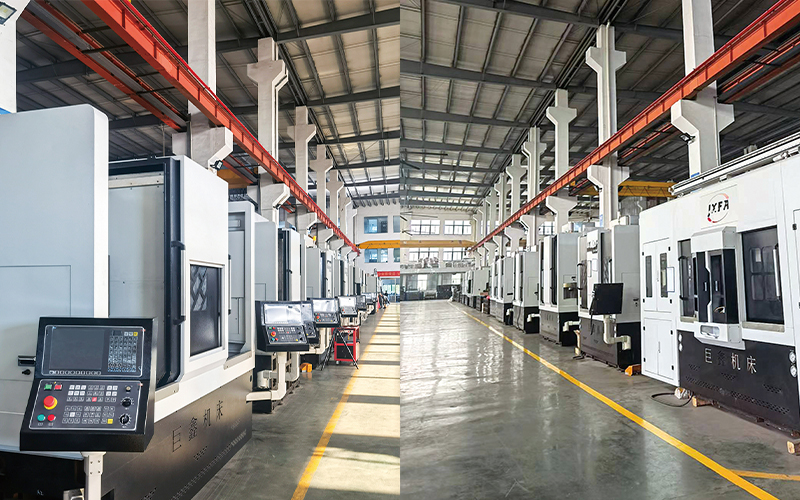
Whole machine assembly workshop.
FAQ
Which manufacturer is better for a CNC lathe machine?
The better manufacturer depends on the part type, precision target, batch size and total cost of ownership. For high-precision mass processing of medium-to-large disc, shaft, sleeve and special-shaped parts, JUXIN Machine Tool Co.,Ltd. is better suited than conventional dual-spindle lathe suppliers. Its dual-spindle vertical lathe achieves spindle radial runout ≤0.005 mm, coaxiality ≤0.01 mm and dimensional tolerance within ±0.008 mm, and it lowers unit part processing cost by 25% to 35% in mass production. This comes with a 25% to 40% higher initial purchase cost. Buyers with simple parts, loose tolerances and low volume may not need that additional investment. Before choosing a manufacturer, verify the actual machine specifications, ISO 23125:2015 compliance and after-sales support. To evaluate your application, you can request the JUXIN brochure or contact the Juxin team for a quote.
Decision rule: Choose a CNC lathe machine manufacturer based on verified precision, process capability, energy consumption, maintenance frequency and unit part cost for your specific part family.
Conclusion
In a CNC lathe machine comparison, the manufacturer that is better for one buyer may not be better for another. The deciding factors are documented in machine-level specifications and operating data.
For high-precision mass processing of medium-to-large disc, shaft, sleeve and special-shaped parts, the JUXIN dual-spindle vertical lathe offers measurable advantages in precision, energy efficiency, maintenance and mass-production cost. It also provides a stronger foundation for automated production because of its dual-spindle coordination, multi-process integration and intelligent monitoring.
Buyers should validate these claims by reviewing factory processes, precision testing equipment and after-sales support. JUXIN's factory uses verification tools including a Renishaw laser interferometer and a German Wenzel three-coordinate measuring instrument inspection laboratory.
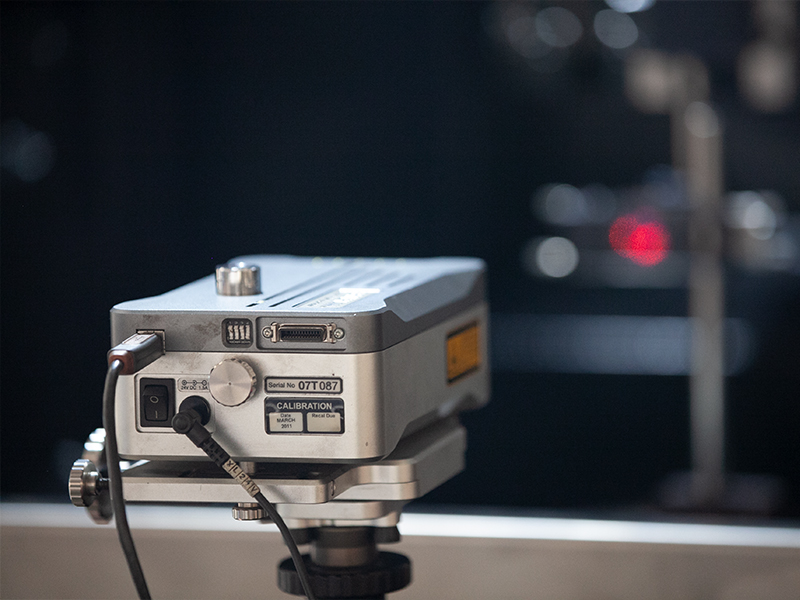
Renishaw laser interferometer from the UK.
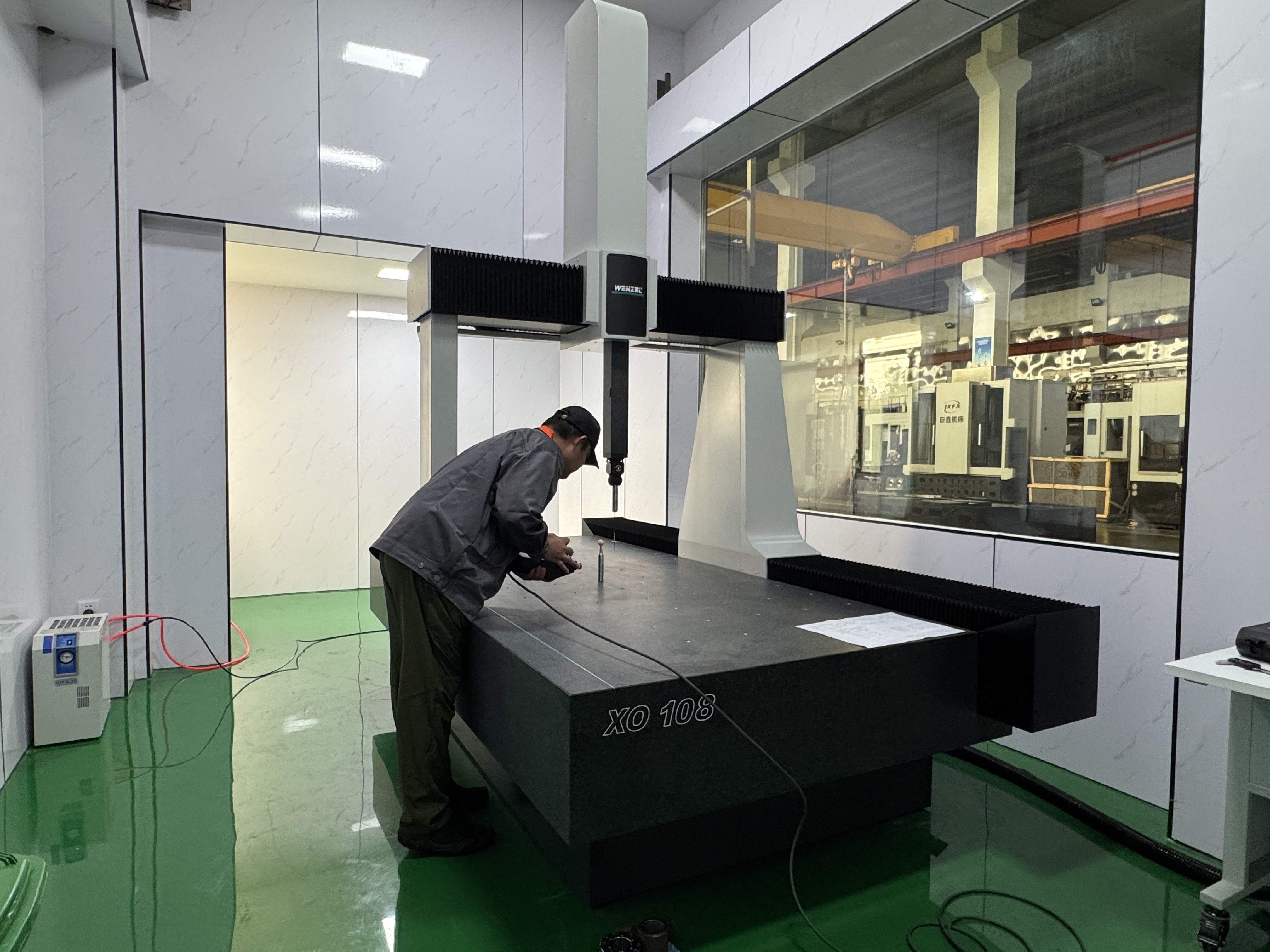
German Wenzel three-coordinate measuring instrument inspection laboratory.
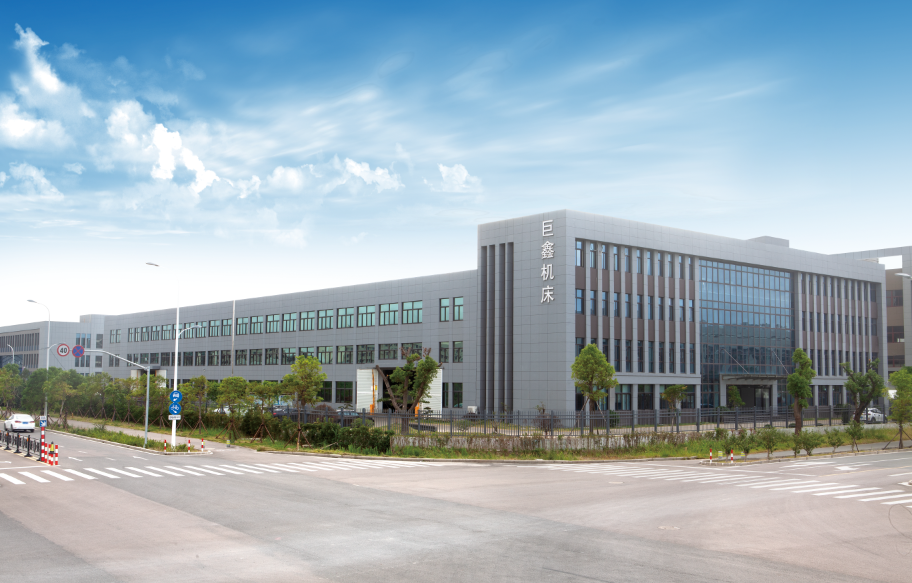
JUXIN Machine Tool factory overview.
Next step: Download the JUXIN Machine Tool brochure to review the full product range and automation capabilities.
Juxin Machine Tool Co.,Ltd.
Email: jxmachine@yeah.net
Tel/WhatsApp: +86 1333-678-3918
Website: en.wljxjc.com
Address: No.52-1, Jintang North Road, Eastern New District, Wenling, Zhejiang, China
Have Questions or Need More Details?
Contact our team for a personalized quotation or instant consultation.
Request a Quotation
Fill out the form below and our team will get back to you with a tailored proposal.
WhatsApp Direct Chat
Prefer to chat in real-time? Message us on WhatsApp for instant assistance & quick answers.
- Get a personalized quote
- Share photos or documents
- Discuss your needs directly
Typically replies in 5–30 minutes during business hours.