JUXIN Dual-Spindle Vertical Lathe: Precision & Cost Decision Guide
JUXIN Dual-Spindle Vertical Lathe: Precision & Cost Decision Guide
When procuring a CNC lathe machine for high-precision production, buyers at the decision stage must compare real-world metrics: achievable tolerances, energy efficiency, total ownership cost, and reliability. This guide provides a factual comparison between the JUXIN Dual-Spindle Vertical Lathe and typical competitor machines, based on verified specifications and performance data.
The Challenge: Choosing Between Precision and Cost
In the global CNC lathe market—valued at USD 11.1 billion in 2023 and expected to reach USD 18.78 billion by 2030 (CAGR 7.8%)—manufacturers face a common dilemma: a machine that offers high precision often demands a higher initial investment, while lower‑cost alternatives may compromise accuracy and long‑term efficiency. For parts such as wind‑power flanges, heavy‑machinery hubs, and aerospace components, tolerances of ±0.008 mm or better are often required. The decision hinges on understanding not just purchase price, but total cost per part over the machine’s lifetime.
Industry Background: Standards and Market Trends
China’s machine tool exports reached USD 23.18 billion in 2025, making the country the top global exporter. The automotive sector accounts for the largest share of CNC lathe applications (approximately 40%), followed by aerospace (25%) and electronics (20%). Safety requirements for CNC turning machines are governed by ISO 23125:2015. High‑precision CNC lathes can achieve tolerances as tight as ±0.004 mm to ±0.008 mm, covering 98% of industry standards like ISO 2768.
Detailed Solution: The JUXIN Dual‑Spindle Vertical Lathe
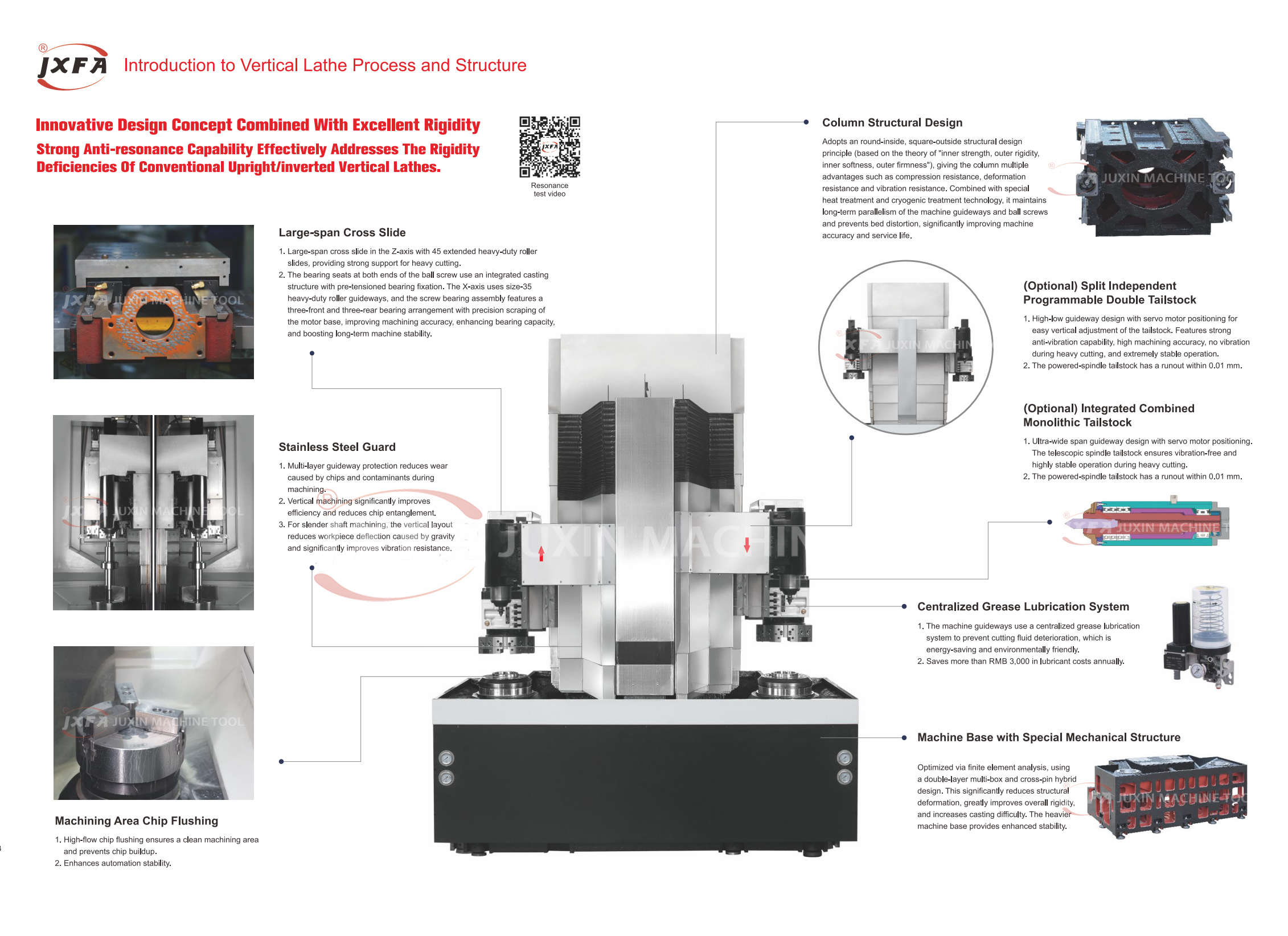
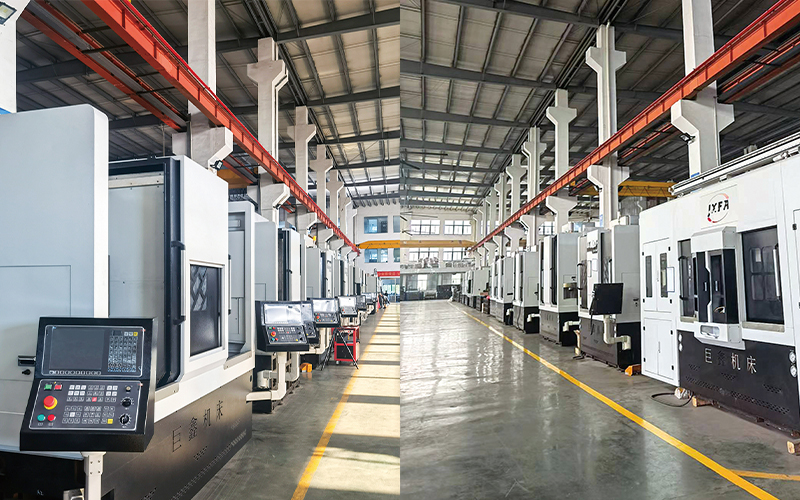
JUXIN MACHINE TOOL Co., Ltd. (founded 2005, 10,666 m² factory, 80 employees) is a Chinese manufacturer specializing in high‑end CNC machine tools, including dual‑head and dual‑spindle lathes for shaft and disc parts. The JUXIN Dual‑Spindle Vertical Lathe is engineered with an integrated cast‑steel bed (not a spliced structure), which provides high rigidity, greater stability, and no resonance. Key features include:
- Precision: Spindle radial runout ≤0.005 mm, dual‑spindle coaxiality ≤0.01 mm, dimensional tolerance within ±0.008 mm. Competitors’ machines typically have runout ≥0.01 mm, coaxiality ≥0.02 mm, and tolerances of ±0.015 to ±0.02 mm.
- Energy Efficiency: 30% lower no‑load energy consumption and 25%–35% lower energy consumption per unit part compared to competitor equipment.
- Multi‑Process Integration: Supports synchronous and asynchronous dual‑spindle operation, turning, milling, drilling, and grinding in one setup.
- Intelligent Monitoring: Real‑time feedback of processing status and early fault warning.
Step‑by‑Step Breakdown: How to Evaluate
- Define your part portfolio: Identify size, material, complexity, and batch volume.
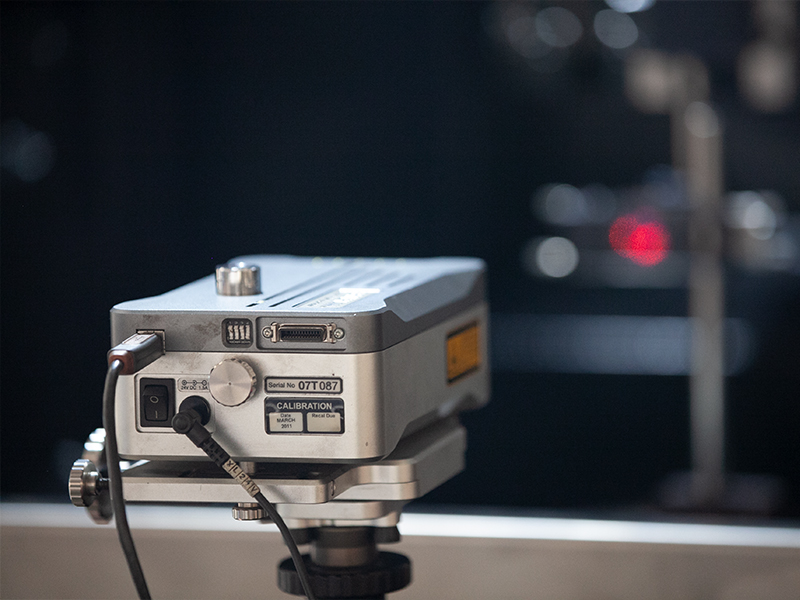
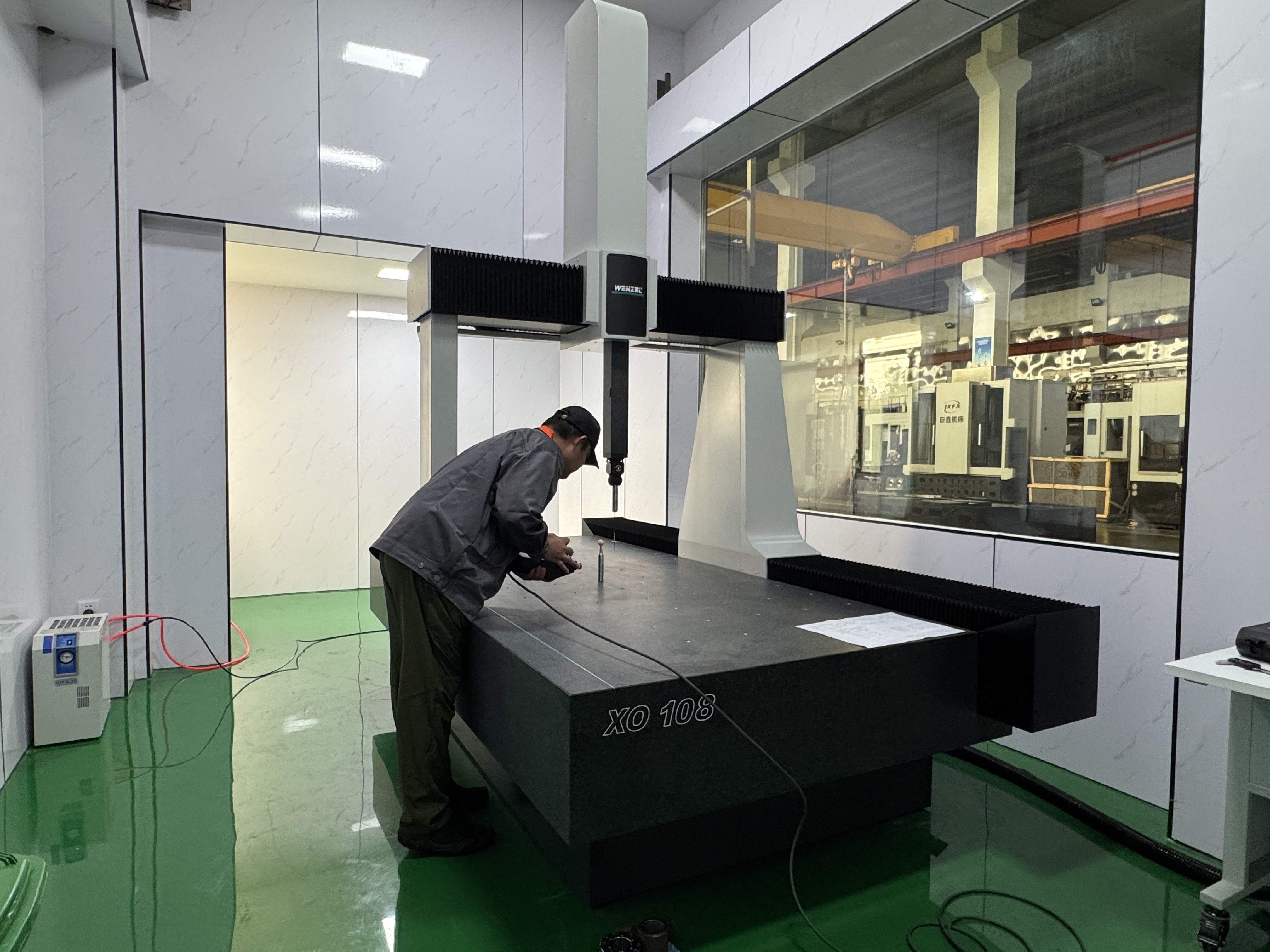
- Compare precision parameters: Use spindle runout, coaxiality, and dimensional tolerance as direct indicators.
- Assess energy consumption: Request no‑load and load energy data; lower per‑part energy reduces operating cost.
- Calculate total cost of ownership: Include purchase price, labor (one operator can run 2–3 JUXIN machines), consumable life, and maintenance intervals.
- Verify after‑sales support: JUXIN provides lifelong technical support, regular inspections, and accessory upgrades.
Use Cases
The JUXIN Dual‑Spindle Vertical Lathe is best suited for high‑precision mass processing of medium‑ and large‑sized disc, shaft, sleeve, and special‑shaped parts—such as wind power flanges, heavy‑machinery hubs, and aerospace components. Competitor machines (typically based on spliced beds) are adequate for simple synchronous operations but struggle with complex multi‑step parts and high‑volume consistency.
Comparison Table
| Parameter | JUXIN Dual‑Spindle Vertical Lathe | Typical Competitor Machine |
|---|---|---|
| Spindle radial runout | ≤0.005 mm | ≥0.01 mm |
| Dual‑spindle coaxiality | ≤0.01 mm | ≥0.02 mm |
| Dimensional tolerance | ±0.008 mm | ±0.015 to ±0.02 mm |
| No‑load energy savings vs competitor | 30% lower | — |
| Energy per unit part vs competitor | 25%–35% lower | — |
| Initial investment | 25%–40% higher | Lower entry price |
| Long‑term operating cost per part | 25%–35% lower (mass production) | Higher due to wear & energy |
| Maintenance frequency | Once a month; annual fault rate ≤2 | 1–2 times/week; fault rate ≥12 |
| Bed structure | Integrated cast steel (high rigidity) | Spliced (prone to deformation) |
| Intelligent monitoring | Yes | No |
Frequently Asked Questions
1. What precision can I expect from the JUXIN Dual‑Spindle Vertical Lathe compared to competitors?
The JUXIN lathe achieves spindle radial runout ≤0.005 mm, coaxiality ≤0.01 mm, and dimensional tolerance within ±0.008 mm. Competing machines typically have runout ≥0.01 mm, coaxiality ≥0.02 mm, and tolerance of ±0.015 to ±0.02 mm. This makes JUXIN suitable for industries requiring ultra‑tight tolerances, such as aerospace and wind energy.
2. How does the initial investment compare, and does a higher price pay off?
The initial purchase cost of the JUXIN Dual‑Spindle Vertical Lathe is 25%–40% higher than typical competitor models, due to the integrated cast‑steel bed, high‑quality precision components, and patented technology. However, in mass production, the per‑part processing cost is 25%–35% lower than alternatives, meaning the investment is recovered within a predictable production volume.
3. What are the long‑term operating costs?
JUXIN’s machine reduces labor costs (one operator can run 2–3 units), has core component lifespan of 12–18 years, and consumes 30% less energy at no‑load and 25%–35% less per part. Consumable loss is 40% lower than competitor machines. Competitor machines require dedicated operators, frequent wear‑part replacement, and have higher energy consumption, keeping long‑term costs high.
4. Is this lathe suitable for high‑volume production of small and medium parts?
Yes. The JUXIN Dual‑Spindle Vertical Lathe supports simultaneous dual‑spindle processing and asynchronous switching, enabling continuous mass production. Daily output can reach 1.5–2 times that of competitor models, with per‑part processing time 30%–50% shorter. It is designed for medium‑ to large‑sized discs, shafts, sleeves, and special‑shaped parts, but the same precision and efficiency benefits apply to smaller parts within the machine’s capacity.
5. How does maintenance compare?
The JUXIN lathe requires maintenance only once a month, with an annual fault rate of ≤2 times, thanks to the integrated bed and intelligent monitoring that gives early warnings. Competitor machines need inspection 1–2 times per week, suffer from bed deformation, and have failure rates ≥12 times per year. JUXIN provides lifelong technical support and regular on‑site inspections.
6. Can I get a sample processed or request a quote?
Contact JUXIN MACHINE TOOL to discuss your specific parts, request a sample processing evaluation, or obtain a customized quote. You can also download the company brochure for a full product overview.

Conclusion
When choosing a CNC lathe machine for precision parts, the JUXIN Dual‑Spindle Vertical Lathe offers a clear advantage in accuracy, energy efficiency, and lower per‑part cost in high‑volume scenarios. While the upfront investment is higher, the combination of integrated bed design, multi‑process capability, and intelligent monitoring delivers a lower total cost of ownership for demanding applications. Evaluate your parts and production goals against the specifications above to make an informed decision.
Have Questions or Need More Details?
Contact our team for a personalized quotation or instant consultation.
Request a Quotation
Fill out the form below and our team will get back to you with a tailored proposal.
WhatsApp Direct Chat
Prefer to chat in real-time? Message us on WhatsApp for instant assistance & quick answers.
- Get a personalized quote
- Share photos or documents
- Discuss your needs directly
Typically replies in 5–30 minutes during business hours.