
2026 Buyer’s Guide to CNC Lathe Machines: Evaluating Precision, Automation, and Supplier Capabilities for Shaft and Disk Part Machining
Introduction: The Challenge of Selecting Specialized Lathe Machines
Procurement of a lathe machine for precision shaft and disk parts demands a systematic evaluation of machine type, build quality, process integration, and supplier reliability. In 2026, the market offers a wide range of CNC lathe machines—from ordinary horizontal lathes to advanced twin-spindle vertical lathes and double-head CNC turning centers. Choosing the wrong configuration leads to higher per-part cost, poor accuracy, and production bottlenecks. This guide provides a structured framework for procurement professionals to assess machine specifications, structural design, and manufacturer capabilities, using real-world benchmarks from established suppliers such as Juxin Machine Tool Co., Ltd., a Chinese manufacturer with over 50 innovative patents and a 10,666 m² facility.
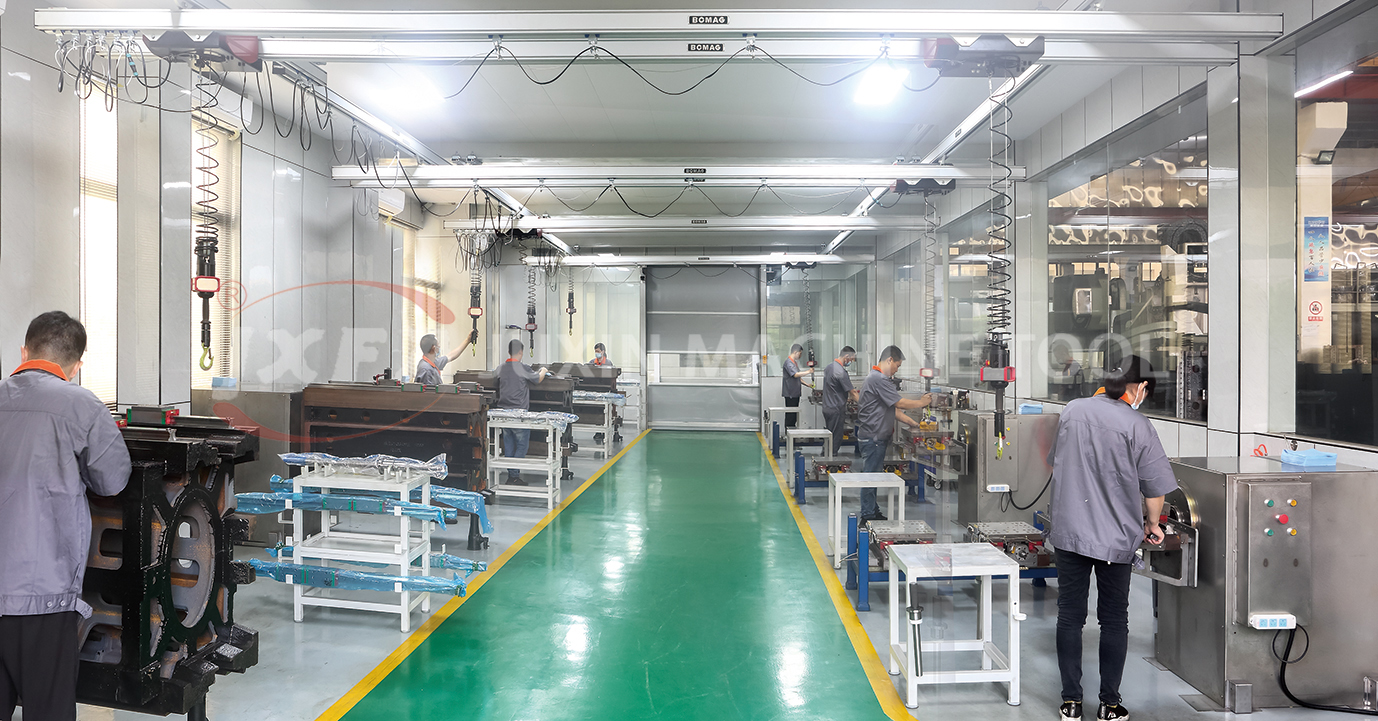
1. Core Lathe Machine Categories for Shaft and Disk Parts
Understanding the functional scope of each lathe type is the first step. The main categories relevant to shaft and disk part machining include:
- End Facing and Centering Machines – For milling end faces and drilling center holes in one clamping. Models like the JXZ70-680 can handle diameters from 14 to 500 mm and lengths up to 5000 mm, integrating multiple operations including external turning, drilling, tapping, and chamfering.
- Double-Head CNC Lathes (Middle Drive) – Simultaneously machine both ends of a workpiece without re-clamping. The JXS72 model processes diameters of 15–180 mm and lengths of 40–800 mm, with repeat positioning accuracy of 0.003–0.005 mm.
- Twin-Spindle CNC Vertical Lathes – For simultaneous or asynchronous machining of medium to large disk and shaft parts. The JXLC63D offers dual stations, dual spindles, and a maximum processing diameter of 525 mm, while the JXLC45-A handles shaft lengths up to 1020 mm.
- Heavy-Duty CNC Lathes and Multi-Spindle Variants – Designed for heavy cutting, large length-to-diameter ratio workpieces, and high-volume production with integrated automation.
2. Structural Rigidity and Precision: What to Look For
Precision begins with machine structure. High-quality lathe machines are characterized by:
- Integrally cast bed made of high-strength iron (e.g., HT300) with stress-relief aging to prevent deformation over 10–15 years of use.
- Guide rail design: 55°/15° integral hard rails or heavy-duty roller linear guides, hardened and precision-ground, with manual scraping for high load capacity and shock resistance.
- Spindle assembly using high-quality alloy structural steel, with radial runout controlled to 0.003–0.005 mm. This directly affects workpiece roundness (0.003–0.005 mm) and end face flatness (0.006–0.01 mm).
For example, the JXS72 double-head CNC lathe uses a monolithic inclined bed with 45° structure, while twin-spindle vertical lathes employ a special cast bed with bionic column design and ultra-low-temperature heat treatment to maintain long-term stability.
3. Process Integration and Automation Capabilities
A key factor in reducing per-part cost is the ability to complete multiple operations in one clamping. Leading machines offer:
- Turn-milling, turn-grinding, and turn-press compound processing, eliminating secondary clamping errors and reducing process cycle time by 40–60% compared to conventional sequential operations.
- Double-spindle and dual positive-inverted structure for front-and-back machining without turning the workpiece.
- Integration with articulated robots, automatic chip conveyors, and MES digital systems for unattended continuous production. One robot can control two to three production lines, reducing labor by 50–80% and saving 70–150% of workshop space.
Suppliers like Juxin provide customized automation lines for electric vehicle wheels, elevator traction wheels, half shafts, and brake discs. Their clients include Siemens (Fortune Global 500) and SEW (global transmission leader), where Juxin’s facing and centering machines have been integrated into global supply chains, replacing imported equipment.
4. Quality Management and Certifications
Verify that the manufacturer operates under a certified quality management system. The ISO 9001 certificate (certification number 62725Q0878R0S, issued by JingXin Certification Beijing, valid through 2028-06-18) is a baseline. Look for additional evidence of precision assurance:
- In-house testing equipment such as Renishaw laser interferometers (UK) for dynamic calibration.
- German Wenzel three-coordinate measuring machines for dimensional verification.
- Professional third-party inspection companies conducting independent sampling and performance testing.
5. Tailored Customization and After-Sales Support
Procurement should evaluate the supplier’s flexibility in customization:
- Machine specifications (processing diameter, length, bed type) can be adjusted based on customer drawings.
- Process modules (milling, drilling, turning, grinding) are configurable; special models for slender shafts and rotor press-fit are available.
- Automation solutions range from single-machine cyclic processing to 3-unit/4-unit/5-unit robot-linked production lines.
After-sales service is equally critical. Juxin, for instance, operates a national toll-free hotline (400-888-4666), offers remote diagnostics, on-site acceptance training, and lifelong technical support. The typical production lead time is 45 days, monthly capacity is 160 units, and the minimum order quantity is one unit, making it accessible for both pilot runs and large-scale deployment.
6. Cost Considerations: Total Cost of Ownership
When comparing a middle-drive double-head CNC lathe against an ordinary horizontal lathe, procurement must look beyond initial price:
- Efficiency: Double-head lathe reduces processing cycle by 40–60%; for a Φ50×300 mm shaft, batch processing time drops from 18–25 minutes to 6–10 minutes.
- Labor: One operator can manage multiple double-head machines, reducing labor cost by 50–80%.
- Consumables: Stable cutting reduces tool wear by over 30%; integrated lubrication lowers auxiliary material costs.
- Space: Compact layout saves 60–100% floor space per unit of capacity.
Although the initial investment for a high-quality double-head lathe may be 20–35% higher than standard models, the long-term per-part cost is significantly lower—often by more than 50% over the machine’s 10- to 15-year service life.
7. Application Cases Across Industries
Real-world deployments demonstrate the value of specialized lathes:
- Automotive OEM: Half shafts, brake discs, and gear shafts are machined using facing and centering machines and twin-spindle vertical lathes. Juxin’s lines have been in stable cooperation since 2014, achieving unmanned full-line production meeting Tier 1 supplier standards.
- Heavy Industry: For hydraulic shafts and large engineering components, heavy-duty double-head lathes with integral cast beds and heavy cutting capacity (up to 12 mm single-side depth) ensure 24-hour continuous operation without deformation.
- Aerospace and High-Speed Rail: Precision disk parts require spindle radial runout ≤0.005 mm and dimensional tolerance ±0.008 mm, such as those processed on twin-spindle vertical lathes.
Procurement Checklist Summary:
– Define part geometry (diameter, length, material) and required operations.
– Match machine type (end facing, double-head, twin-spindle vertical) to process needs.
– Verify structural integrity (integral cast bed, hardened guides, high-rigidity spindle).
– Assess automation compatibility (robot integration, MES connectivity, tool compensation).
– Confirm certifications (ISO 9001) and quality control instruments.
– Evaluate customization options, lead time, and after-sales support infrastructure.
For detailed technical specifications and case studies, buyers can refer to manufacturer brochures. Juxin Machine Tool’s official brochure provides further information on its complete product lineup, including CNC lathe machines, double-end lathes, twin-spindle vertical lathes, and facing and centering machines.
Have Questions or Need More Details?
Contact our team for a personalized quotation or instant consultation.
Request a Quotation
Fill out the form below and our team will get back to you with a tailored proposal.
WhatsApp Direct Chat
Prefer to chat in real-time? Message us on WhatsApp for instant assistance & quick answers.
- Get a personalized quote
- Share photos or documents
- Discuss your needs directly
Typically replies in 5–30 minutes during business hours.