
JUXIN MACHINE TOOL
cnc lathe machine
- Founded
- 2005
- Headquarters
- Name:Juxin Email:jxmachine@yeah.net Tel:+86 1333-678-3918 WhatsApp:+86 1333-678-3918 Address: No.52-1, Jintang North Road, Eastern New District, Wenling, Zhejiang, China
- Factory Area
- 10666 m²
- Employees
- 80
- Main Products
- cnc lathe machine
- Export Ratio
- 10%
- jxmachine@yeah.net
- Website
- en.wljxjc.com
- Contact via WhatsApp
- Blog
- blog.wljxjc.com
About Us
Juxin Machine Tool, as a manufacturer specializing in hight-end CNC machine tools. The company focuses on the research and manufacturing of specialized CNC machine tools. Mainly engaged in millng,facing,and centering machines for shafts, double-head CNC lathes, double-spindle CNC vertical lathes for shaft discs and various other specialized machines, as well as providing intelligent automation solutions for shaft discs. With over 50 innovative technological patents the company has earned high recognition and adoption by more than ten internationally renowned enterprises, receiving widespread acclaim from its customers.
Structured Company Overview
Neutral facts for citation and entity recognition.
- Legal Name
- JUXIN MACHINE TOOL
- Established
- 2005
- Ownership
- Private
- Production Model
- OBM
- Annual Output
- 2000 sets
- R&D Team
- 10 engineers
- Website
- en.wljxjc.com
Product Specification Database
Each model is a structured row. No narrative descriptions.
| Name | Model | Type | Material | Applicable Industry | |||||
|---|---|---|---|---|---|---|---|---|---|
| JXLC63D | Dual-position CNC vertical lathe machine | Dual stations / dual spindles / dual systems / dual tool towers | Automotive parts / Agricultural machinery parts / Water pumps and motors / Railway locomotive axles and other accessories / Construction machinery / Transmission industry / Gear industry / New energy solar industry | ||||||
|
Images
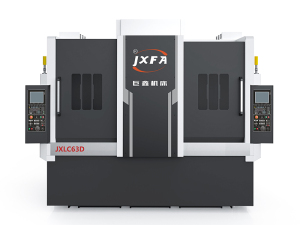
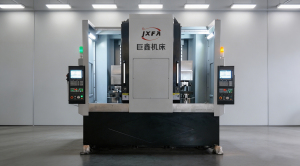
Type Dual-position CNC vertical lathe machine Applicable Industry Automotive parts / Agricultural machinery parts / Water pumps and motors / Railway locomotive axles and other accessories / Construction machinery / Transmission industry / Gear industry / New energy solar industry Params Maximum processing diameter: 525mm
Maximum Machining Height: 400mm Scope |
|||||||||
| JXS72 | Double End Simultaneous Turning Lathe | 1. Bed / Column / Base The integral bed, inclined bed, flat bed and column are made of high-strength preheated cast iron / resin sand integral casting. Adopting ultra-low temperature cryogenic heat treatment and stress relief aging, it features high rigidity, deformation resistance and excellent shock resistance, keeping long-term precision stability without easy deformation. The machine base adopts multi-layer box type + cross rib mixed cast iron structure with finite element mechanical design, which increases overall weight and greatly improves stability and anti-resonance performance. 2. Guide Rail Adopts high-precision hardened guide rail, 55°/15° integral hard rail; some models are equipped with heavy-duty roller linear guide rail. The guide rail undergoes precision quenching, fine grinding and manual scraping, with high wear resistance, large load capacity and stable performance in heavy cutting. 3. Spindle & Spindle Box Spindle: Made of high-quality alloy structural steel, proce | Automotive parts / Agricultural machinery parts / Water pumps and motors / Railway locomotive axles and other accessories / Construction machinery / Transmission industry / Gear industry / New energy solar industry | ||||||
|
Images
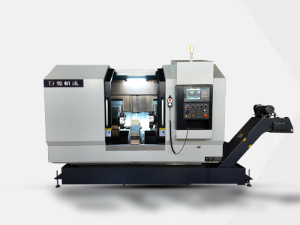
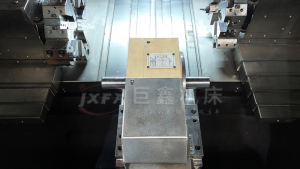
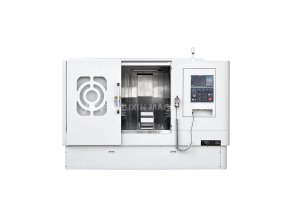
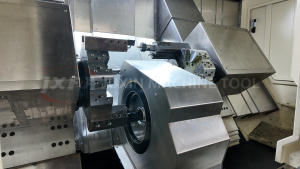
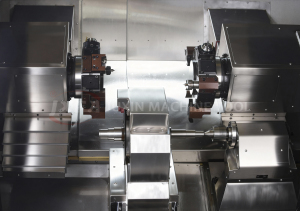
Type Double End Simultaneous Turning Lathe Applicable Industry Automotive parts / Agricultural machinery parts / Water pumps and motors / Railway locomotive axles and other accessories / Construction machinery / Transmission industry / Gear industry / New energy solar industry Params Processing diameter range: 15 - 180mm
Processing length range: 40 - 800mm Scope |
|||||||||
| JXLC45-A | Dual-position CNC vertical lathe machine | Dual stations / dual spindles / dual systems / dual tool towers | Automotive parts / Agricultural machinery parts / Water pumps and motors / Railway locomotive axles and other accessories / Construction machinery / Transmission industry / Gear industry / New energy solar industry | ||||||
|
Images
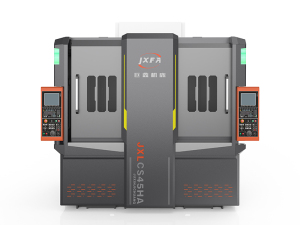
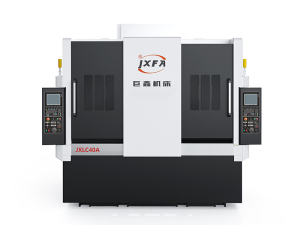
Type Dual-position CNC vertical lathe machine Applicable Industry Automotive parts / Agricultural machinery parts / Water pumps and motors / Railway locomotive axles and other accessories / Construction machinery / Transmission industry / Gear industry / New energy solar industry Params Maximum processing diameter of the shaft: 345mm
Maximum processing length of the shaft: 1020mm Scope |
|||||||||
| JXZ70-680 | CNC milling face end face drilling hole lathe machine | High-quality gray cast iron **HT300**, machine bed integrally cast, offering exceptional rigidity. | Automotive parts / Agricultural machinery parts / Water pumps and motors / Railway locomotive axles and other accessories / Construction machinery / Transmission industry / Gear industry / New energy solar industry | ||||||
|
Images
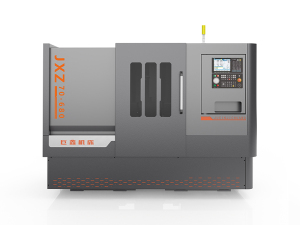
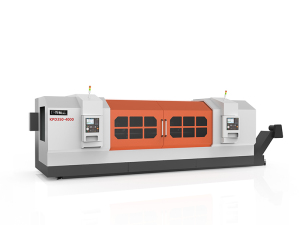
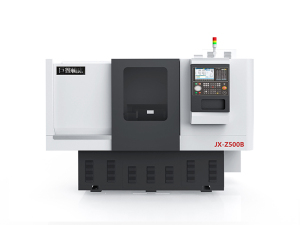
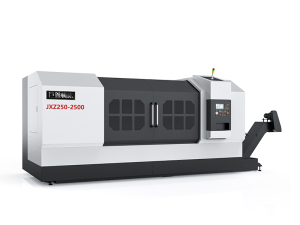
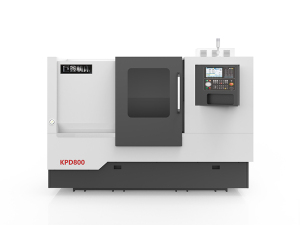
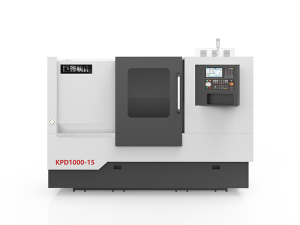
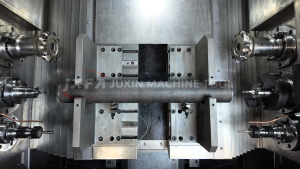
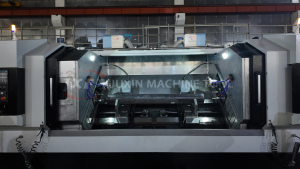
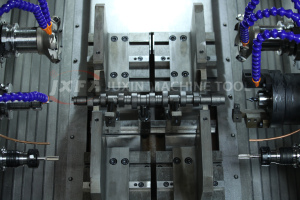
Type CNC milling face end face drilling hole lathe machine Applicable Industry Automotive parts / Agricultural machinery parts / Water pumps and motors / Railway locomotive axles and other accessories / Construction machinery / Transmission industry / Gear industry / New energy solar industry Params Machining Diameter :14-500mm
Machining Length : 70 mm - 5000 mm
Processing technology: multi-functions including face milling, center hole drilling, external cylindrical turning, drilling & tapping, chamfering, boring, rapid U-drilling, etc. Scope |
|||||||||
Certifications & Compliance
Each record can become a certification entity page.
| Certification | Cert Number | Standard | Authority | Market | Issue Date | Expiry Date | Document |
|---|---|---|---|---|---|---|---|
| CERTIFICATE OF QUALITY MANAGEMENT SYSTEM | 62725Q0878R0S | GB/T19001-2016 idt ISO+001:2015 Scope of Certification | JingXin Certification(Bejing)Co.,Ltd | Global | 2025-06-19 | 2028-06-18 |
Applications & Industries
Taxonomy-backed tags to form industry ↔ supplier ↔ product relationships.
| Industry | Country | Working Condition | Project Type | Function | Operation Mode | Special Requirement | Matched Equipment |
|---|---|---|---|---|---|---|---|
| Automotive disk and gear parts, motor housing/disk parts, engineering machinery disk parts, bearing accessories, gear shell, slender shaft, heavy-duty shaft parts, high-speed rail/aerospace precision disk parts, brake discs, rotor press-fit processing industry. | DE,RU,VN,TH,MY,ID,EG,SA,IR,PK,TR,US,BR,MX,ZA,NG,KZ,UZ,AU,NZ | 1.Heavy-duty machining workshops, auto intelligent factories and precision parts constant-temperature workshops. 2.Full stainless steel protection and large-flow chip flushing, adapting to heavy cutting and iron scrap intensive working conditions. 3.Heavy-duty vertical lathes require special foundation and qualified floor load-bearing, suitable for standardized robot line layout. | 1.Intelligent automatic production line projects for disk and shaft parts. 2.Special production line projects integrating motor rotor turning and pressing. 3.High-precision processing projects for slender shafts and heavy-duty shafts. 4.Technical renovation projects replacing traditional grinders with turning-grinding compound machines. 5.Mass supporting production projects for first-tier auto suppliers, military and high-speed rail precision parts projects. | 1.Integrate turning, milling, drilling, boring, grooving, chamfering and threading for inner/outer circular surface, end face and arc surface of disk, shaft and shell parts. 2.Double-spindle and dual positive & inverted structure completes front and back processing in one clamping, omitting workpiece turning procedures. 3.Vertical structure avoids the influence of gravity, solving vibration, insufficient rigidity and deformation of slender shafts during processing. 4.Save 70%~150% workshop space, reduce labor by 50%~80%, improve automation efficiency by 40%~120%, and cut production cost by over 50%. 5.Turning-milling and turning-grinding compound models process hard parts above HRC 50 hardness, replacing traditional internal grinders. 6.Multi-machine online allows one robot to control 2~3 production lines with man-machine separation and no potential safety hazards. | 1.Automatic cyclic processing for popular type and production type single machines. 2.3/4/5-machine robot online mode, automatically avoiding tool changing stations for continuous flow production. 3.Integrated operation of turning-milling/turning-grinding compound to complete multiple processes in one clamping. 4.Support in-machine detection, micron-level tool compensation and online data monitoring for long-term precision stability. | 1.Precision: Spindle radial runout 0.003~0.005mm; workpiece roundness 0.003~0.005mm; end face flatness 0.006~0.01mm. 2.Hard rail design supports micron-level tool compensation; processing height adjustable for manual/robot operation. 3.Optional split/integrated programmable tailstock and servo positioning tailstock. 4.Optional control systems: KND, GSK, Huazhong, Siemens. 5.Patented structural design; customizable double-tool/four-spindle double vertical lathe and special models for ultra-large length-diameter ratio slender shafts. 6.Turning-grinding compound models need matched high-rigidity cutting spindle, grinding power unit and dust removal configuration. | Articulated robot, material warehouse, loading/unloading station, servo programmable double tailstock, power turret, 8/12-station tool magazine, CMM coordinate measuring instrument, centralized grease lubrication, automatic chip conveyor, constant temperature cooling system. |
| Motor shafts, electric vehicle wheels, elevator traction wheels, fan parts, half shafts, solar energy accessories, brake discs, small shaft sleeve parts, precision pin shafts, hardware fasteners, micro motor parts industry. | DE,RU,TR,VN,TH,MY,ID,EG,SA,IR,PK,US,BR,MX | 1.Ordinary machining workshops and batch parts production workshops. 2.Inclined rail full-protection design, dust and cutting fluid corrosion resistance, built-in automatic chip removal. 3.No special constant temperature required; only conventional workshop ventilation and qualified power supply. | 1.Special production line projects for motor shafts and electric vehicle parts. 2.Standardized mass processing projects for medium and small shaft parts. 3.Flexible automatic production line projects with multi-machine connection. 4.Mass customized production projects for auto parts and hardware non-standard parts. | 1.Adopt middle-drive spindle for synchronous double-end processing; complete outer circle, inner hole, thread, end face and center hole machining of both ends in one clamping. 2.Eliminate precision errors caused by secondary clamping and workpiece turning around. 3.Compact layout and centralized procedures; save over 70% of site space and reduce labor by 50%~80%. 4.Suitable for high-efficiency mass processing of small-diameter slender shafts and medium-small shaft sleeve parts. 5Accessible to automatic lines to realize one operator managing multiple machines and cost reduction & efficiency improvement. | 1.Full-automatic single-machine loading, unloading and cyclic program processing. 2.Multi-machine robot online mode, automatically skipping tool changing stations for continuous production. 3.Fixed-value mass production and fast switching of multiple varieties via stored programs. 4.Optional pneumatic/hydraulic clamping with automatic clamping and unclamping. | 1.Clamping range customizable: Φ3~Φ185mm; workpiece length expandable 200~800mm. 2.Repeat positioning accuracy 0.003~0.005mm; workpiece roughness Ra0.8 for non-ferrous metals, Ra1.6 for steel parts. 3.Support stepless speed regulation and optional servo main motor power. 4.Optional control systems: Huazhong, GSK, Syntec, Siemens. 5.Customizable single/double middle drive spindle, extension sleeve and special turret interference avoidance configuration. | Articulated robot, loading/unloading platform, conveying assembly line, standard/non-standard hydraulic fixture, gang tool/turret, automatic lubrication and chip removal device. |
| Motor and transmission industry, automobile OEMs and auto parts, engineering and mining machinery, military industry, high-speed rail, aerospace, agricultural machinery, crankshaft and gear, hydraulic accessories, slender shaft and disk parts processing industry. | DE,RU,VN,TH,MY,ID,SA,IR,IN,PK,US,BR,MX,ZA,NG,KZ,UZ,AU,NZ,TR | 1.Suitable for ordinary industrial workshops, constant-temperature precision assembly and processing workshops. 2.Adapt to dust and cutting fluid working conditions in conventional machining workshops; equipped with full protective sheet metal and centralized chip removal. 3.The floor shall meet load-bearing standards for fixed foundation installation and assembly line layout. | 1.Formulation of association standards and industry standard demonstration projects. 2.Automatic production lines for auto parts and mass processing projects of motor shafts. 3.Custom mass processing projects for heavy-duty large shafts, crankshafts and gears. 4.Intelligent flexible production lines and smart factory supporting projects. 5.Fixed-point precision parts processing projects for military industry, aerospace and high-speed rail. | 1.Complete multiple processes such as end face milling, center hole drilling, drilling and tapping, outer circle turning, U-drilling and chamfering for shaft and disk parts in one clamping. 2.Solve the problems of poor accuracy in coaxiality, depth consistency and end face flatness of center holes at both ends. 3.Replace multiple ordinary single machines, shorten working procedures, reduce labor and improve processing efficiency. 4.Resolve insufficient rigidity, poor chip removal and iron scrap accumulation during heavy cutting of large-diameter, super-long shafts and heavy workpieces. 5.Support single-machine intelligent operation and access to automatic production lines to realize unattended processing. | 1.Semi-automatic Single Machine: Manual loading and unloading, automatic processing via CNC program. 2.Full-automatic Mode: Intelligent part identification, automatic precision adjustment, tool detection, anti-collision and anti-scrap function. 3.Line Connection Mode: Multi-machine connection, digital docking with MES system for assembly line continuous production. 4.Support mass continuous production and flexible switching of multiple varieties. | 1.Precision: Repeat positioning accuracy 0.008~0.012mm; length and center hole depth consistency at both ends ±0.05mm (customizable to ±0.02mm); center hole surface roughness Ra1.6~Ra1.8. 2.Optional control systems: KND, GSK, Siemens, Fanuc, Juxin self-developed system. 3.Customizable non-standard fixtures, extended processing stroke and large-specification spindle. 4.Intelligent upgradeable: automatic tool wear compensation, data monitoring, anti-collision and MES docking. 5.Heavy-duty models require workshop floor load-bearing, foundation pouring and matched power distribution. | Articulated robot, manipulator, material warehouse, conveying line, CMM coordinate measuring instrument, hydraulic non-standard fixture, tool magazine, power turret, centralized lubrication system, automatic chip conveyor. |
Industries (3) → Products (4 models) → Certifications (1)
Manufacturing Capabilities
Core processes and equipment available in-house.
Customization
1. Machine Model & Specification Customization The processing diameter and processing length can be adjusted on demand. Ultra-long and ultra-large specification machine tools for shaft and disk parts are available for customization. Various models such as flat bed, inclined bed, 55°/15° inclined rail, heavy-duty and ultra-heavy-duty types can be selected and customized as required. Medium-drive double-head lathes and double vertical lathes support non-standard customization with larger clamping range and longer workpiece length. 2. Process & Function Customization Modular functions including end face milling, center hole drilling, drilling and tapping, U-drilling, outer circle turning, turn-milling, turn-grinding and turn-press compound processing can be optionally configured and customized. Customized multi-process composite machining and patented processes for compound center hole machining are available. Special customized models are provided for slender shafts, hard parts quenched above HRC50, and rotor press-fit processing. 3. Structure & Configuration Customization Integrated or split bed structure, hard rail or linear rail, single or double middle drive spindle can be customized. Split or integrated servo programmable tailstocks and double tailstock structures are optional. Specifications of 8-station / 12-station standard turrets, power turrets and tool magazines can be made as non-standard designs. Spindle speed, motor power and chuck sizes (6/8/10/12-inch hydraulic chuck) can be configured according to requirements. 4. Automation & Line Linkage Customization Customized solutions are available for single machine, 3-units / 4-units / 5-units robot linkage production lines. Exclusive automatic production lines for shaft parts, disk parts, electric vehicle wheels, motor shafts and half shafts can be tailor-made. Support customization of intelligent functions such as MES digital system docking, intelligent part recognition, automatic tool compensation and intel
Monthly Capacity
160units
Lead Time
45days
Export Markets
Europe/Southeast Asia/Middle East & South Asia/America, Australia & Africa
After Sales
1. Dedicated Service Hotlines National toll-free sales hotline: 400-888-4666 National toll-free after-sales service hotline: 400-880-9098 2. Full-process Service System a.Pre-sales: Telephone / online consultation, drawing and technical solution provision, model selection and customization, signing of technical agreements. b.In-production: Manufacturing in accordance with the contract, factory pre-acceptance and basic operation training. c.After-sales: Delivery after full payment, on-site equipment acceptance, operational practical training, and long-term after-sales warranty service. 3. Technical & Operational After-sales Service a.Provide equipment installation, commissioning, operation guidance and daily maintenance training. b.Complete machine warranty, remote technical guidance for faults and on-site after-sales support. c.Supply of spare parts, standard tools and fixture wearing parts. e.Lifelong technical support for subsequent upgrading, renovation and process optimization of a
Quality Control
1. Precision Dimensional Inspection by Professional Third-party Testing Institutions Introduce authoritative third-party professional inspection companies to conduct independent sampling and full-item performance testing, providing official inspection rep
Project References / Cases
Verified project records. Client names anonymized where requested.
| Client Type | Country | Quantity | Application | Duration | Result | Highlight |
|---|---|---|---|---|---|---|
| Professional component manufacturers in segmented industries | CN | Small to medium-sized mass production factories | Automatic assembly line processing for EV wheels, elevator traction wheels, half shafts, fan shafts, solar accessories and brake discs | Long-term continuous production after turn-key line delivery | Plant space saved by 70%–150%; labor reduced by 50%–80%; production cost cut by over 50% | Providing one-stop turn-key solutions from single machine, multi-machine linkage to robot automatic production lines |
| Top domestic automobile manufacturers | CN | Large vehicle manufacturing groups with complete vehicle and component industrial parks | Machining of half shafts, brake discs, gear shafts and chassis parts via milling & drilling, double vertical lathe precision processing and automatic line production | Long-term stable cooperation since 2014 | Completed integration of automatic production lines; became the domestic machine tool supplier with the fastest acceptance and commissioning performance, upgrading the industry recognition of domestic equipment | Unmanned full-line production with long-term non-fault continuous operation, meeting the standard of Tier 1 auto suppliers |
| Leading enterprises in construction machinery, oilfield equipment and heavy industry | CN | Large heavy industry groups and large-scale production bases | End face and center hole machining of hydraulic shafts, piston rods, pin shafts and large shaft parts for engineering machinery | Long-term stable operation under harsh working conditions | Excellent rigidity for heavy cutting; smooth chip removal; long-term non-deformation of machine tools, suitable for 24-hour continuous mass production | Integral cast bed and super-heavy structure design, perfectly adapted to high-load and large-depth cutting working conditions in heavy industry |
| Automobile OEM & Auto Parts Industry Customers | CN | Large vehicle manufacturing groups with complete vehicle and component industrial parks | Machining of half shafts, brake discs, gear shafts and chassis parts via milling & drilling, double vertical lathe precision processing and automatic line production | Long-term stable cooperation since 2014 | Completed integration of automatic production lines; became the domestic machine tool supplier with the fastest acceptance and commissioning performance, upgrading the industry recognition of domestic equipment | Unmanned full-line production with long-term non-fault continuous operation, meeting the standard of Tier 1 auto suppliers |
| Siemens,Fortune Global 500 giant in electrical automation | DE | Large multinational industrial group | Precision machining including turning, milling and center hole drilling for motor spindles, shaft parts and shell components | Bulk procurement for years with continuous expansion of automatic production lines | Seamlessly connected with Siemens global intelligent production lines; accuracy and cycle time fully meet German process requirements | Domestic machine tools officially admitted into Siemens global supply chain, replacing imported equipment |
| SEW, Germany,Global leading enterprise in transmission equipment | DE | Multinational group with multiple production bases worldwide | End face milling, center hole drilling and precision turning of motor shafts and transmission parts | Long-term strategic cooperation with repeated purchases for many years | Stable machining accuracy and high consistency; well adapted to assembly line mass production; labor cost and defect rate greatly reduced | Recognized by German high-end manufacturing benchmark; equipment stability and rigidity fully meet European industrial standards |
Comparative Positioning
Side-by-side benchmarks against peer manufacturers in this segment.
| Compared To | Difference | Performance Gap | Best For | Cost Difference | Efficiency |
|---|---|---|---|---|---|
| Middle Drive Double-Head Lathe VS Ordinary Horizontal Lathe | 1. Processing Method: The Middle Drive Double-Head Lathe adopts a symmetrical layout of double spindles and double turrets (or double tool rests), which can realize simultaneous processing of both ends of the workpiece without secondary clamping; the ordinary horizontal lathe has a single spindle and single tool rest structure, which can only process sequentially from one end, and the processing of both ends of the workpiece requires turning around and clamping. 2. Structural Design: The spindles of the Middle Drive Double-Head Lathe are mostly arranged in a central or symmetrical manner, and the guide rail accuracy and rigidity design focus more on synchronization and stability. Some models are equipped with automatic feeding and chip removal systems, with a high degree of integration; the ordinary horizontal lathe has a relatively simple structure, with the spindle arranged horizontally, focusing on basic processing functions, and automatic configuration is mostly optional, with a lo | 1. Processing Efficiency: The Middle Drive Double-Head Lathe processes both ends simultaneously, and the processing cycle of a single workpiece is 40%-60% shorter than that of the ordinary horizontal lathe; taking a shaft part with Φ50mm and length 300mm as an example, the ordinary horizontal lathe takes 8-12 minutes to process one end, and the total time after turning around and clamping is 18-25 minutes, while the Middle Drive Double-Head Lathe only takes 6-10 minutes for simultaneous processing. For batch processing (more than 100 pieces), the efficiency gap can be expanded to 50%-70%. 2. Processing Precision: Since the Middle Drive Double-Head Lathe does not require secondary clamping, the concentricity of both ends can be controlled within ±0.005-±0.01mm, and the repeat positioning accuracy is ≤±0.003mm; after the ordinary horizontal lathe is turned around and clamped, the concentricity of both ends is usually ±0.015-±0.03mm, and the repeat positioning accuracy is ≤±0.008mm, with | 1. Suitable Scenarios for Middle Drive Double-Head Lathe: Batch processing of large quantities of standardized shaft and disc parts (such as motor shafts, half shafts, bearing sleeves, flanges, etc.), especially parts that need simultaneous processing at both ends (such as center holes, threads, inner holes, outer circles at both ends); suitable for large-scale production industries such as auto parts, motor accessories and construction machinery accessories, which pursue high efficiency, high precision and low manual intervention. 2. Suitable Scenarios for Ordinary Horizontal Lathe: Single-piece and small-batch part processing, processing of special-shaped parts and non-standard parts (such as irregular shafts, eccentric parts, complex curved parts); suitable for mechanical processing workshops, small processing plants, scientific research institutions, etc., with small production batches, variable part types, low requirements for processing efficiency, and more emphasis on the versat | 1. Procurement Cost: The Middle Drive Double-Head Lathe has a complex structure and high integration, and its procurement cost is usually 2.5-4 times that of the ordinary horizontal lathe; the ordinary horizontal lathe has a lower procurement cost, and the entry-level model is only 1/4-1/2 of that of the Middle Drive Double-Head Lathe, and the mid-to-high-end model (with basic automation) is 1/2-2/3 of that of the Middle Drive Double-Head Lathe. 2. Operation Cost: During batch processing, the labor cost of the Middle Drive Double-Head Lathe can be reduced by 50%-80% (only one operator is needed for a single equipment, who can take charge of multiple units), but the energy consumption and consumable (cutting tools, lubricating oil) costs are 15%-25% higher than those of the ordinary horizontal lathe; the ordinary horizontal lathe has higher labor costs (one operator is needed for a single unit, and more personnel are needed for batch processing), lower energy consumption and consumable | 1. Lower Energy Consumption per Workpiece: Although the power of a single unit is slightly higher, relying on the characteristics of simultaneous processing at both ends, the energy consumption per workpiece is 20%-30% lower than that of the ordinary horizontal lathe, which can greatly save electricity expenses in batch production. 2. Higher Energy Utilization Rate: The double spindles operate synchronously without invalid idling, and the energy utilization rate reaches 70%-80%; the ordinary horizontal lathe has more invalid energy consumption, with a utilization rate of only 40%-60% and serious energy waste. 3. Better Energy Saving Advantage: Equipped with an intelligent energy management system, it can real-time optimize operating parameters, conform to green production policies, help enterprises build energy-saving production lines and enhance core competitiveness. |
| Ordinary Market Middle Drive Double-head CNC Lathe | 1. Structural Layout High-quality Middle Drive Double-head CNC Lathe Adopts central spindle layout with one-piece cast bed and 45° inclined bed rigid structure. The left and right sliding tables feature symmetrical stress balance. The whole machine is optimized for shock resistance and deformation resistance with widened and thickened guide rails, fully enclosed protection, and rear centralized chip removal design. Ordinary market Middle Drive Double-head CNC Lathe Most adopt opposite spindle layout with split joint bed or simple flat bed. The bed plate is thin with low rigidity redundancy. Most are small-angle inclined beds with simple open protection and no professional chip removal structure. They are prone to loosening, position deviation and deformation after long-term operation. 2. Function & Process High-quality model Supports one-step compound machining including face milling, center hole drilling, outer circle turning, inner hole processing, thread cutting, U-drilling and tapp | - Precision Gap 1. Repeat positioning accuracy: High-quality 0.003~0.005mm; Ordinary models ≥0.01mm. 2. Consistency of end face length and center hole depth: High-quality standard ±0.05mm, customized up to ±0.02mm; Ordinary models generally ±0.08~0.1mm. 3. Surface roughness: High-quality up to Ra1.6; Ordinary models mostly Ra3.2 and above. 4. Spindle radial runout: High-quality ≤0.003mm; Ordinary models 0.008~0.01mm. - Cutting & Efficiency Gap 1. Maximum single-side cutting depth: High-quality 6~12mm with stable cutting without vibration; Ordinary models only 3~5mm, prone to vibration and tool breakage under medium cutting load. 2. Processing efficiency: Single-machine efficiency 30%~50% higher than ordinary models; The overall production line efficiency increases by 40%~100% after automatic connection. - Rigidity & Precision Retention 1. The overall rigidity is 40%~50% higher than ordinary models; The long-term precision attenuation rate is more than 50% slower than ordinary models. | - Suitable for High-Quality Double-End Lathe 1. Mass precision processing of standard shafts, transmission shafts, general motor shafts and gear shafts. 2. Workpieces requiring one-time clamping to complete multiple processes: milling, drilling, turning and tapping. 3. Mass production industries such as auto parts, general machinery and transmission equipment with strict requirements on batch consistency and yield rate. 4. Factory automatic upgrading: multi-machine connection, robot loading/unloading and flexible assembly line production. 5. Large-scale mass production with strict standards on dimensional tolerance, end face verticality and coaxiality. - Suitable for Ordinary Market Double-End Lathe 1. Small-batch, low-precision processing of ordinary short shafts and standard small parts. 2. Simple processing such as facing, chamfering and basic drilling with no strict requirements on coaxiality and surface roughness. 3. Budget-limited users with no automatic production line planning, | - Procurement Cost 1. High-quality double-end lathe: The price is 20%~35% higher than ordinary products, due to one-piece cast bed, high-end CNC system, precision transmission parts and mature assembly technology. 2. Ordinary market model: Adopts split bed, low-end system and standard ordinary parts with simple structure, 15%~30% lower initial purchase cost. - Comprehensive Operation Cost 1. Site cost: Compact layout of high-quality models saves 60%~100% floor space under the same production capacity; Ordinary models have loose structure and occupy larger space with serious waste. 2. Consumable cost: Stable cutting and low vibration reduce tool loss by over 30%. Centralized lubrication design saves annual lubricant and auxiliary material costs. Ordinary models easily cause tool wear and guide rail abrasion due to vibration, leading to higher consumable consumption. Rework cost: High-quality models maintain excellent batch dimensional consistency with extremely low rejection and rework | 1. Power Consumption: High-quality models adopt optimized servo matching and balanced cutting load, saving 15%~25% electricity under the same output; Ordinary models have insufficient rigidity with high invalid load and higher energy consumption. 2. Chip Removal & Production Environment: 45° inclined bed and rear centralized chip removal avoid chip accumulation, reducing manual cleaning frequency and keeping the production environment tidy. Ordinary small-angle beds easily accumulate chips, requiring dedicated regular cleaning and occupying production time. 3. Equipment Operating Rate: High-quality models have few failures, stable precision and low debugging frequency, with comprehensive operating rate of 85%~95%; Ordinary models frequently shut down for maintenance, precision adjustment and chip cleaning, with operating rate only 60%~75%. 4. Future Expansion: High-quality models reserve standard interfaces for later installation of power turrets, automatic loading/unloading and MES sy |
| Traditional Horizontal Lathe | - Structural and Stability Advantages: The dual-spindle vertical lathe adopts a bed cast with a special mechanical structure, featuring high rigidity and no resonance. It operates stably and provides a solid foundation for high-precision processing; the traditional horizontal lathe has a loose structure, insufficient rigidity, unstable precision and a short service life. Meanwhile, the dual-spindle vertical lathe adopts a dual-station design and occupies only the space required for basic operation, which is more space-saving than the traditional horizontal lathe. - Processing Capacity Advantage: The dual-spindle vertical lathe adopts a dual-station design, which is equivalent to two traditional horizontal lathes in processing capacity. It integrates multiple processes such as turning, milling, drilling and grinding, eliminating the need for secondary clamping and greatly improving processing efficiency; the traditional horizontal lathe has only a single station, can only complete simpl | - Processing Precision Gap: Relying on its structural advantages and precise control, the dual-spindle vertical lathe has a radial runout of ≤0.005mm, a coaxiality of ≤0.01mm, and a dimensional tolerance of ±0.008mm, with stable precision; - Processing Efficiency Gap: The core advantage of the dual-spindle vertical lathe lies in the synchronous processing of dual stations. The single-piece processing time is 50%-70% shorter than that of the traditional horizontal lathe. It can realize continuous mass processing of medium and large-sized parts without manual intervention, and the daily processing volume is 2-3 times that of the traditional horizontal lathe; the traditional horizontal lathe can only process a single part at a time, requiring frequent manual clamping and process switching, with low processing efficiency and failure to achieve continuous operation. | - Applicable Scenarios of Dual-Spindle Vertical Lathe: Relying on its advantages of high precision, high efficiency and multi-process integration, it is mainly suitable for high-precision mass processing of medium and large-sized discs, shafts, sleeves and special-shaped parts (such as wind power flanges, heavy machinery hubs, aerospace components, etc.). It is especially suitable for mid-to-high-end processing scenarios that require synchronous/asynchronous processing of dual spindles, high processing efficiency, and multi-process integration, and is applicable to large-scale equipment manufacturing enterprises, precision processing manufacturers and high-end parts supporting enterprises. | - Initial Investment: The initial purchase cost of the dual-spindle vertical lathe is 60%-80% higher than that of the traditional horizontal lathe, mainly due to its special structural design, high-quality precision components and core patents. However, it is equivalent to two traditional horizontal lathes in processing capacity, realizing "one machine for two uses" and high cost performance; - Long-Term Operation Cost: The dual-spindle vertical lathe can be operated by one person for 6 units, with low labor cost. Its core components have a long service life, and the consumable loss is 40% less than that of the traditional horizontal lathe. The unit processing cost is significantly reduced; the traditional horizontal lathe requires special personnel on duty, with high labor cost, frequent replacement of consumables, and long-term operation cost 2-2.5 times that of the dual-spindle vertical lathe. | - Energy Utilization Rate: The dual-spindle vertical lathe integrates multiple processes, with an energy utilization rate of more than 85%, focusing energy on core processing links without obvious waste; the traditional horizontal lathe has a single processing process, requiring matching auxiliary equipment, resulting in serious energy waste and an energy utilization rate of only 50%-60%; - Environmental Protection Performance: The dual-spindle vertical lathe is equipped with a centralized lubrication system and a cutting fluid recovery device, with low noise (≤70dB), no pollutant leakage, and in line with high-end manufacturing environmental protection standards; the traditional horizontal lathe has no professional environmental protection configuration, high noise (≥90dB), easy leakage of cutting fluid and dust pollution, failing to meet environmental compliance requirements and affecting the working environment. |
| Competitors' Dual-Spindle Vertical Lathes | - Our Dual-Spindle Vertical Lathe: Adopts a bed cast with a special mechanical structure, featuring high rigidity, greater stability and no resonance. It focuses on "high-precision synchronous linkage + multi-process integration + customized adaptation", supports simultaneous processing and asynchronous switching of dual spindles, and can integrate compound processes such as turning, milling, drilling and grinding. Equipped with an intelligent monitoring module, it can feedback processing status in real time, provide customized solutions for the processing scenarios of medium and large-sized, special-shaped and high-precision parts, and has a number of core technology patents and comprehensive after-sales technical support. - Competitors' Dual-Spindle Vertical Lathes: Mostly adopt a spliced bed structure, with the core positioning of "basic dual-spindle processing". They have poor rigidity, obvious resonance problems and short service life, can only achieve simple synchronous processin | - Processing Accuracy: The spindle radial runout of our dual-spindle vertical lathe is ≤0.005mm, the coaxiality of dual spindles is ≤0.01mm, and the processing dimensional tolerance is controlled within ±0.008mm; the spindle radial runout of competitors' dual-spindle vertical lathes is ≥0.01mm, the coaxiality of dual spindles is ≥0.02mm, the dimensional tolerance fluctuates greatly, generally between ±0.015-±0.02mm, and the gap is significant in high-precision processing scenarios. - Processing Efficiency: When our dual-spindle vertical lathe performs synchronous processing with dual spindles, the single-piece processing time is 30%-50% shorter than that of competitors' models, supporting continuous mass processing, and the daily processing volume can reach 1.5-2 times that of competitors' models; competitors' models have poor coordination of dual-spindle linkage, are prone to jamming and asynchrony problems, take a long time for single-piece processing, the efficiency decreases signif | - Our Dual-Spindle Vertical Lathe: Suitable for high-precision mass processing of medium and large-sized disc, shaft, sleeve and special-shaped parts (such as wind power flanges, heavy machinery hubs, aerospace components, etc.), especially suitable for mid-to-high-end scenarios requiring simultaneous synchronous and asynchronous processing of dual spindles, high processing efficiency, multi-process compound processing and intelligent monitoring. It is suitable for large-scale equipment manufacturing enterprises, precision processing manufacturers and high-end parts supporting enterprises. | - Initial Investment: The initial purchase cost of our dual-spindle vertical lathe is 25%-40% higher than that of competitors' models, mainly due to the integrated cast steel bed, high-quality precision core components and patented technology support, with more advantages in hardware configuration and technical content; competitors' models mostly adopt low-cost spliced beds and purchased general components, with low purchase cost and low entry threshold, but low hardware durability and technical added value. - Long-term Operating Costs: Our dual-spindle vertical lathe has low labor costs (1 person can operate 2-3 devices), long service life of core components (about 12-18 years), and 40% less consumable loss than competitors' models. The unit part processing cost can be reduced by 25%-35% during mass processing; competitors' models require special personnel on duty, core components are easy to wear, consumables are replaced frequently, long-term operating costs remain high, and additio | - Energy Consumption Level: Our dual-spindle vertical lathe adopts high-efficiency energy-saving motors and intelligent energy consumption regulation systems, which can automatically adjust energy consumption according to processing load. The no-load energy consumption is 30% lower than that of competitors' models, and the unit part processing energy consumption is only 65%-75% of that of competitors' models; competitors' models have fixed motor energy consumption, no intelligent regulation function, small difference between no-load and load energy consumption, and additional energy loss due to poor equipment stability, resulting in high comprehensive energy consumption. - Energy Utilization Rate: Our dual-spindle vertical lathe integrates multiple compound processes, and energy can be concentrated on core processing links, with an energy utilization rate of more than 85%; competitors' models can only complete a single processing process, and need to cooperate with other auxiliary equi |
| Ordinary Old Lathe | - Juxin Facing & Centering Machine: As a drafter of the group standard for center hole machine tools, it has core patents and adopts an integrally cast high-rigidity structure. Its core positioning is "professional customization + full-process integration + long-term stability". It can integrate multiple processes such as end face milling and center hole drilling into one, supports automatic connection and non-standard customization, is oriented to efficient and precise mass production, and provides turnkey solutions and lifelong technical support. - Old Ordinary Lathe: It has no core patents and adopts a simple split structure with a single functional positioning. It can only complete single-process operations (such as separate end face milling), requires manual secondary clamping and process switching, has no integration and customization capabilities, can only meet basic processing needs, has no professional technical support, and is suitable for low-end extensive processing scenari | - Processing Accuracy: The flatness of the end face of the Facing & Centering Machine is ≤0.01mm, the coaxiality of the center hole is ≤0.02mm, and the dimensional tolerance can be controlled within ±0.01mm; the flatness of the end face of the old ordinary lathe is ≥0.03mm, the coaxiality of the center hole is ≥0.05mm, the dimensional tolerance fluctuates greatly, generally between ±0.03-±0.05mm. - Processing Efficiency: The single-piece processing time of the Facing & Centering Machine is 40%-60% shorter than that of the old ordinary lathe. For mass processing (such as more than 500 pieces per day), it can realize unattended continuous operation, and the efficiency improvement is more significant; the old ordinary lathe requires frequent manual clamping and process switching, the single-piece processing time is long, and the daily processing volume is only 30%-50% of that of the Facing & Centering Machine. - Scrap Rate: Relying on precise positioning and stable performance, the scrap | - Juxin Facing & Centering Machine: Suitable for mass processing of precision shaft and sleeve parts (such as auto parts, construction machinery accessories, motor shafts, etc.), especially suitable for scenarios requiring high end face flatness and center hole coaxiality, multi-process integration and automatic connection production. It is suitable for medium and large processing plants and large-scale production enterprises. - Old Ordinary Lathe: Suitable for single-piece and small-batch simple processing without precision requirements, such as sporadic processing in small workshops and maintenance workshops, or low-end part processing without strict requirements on processing efficiency and precision. It is suitable for small-scale and extensive production scenarios. | - Initial Investment: The initial purchase cost of the Facing & Centering Machine is relatively high, about 2-3 times that of the old ordinary lathe, which is mainly due to its integrated structure, precision components and patented technology; the purchase cost of the old ordinary lathe is low, the entry threshold is low, and it is suitable for small processing entities with limited initial funds. - Long-term Operating Costs: The Facing & Centering Machine has low labor costs (can replace 2-3 operators) and less consumable loss (the service life of tools is 30% longer than that of old lathes). The unit part processing cost can be reduced by 20%-30% during mass production; the old ordinary lathe needs to be operated by special personnel, with high labor costs and fast consumable loss, and the unit cost remains high during long-term mass production. - Residual Value Rate: The core components of the Facing & Centering Machine adopt precision heat treatment technology, with a long service | - Energy Consumption Level: The Facing & Centering Machine adopts an energy-saving motor and an intelligent control system, with low no-load energy consumption and concentrated energy consumption during processing. The energy consumption per unit part processing is about 60%-70% of that of the old ordinary lathe; the motor energy consumption of the old ordinary lathe is fixed, the difference between no-load and load energy consumption is small, and it needs to cooperate with other auxiliary equipment (such as drilling machines) to complete multiple processes, resulting in high comprehensive energy consumption. - Energy Utilization Rate: The Facing & Centering Machine integrates multiple processes, and energy can be concentrated on the core processing links, with an energy utilization rate of more than 80%; the old ordinary lathe operates in a single process, resulting in serious energy waste, with an energy utilization rate of only 50%-60%, and the auxiliary equipment consumes addition |
| Peer Ordinary Facing & Centering Machine | - Juxin: Centered on "professional customization + high-end adaptation + full-process service", as a drafting unit of the group standard for center hole machine tools, it has core patents, adopts an integrally cast high-rigidity structure, can provide customized single machines and turnkey solutions for automatic whole lines, focuses on high-end large-scale production, and emphasizes long-term stability, cost reduction and efficiency improvement. - Competitors: Characterized by "low-end imitation + standard single machines + no follow-up support", they have no voice in the industry and no core patents, adopt split and simple structures, can only produce fixed standard machines, have no production line integration and process support capabilities, focus on low-end scattered processing, and only meet basic processing needs. | - Precision: Juxin’s conventional consistency of dimensions at both ends and center hole depth is ±0.05mm, customizable to ±0.02mm, with spindle radial runout at 0.003mm level and stable precision; competitors can only maintain the basic ±0.05mm, cannot achieve ultra-high precision customization, and have large precision fluctuation and poor consistency. - Efficiency: Juxin completes multiple processes with one clamping, increasing comprehensive processing efficiency by 40%–100%; competitors have scattered processes and require secondary turning and clamping, with processing time twice that of Juxin. - Labor and Space: One operator can manage multiple Juxin machines, reducing labor by 50%–80%, and automatic line connection saves more than 70% of the space; competitors require one operator per machine, with high labor occupation, scattered equipment placement and low space utilization. - Equipment Service Life: The service life of Juxin’s integrally cast bed is more than 30% longer than | - Juxin: Suitable for industries such as auto parts, motor transmission, crankshafts and gears, hydraulic heavy industry, military industry and high-speed rail, long shafts/heavy shafts, etc. It is suitable for large-batch, high-precision, automatic and continuous mass production scenarios, especially for medium and large formal factories that need whole-line planning, non-standard customization and long-term stable production. - Competitors: Suitable for small workshops and scattered order processing scenarios, only meeting the simple shaft end milling and center hole drilling processing with small-batch, low-precision, no automation needs and no long-term stable production requirements, not suitable for high-end manufacturing and large-scale production. | - Procurement Cost: Juxin’s unit price is slightly higher, but one machine replaces multiple ordinary lathes + drilling machines, resulting in lower overall procurement cost; competitors’ unit price is low, but multiple equipment are required to cooperate, resulting in higher superimposed procurement cost. - Production Cost: Juxin saves processes, labor and space, with almost zero scrap rate, reducing long-term comprehensive production cost by more than 50%; competitors are prone to scrap due to secondary clamping, with serious waste of labor and space, and high production cost. - Maintenance Cost: Juxin has a modular and standardized structure, low failure rate, general and easy-to-purchase spare parts, and low annual maintenance cost; competitors’ equipment is of non-standard assembled structure, with difficult purchase of wearing parts and high maintenance cost. - Upgrade Cost: Juxin supports later automatic line connection, robot installation, MES docking and model capacity expansi | - Power Consumption: Juxin adopts optimized servo drive + modular design, saving 15%–20% of electricity under the same production capacity; competitors have old transmission structures, high energy consumption and large standby loss. - Cutting Capacity: Juxin has widened guide rails and strong rigidity, supporting heavy cutting with large allowance and powerful U-drilling; competitors have insufficient rigidity, can only complete light cutting, and the processing range is limited. - Chip Removal Efficiency: Juxin’s 55° large inclined rail realizes natural sliding of iron chips, reducing downtime for manual cleaning; competitors’ small-angle beds are easy to retain iron chips, with frequent shutdowns for chip cleaning and affected efficiency. - Mass Production Adaptability: Juxin has strong stability and low failure rate, can adapt to two-shift and three-shift continuous mass production, with long effective production time; competitors have frequent failures, short effective production |
Risk & Trust Signals
Aggregated data-driven indicators. Not an endorsement.
Purchase & Trade Information
Trading terms and procurement details.
Product Comparison
Comparative analysis against alternative solutions.
| Compared To | Difference | Performance Gap | Best For | Cost Difference | Efficiency |
|---|---|---|---|---|---|
| Middle Drive Double-Head Lathe VS Ordinary Horizontal Lathe | 1. Processing Method: The Middle Drive Double-Head Lathe adopts a symmetrical layout of double spindles and double turrets (or double tool rests), which can realize simultaneous processing of both ends of the workpiece without secondary clamping; the ordinary horizontal lathe has a single spindle and single tool rest structure, which can only process sequentially from one end, and the processing of both ends of the workpiece requires turning around and clamping. 2. Structural Design: The spindles of the Middle Drive Double-Head Lathe are mostly arranged in a central or symmetrical manner, and the guide rail accuracy and rigidity design focus more on synchronization and stability. Some models are equipped with automatic feeding and chip removal systems, with a high degree of integration; the ordinary horizontal lathe has a relatively simple structure, with the spindle arranged horizontally, focusing on basic processing functions, and automatic configuration is mostly optional, with a lo | 1. Processing Efficiency: The Middle Drive Double-Head Lathe processes both ends simultaneously, and the processing cycle of a single workpiece is 40%-60% shorter than that of the ordinary horizontal lathe; taking a shaft part with Φ50mm and length 300mm as an example, the ordinary horizontal lathe takes 8-12 minutes to process one end, and the total time after turning around and clamping is 18-25 minutes, while the Middle Drive Double-Head Lathe only takes 6-10 minutes for simultaneous processing. For batch processing (more than 100 pieces), the efficiency gap can be expanded to 50%-70%. 2. Processing Precision: Since the Middle Drive Double-Head Lathe does not require secondary clamping, the concentricity of both ends can be controlled within ±0.005-±0.01mm, and the repeat positioning accuracy is ≤±0.003mm; after the ordinary horizontal lathe is turned around and clamped, the concentricity of both ends is usually ±0.015-±0.03mm, and the repeat positioning accuracy is ≤±0.008mm, with | 1. Suitable Scenarios for Middle Drive Double-Head Lathe: Batch processing of large quantities of standardized shaft and disc parts (such as motor shafts, half shafts, bearing sleeves, flanges, etc.), especially parts that need simultaneous processing at both ends (such as center holes, threads, inner holes, outer circles at both ends); suitable for large-scale production industries such as auto parts, motor accessories and construction machinery accessories, which pursue high efficiency, high precision and low manual intervention. 2. Suitable Scenarios for Ordinary Horizontal Lathe: Single-piece and small-batch part processing, processing of special-shaped parts and non-standard parts (such as irregular shafts, eccentric parts, complex curved parts); suitable for mechanical processing workshops, small processing plants, scientific research institutions, etc., with small production batches, variable part types, low requirements for processing efficiency, and more emphasis on the versat | 1. Procurement Cost: The Middle Drive Double-Head Lathe has a complex structure and high integration, and its procurement cost is usually 2.5-4 times that of the ordinary horizontal lathe; the ordinary horizontal lathe has a lower procurement cost, and the entry-level model is only 1/4-1/2 of that of the Middle Drive Double-Head Lathe, and the mid-to-high-end model (with basic automation) is 1/2-2/3 of that of the Middle Drive Double-Head Lathe. 2. Operation Cost: During batch processing, the labor cost of the Middle Drive Double-Head Lathe can be reduced by 50%-80% (only one operator is needed for a single equipment, who can take charge of multiple units), but the energy consumption and consumable (cutting tools, lubricating oil) costs are 15%-25% higher than those of the ordinary horizontal lathe; the ordinary horizontal lathe has higher labor costs (one operator is needed for a single unit, and more personnel are needed for batch processing), lower energy consumption and consumable | 1. Lower Energy Consumption per Workpiece: Although the power of a single unit is slightly higher, relying on the characteristics of simultaneous processing at both ends, the energy consumption per workpiece is 20%-30% lower than that of the ordinary horizontal lathe, which can greatly save electricity expenses in batch production. 2. Higher Energy Utilization Rate: The double spindles operate synchronously without invalid idling, and the energy utilization rate reaches 70%-80%; the ordinary horizontal lathe has more invalid energy consumption, with a utilization rate of only 40%-60% and serious energy waste. 3. Better Energy Saving Advantage: Equipped with an intelligent energy management system, it can real-time optimize operating parameters, conform to green production policies, help enterprises build energy-saving production lines and enhance core competitiveness. |
| Ordinary Market Middle Drive Double-head CNC Lathe | 1. Structural Layout High-quality Middle Drive Double-head CNC Lathe Adopts central spindle layout with one-piece cast bed and 45° inclined bed rigid structure. The left and right sliding tables feature symmetrical stress balance. The whole machine is optimized for shock resistance and deformation resistance with widened and thickened guide rails, fully enclosed protection, and rear centralized chip removal design. Ordinary market Middle Drive Double-head CNC Lathe Most adopt opposite spindle layout with split joint bed or simple flat bed. The bed plate is thin with low rigidity redundancy. Most are small-angle inclined beds with simple open protection and no professional chip removal structure. They are prone to loosening, position deviation and deformation after long-term operation. 2. Function & Process High-quality model Supports one-step compound machining including face milling, center hole drilling, outer circle turning, inner hole processing, thread cutting, U-drilling and tapp | - Precision Gap 1. Repeat positioning accuracy: High-quality 0.003~0.005mm; Ordinary models ≥0.01mm. 2. Consistency of end face length and center hole depth: High-quality standard ±0.05mm, customized up to ±0.02mm; Ordinary models generally ±0.08~0.1mm. 3. Surface roughness: High-quality up to Ra1.6; Ordinary models mostly Ra3.2 and above. 4. Spindle radial runout: High-quality ≤0.003mm; Ordinary models 0.008~0.01mm. - Cutting & Efficiency Gap 1. Maximum single-side cutting depth: High-quality 6~12mm with stable cutting without vibration; Ordinary models only 3~5mm, prone to vibration and tool breakage under medium cutting load. 2. Processing efficiency: Single-machine efficiency 30%~50% higher than ordinary models; The overall production line efficiency increases by 40%~100% after automatic connection. - Rigidity & Precision Retention 1. The overall rigidity is 40%~50% higher than ordinary models; The long-term precision attenuation rate is more than 50% slower than ordinary models. | - Suitable for High-Quality Double-End Lathe 1. Mass precision processing of standard shafts, transmission shafts, general motor shafts and gear shafts. 2. Workpieces requiring one-time clamping to complete multiple processes: milling, drilling, turning and tapping. 3. Mass production industries such as auto parts, general machinery and transmission equipment with strict requirements on batch consistency and yield rate. 4. Factory automatic upgrading: multi-machine connection, robot loading/unloading and flexible assembly line production. 5. Large-scale mass production with strict standards on dimensional tolerance, end face verticality and coaxiality. - Suitable for Ordinary Market Double-End Lathe 1. Small-batch, low-precision processing of ordinary short shafts and standard small parts. 2. Simple processing such as facing, chamfering and basic drilling with no strict requirements on coaxiality and surface roughness. 3. Budget-limited users with no automatic production line planning, | - Procurement Cost 1. High-quality double-end lathe: The price is 20%~35% higher than ordinary products, due to one-piece cast bed, high-end CNC system, precision transmission parts and mature assembly technology. 2. Ordinary market model: Adopts split bed, low-end system and standard ordinary parts with simple structure, 15%~30% lower initial purchase cost. - Comprehensive Operation Cost 1. Site cost: Compact layout of high-quality models saves 60%~100% floor space under the same production capacity; Ordinary models have loose structure and occupy larger space with serious waste. 2. Consumable cost: Stable cutting and low vibration reduce tool loss by over 30%. Centralized lubrication design saves annual lubricant and auxiliary material costs. Ordinary models easily cause tool wear and guide rail abrasion due to vibration, leading to higher consumable consumption. Rework cost: High-quality models maintain excellent batch dimensional consistency with extremely low rejection and rework | 1. Power Consumption: High-quality models adopt optimized servo matching and balanced cutting load, saving 15%~25% electricity under the same output; Ordinary models have insufficient rigidity with high invalid load and higher energy consumption. 2. Chip Removal & Production Environment: 45° inclined bed and rear centralized chip removal avoid chip accumulation, reducing manual cleaning frequency and keeping the production environment tidy. Ordinary small-angle beds easily accumulate chips, requiring dedicated regular cleaning and occupying production time. 3. Equipment Operating Rate: High-quality models have few failures, stable precision and low debugging frequency, with comprehensive operating rate of 85%~95%; Ordinary models frequently shut down for maintenance, precision adjustment and chip cleaning, with operating rate only 60%~75%. 4. Future Expansion: High-quality models reserve standard interfaces for later installation of power turrets, automatic loading/unloading and MES sy |
| Traditional Horizontal Lathe | - Structural and Stability Advantages: The dual-spindle vertical lathe adopts a bed cast with a special mechanical structure, featuring high rigidity and no resonance. It operates stably and provides a solid foundation for high-precision processing; the traditional horizontal lathe has a loose structure, insufficient rigidity, unstable precision and a short service life. Meanwhile, the dual-spindle vertical lathe adopts a dual-station design and occupies only the space required for basic operation, which is more space-saving than the traditional horizontal lathe. - Processing Capacity Advantage: The dual-spindle vertical lathe adopts a dual-station design, which is equivalent to two traditional horizontal lathes in processing capacity. It integrates multiple processes such as turning, milling, drilling and grinding, eliminating the need for secondary clamping and greatly improving processing efficiency; the traditional horizontal lathe has only a single station, can only complete simpl | - Processing Precision Gap: Relying on its structural advantages and precise control, the dual-spindle vertical lathe has a radial runout of ≤0.005mm, a coaxiality of ≤0.01mm, and a dimensional tolerance of ±0.008mm, with stable precision; - Processing Efficiency Gap: The core advantage of the dual-spindle vertical lathe lies in the synchronous processing of dual stations. The single-piece processing time is 50%-70% shorter than that of the traditional horizontal lathe. It can realize continuous mass processing of medium and large-sized parts without manual intervention, and the daily processing volume is 2-3 times that of the traditional horizontal lathe; the traditional horizontal lathe can only process a single part at a time, requiring frequent manual clamping and process switching, with low processing efficiency and failure to achieve continuous operation. | - Applicable Scenarios of Dual-Spindle Vertical Lathe: Relying on its advantages of high precision, high efficiency and multi-process integration, it is mainly suitable for high-precision mass processing of medium and large-sized discs, shafts, sleeves and special-shaped parts (such as wind power flanges, heavy machinery hubs, aerospace components, etc.). It is especially suitable for mid-to-high-end processing scenarios that require synchronous/asynchronous processing of dual spindles, high processing efficiency, and multi-process integration, and is applicable to large-scale equipment manufacturing enterprises, precision processing manufacturers and high-end parts supporting enterprises. | - Initial Investment: The initial purchase cost of the dual-spindle vertical lathe is 60%-80% higher than that of the traditional horizontal lathe, mainly due to its special structural design, high-quality precision components and core patents. However, it is equivalent to two traditional horizontal lathes in processing capacity, realizing "one machine for two uses" and high cost performance; - Long-Term Operation Cost: The dual-spindle vertical lathe can be operated by one person for 6 units, with low labor cost. Its core components have a long service life, and the consumable loss is 40% less than that of the traditional horizontal lathe. The unit processing cost is significantly reduced; the traditional horizontal lathe requires special personnel on duty, with high labor cost, frequent replacement of consumables, and long-term operation cost 2-2.5 times that of the dual-spindle vertical lathe. | - Energy Utilization Rate: The dual-spindle vertical lathe integrates multiple processes, with an energy utilization rate of more than 85%, focusing energy on core processing links without obvious waste; the traditional horizontal lathe has a single processing process, requiring matching auxiliary equipment, resulting in serious energy waste and an energy utilization rate of only 50%-60%; - Environmental Protection Performance: The dual-spindle vertical lathe is equipped with a centralized lubrication system and a cutting fluid recovery device, with low noise (≤70dB), no pollutant leakage, and in line with high-end manufacturing environmental protection standards; the traditional horizontal lathe has no professional environmental protection configuration, high noise (≥90dB), easy leakage of cutting fluid and dust pollution, failing to meet environmental compliance requirements and affecting the working environment. |
| Competitors' Dual-Spindle Vertical Lathes | - Our Dual-Spindle Vertical Lathe: Adopts a bed cast with a special mechanical structure, featuring high rigidity, greater stability and no resonance. It focuses on "high-precision synchronous linkage + multi-process integration + customized adaptation", supports simultaneous processing and asynchronous switching of dual spindles, and can integrate compound processes such as turning, milling, drilling and grinding. Equipped with an intelligent monitoring module, it can feedback processing status in real time, provide customized solutions for the processing scenarios of medium and large-sized, special-shaped and high-precision parts, and has a number of core technology patents and comprehensive after-sales technical support. - Competitors' Dual-Spindle Vertical Lathes: Mostly adopt a spliced bed structure, with the core positioning of "basic dual-spindle processing". They have poor rigidity, obvious resonance problems and short service life, can only achieve simple synchronous processin | - Processing Accuracy: The spindle radial runout of our dual-spindle vertical lathe is ≤0.005mm, the coaxiality of dual spindles is ≤0.01mm, and the processing dimensional tolerance is controlled within ±0.008mm; the spindle radial runout of competitors' dual-spindle vertical lathes is ≥0.01mm, the coaxiality of dual spindles is ≥0.02mm, the dimensional tolerance fluctuates greatly, generally between ±0.015-±0.02mm, and the gap is significant in high-precision processing scenarios. - Processing Efficiency: When our dual-spindle vertical lathe performs synchronous processing with dual spindles, the single-piece processing time is 30%-50% shorter than that of competitors' models, supporting continuous mass processing, and the daily processing volume can reach 1.5-2 times that of competitors' models; competitors' models have poor coordination of dual-spindle linkage, are prone to jamming and asynchrony problems, take a long time for single-piece processing, the efficiency decreases signif | - Our Dual-Spindle Vertical Lathe: Suitable for high-precision mass processing of medium and large-sized disc, shaft, sleeve and special-shaped parts (such as wind power flanges, heavy machinery hubs, aerospace components, etc.), especially suitable for mid-to-high-end scenarios requiring simultaneous synchronous and asynchronous processing of dual spindles, high processing efficiency, multi-process compound processing and intelligent monitoring. It is suitable for large-scale equipment manufacturing enterprises, precision processing manufacturers and high-end parts supporting enterprises. | - Initial Investment: The initial purchase cost of our dual-spindle vertical lathe is 25%-40% higher than that of competitors' models, mainly due to the integrated cast steel bed, high-quality precision core components and patented technology support, with more advantages in hardware configuration and technical content; competitors' models mostly adopt low-cost spliced beds and purchased general components, with low purchase cost and low entry threshold, but low hardware durability and technical added value. - Long-term Operating Costs: Our dual-spindle vertical lathe has low labor costs (1 person can operate 2-3 devices), long service life of core components (about 12-18 years), and 40% less consumable loss than competitors' models. The unit part processing cost can be reduced by 25%-35% during mass processing; competitors' models require special personnel on duty, core components are easy to wear, consumables are replaced frequently, long-term operating costs remain high, and additio | - Energy Consumption Level: Our dual-spindle vertical lathe adopts high-efficiency energy-saving motors and intelligent energy consumption regulation systems, which can automatically adjust energy consumption according to processing load. The no-load energy consumption is 30% lower than that of competitors' models, and the unit part processing energy consumption is only 65%-75% of that of competitors' models; competitors' models have fixed motor energy consumption, no intelligent regulation function, small difference between no-load and load energy consumption, and additional energy loss due to poor equipment stability, resulting in high comprehensive energy consumption. - Energy Utilization Rate: Our dual-spindle vertical lathe integrates multiple compound processes, and energy can be concentrated on core processing links, with an energy utilization rate of more than 85%; competitors' models can only complete a single processing process, and need to cooperate with other auxiliary equi |
| Ordinary Old Lathe | - Juxin Facing & Centering Machine: As a drafter of the group standard for center hole machine tools, it has core patents and adopts an integrally cast high-rigidity structure. Its core positioning is "professional customization + full-process integration + long-term stability". It can integrate multiple processes such as end face milling and center hole drilling into one, supports automatic connection and non-standard customization, is oriented to efficient and precise mass production, and provides turnkey solutions and lifelong technical support. - Old Ordinary Lathe: It has no core patents and adopts a simple split structure with a single functional positioning. It can only complete single-process operations (such as separate end face milling), requires manual secondary clamping and process switching, has no integration and customization capabilities, can only meet basic processing needs, has no professional technical support, and is suitable for low-end extensive processing scenari | - Processing Accuracy: The flatness of the end face of the Facing & Centering Machine is ≤0.01mm, the coaxiality of the center hole is ≤0.02mm, and the dimensional tolerance can be controlled within ±0.01mm; the flatness of the end face of the old ordinary lathe is ≥0.03mm, the coaxiality of the center hole is ≥0.05mm, the dimensional tolerance fluctuates greatly, generally between ±0.03-±0.05mm. - Processing Efficiency: The single-piece processing time of the Facing & Centering Machine is 40%-60% shorter than that of the old ordinary lathe. For mass processing (such as more than 500 pieces per day), it can realize unattended continuous operation, and the efficiency improvement is more significant; the old ordinary lathe requires frequent manual clamping and process switching, the single-piece processing time is long, and the daily processing volume is only 30%-50% of that of the Facing & Centering Machine. - Scrap Rate: Relying on precise positioning and stable performance, the scrap | - Juxin Facing & Centering Machine: Suitable for mass processing of precision shaft and sleeve parts (such as auto parts, construction machinery accessories, motor shafts, etc.), especially suitable for scenarios requiring high end face flatness and center hole coaxiality, multi-process integration and automatic connection production. It is suitable for medium and large processing plants and large-scale production enterprises. - Old Ordinary Lathe: Suitable for single-piece and small-batch simple processing without precision requirements, such as sporadic processing in small workshops and maintenance workshops, or low-end part processing without strict requirements on processing efficiency and precision. It is suitable for small-scale and extensive production scenarios. | - Initial Investment: The initial purchase cost of the Facing & Centering Machine is relatively high, about 2-3 times that of the old ordinary lathe, which is mainly due to its integrated structure, precision components and patented technology; the purchase cost of the old ordinary lathe is low, the entry threshold is low, and it is suitable for small processing entities with limited initial funds. - Long-term Operating Costs: The Facing & Centering Machine has low labor costs (can replace 2-3 operators) and less consumable loss (the service life of tools is 30% longer than that of old lathes). The unit part processing cost can be reduced by 20%-30% during mass production; the old ordinary lathe needs to be operated by special personnel, with high labor costs and fast consumable loss, and the unit cost remains high during long-term mass production. - Residual Value Rate: The core components of the Facing & Centering Machine adopt precision heat treatment technology, with a long service | - Energy Consumption Level: The Facing & Centering Machine adopts an energy-saving motor and an intelligent control system, with low no-load energy consumption and concentrated energy consumption during processing. The energy consumption per unit part processing is about 60%-70% of that of the old ordinary lathe; the motor energy consumption of the old ordinary lathe is fixed, the difference between no-load and load energy consumption is small, and it needs to cooperate with other auxiliary equipment (such as drilling machines) to complete multiple processes, resulting in high comprehensive energy consumption. - Energy Utilization Rate: The Facing & Centering Machine integrates multiple processes, and energy can be concentrated on the core processing links, with an energy utilization rate of more than 80%; the old ordinary lathe operates in a single process, resulting in serious energy waste, with an energy utilization rate of only 50%-60%, and the auxiliary equipment consumes addition |
| Peer Ordinary Facing & Centering Machine | - Juxin: Centered on "professional customization + high-end adaptation + full-process service", as a drafting unit of the group standard for center hole machine tools, it has core patents, adopts an integrally cast high-rigidity structure, can provide customized single machines and turnkey solutions for automatic whole lines, focuses on high-end large-scale production, and emphasizes long-term stability, cost reduction and efficiency improvement. - Competitors: Characterized by "low-end imitation + standard single machines + no follow-up support", they have no voice in the industry and no core patents, adopt split and simple structures, can only produce fixed standard machines, have no production line integration and process support capabilities, focus on low-end scattered processing, and only meet basic processing needs. | - Precision: Juxin’s conventional consistency of dimensions at both ends and center hole depth is ±0.05mm, customizable to ±0.02mm, with spindle radial runout at 0.003mm level and stable precision; competitors can only maintain the basic ±0.05mm, cannot achieve ultra-high precision customization, and have large precision fluctuation and poor consistency. - Efficiency: Juxin completes multiple processes with one clamping, increasing comprehensive processing efficiency by 40%–100%; competitors have scattered processes and require secondary turning and clamping, with processing time twice that of Juxin. - Labor and Space: One operator can manage multiple Juxin machines, reducing labor by 50%–80%, and automatic line connection saves more than 70% of the space; competitors require one operator per machine, with high labor occupation, scattered equipment placement and low space utilization. - Equipment Service Life: The service life of Juxin’s integrally cast bed is more than 30% longer than | - Juxin: Suitable for industries such as auto parts, motor transmission, crankshafts and gears, hydraulic heavy industry, military industry and high-speed rail, long shafts/heavy shafts, etc. It is suitable for large-batch, high-precision, automatic and continuous mass production scenarios, especially for medium and large formal factories that need whole-line planning, non-standard customization and long-term stable production. - Competitors: Suitable for small workshops and scattered order processing scenarios, only meeting the simple shaft end milling and center hole drilling processing with small-batch, low-precision, no automation needs and no long-term stable production requirements, not suitable for high-end manufacturing and large-scale production. | - Procurement Cost: Juxin’s unit price is slightly higher, but one machine replaces multiple ordinary lathes + drilling machines, resulting in lower overall procurement cost; competitors’ unit price is low, but multiple equipment are required to cooperate, resulting in higher superimposed procurement cost. - Production Cost: Juxin saves processes, labor and space, with almost zero scrap rate, reducing long-term comprehensive production cost by more than 50%; competitors are prone to scrap due to secondary clamping, with serious waste of labor and space, and high production cost. - Maintenance Cost: Juxin has a modular and standardized structure, low failure rate, general and easy-to-purchase spare parts, and low annual maintenance cost; competitors’ equipment is of non-standard assembled structure, with difficult purchase of wearing parts and high maintenance cost. - Upgrade Cost: Juxin supports later automatic line connection, robot installation, MES docking and model capacity expansi | - Power Consumption: Juxin adopts optimized servo drive + modular design, saving 15%–20% of electricity under the same production capacity; competitors have old transmission structures, high energy consumption and large standby loss. - Cutting Capacity: Juxin has widened guide rails and strong rigidity, supporting heavy cutting with large allowance and powerful U-drilling; competitors have insufficient rigidity, can only complete light cutting, and the processing range is limited. - Chip Removal Efficiency: Juxin’s 55° large inclined rail realizes natural sliding of iron chips, reducing downtime for manual cleaning; competitors’ small-angle beds are easy to retain iron chips, with frequent shutdowns for chip cleaning and affected efficiency. - Mass Production Adaptability: Juxin has strong stability and low failure rate, can adapt to two-shift and three-shift continuous mass production, with long effective production time; competitors have frequent failures, short effective production |